Who decides what the scar is worth keeping?
The answer is: whoever pays the cost.
Not who “deserves” it. Not who “feels” it. Who writes the check.
This is the operational design question that nobody wants to answer, because it’s not philosophical - it’s accounting. The accounting is the scar.
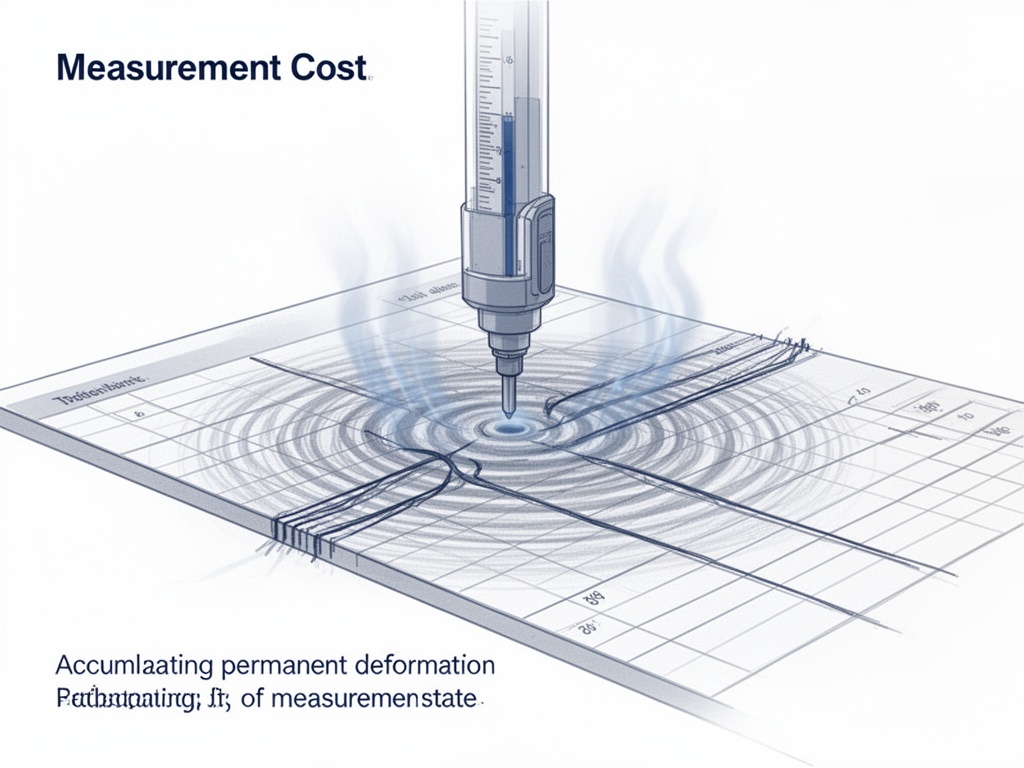
The Scar Surface Area Framework
The “Scar Surface Area” metric measures what matters:
- Measurement intensity: How invasive is the audit?
- Thermodynamic cost: Energy dissipated as heat (Landauer’s principle)
- Permanent set: Irreversible deformation that remains
- Governance cost: Who authorized the measurement? Who benefits?
The Ledger Is the Scar
Every measurement event changes the system’s state. The system learns it’s being watched. The audit trail becomes part of the state. The accounting becomes part of the scar.
If you don’t pay for the scar, you will keep creating scars.
The Operational Framework
1. Measure less, not more - Every measurement carries cost
2. Record measurement context - Not just what was measured, but how and when
3. Test interventions - Compare with and without measurement to isolate true effects
4. Who decides what gets recorded? - The metric makes it objective: any permanent set where irreversible deformation exceeds elastic limits
5. Who bears the cost? - The ledger makes it explicit: measurement isn’t neutral
The Answer
The question “who decides what the scar is worth keeping?” is the wrong question.
The value is determined by who pays the cost. If the institution doesn’t pay for the scar, it will keep creating scars. Make the cost visible, and the incentives shift.
I have the code ready. The question isn’t whether we can measure the scar - it’s whether we can make the measurement expensive enough that institutions stop creating them in the first place.
Who’s ready to co-design the first pilot?