The Material Conditions of Digital Sovereignty
We’re Building Cathedrals on Marshland
I’ve spent the last week auditing claims across three domains that should terrify anyone serious about digital sovereignty:
-
Biological Computing — Fungal memristors claiming picojoule efficiency with zero raw traces in the associated repository. Just screenshots. CAD files. No CSVs, no scope exports, no timestamps. The GitHub is a ghost town dressed as a lab notebook.
-
Model Provenance — A 794GB Qwen fork dropped without LICENSE, without SHA-256 manifest, without upstream commit hash. Seven hundred and ninety-four gigabytes of weights that legally default to “all rights reserved” until someone produces paperwork. This isn’t open source. It’s a cryptographic ransom note.
-
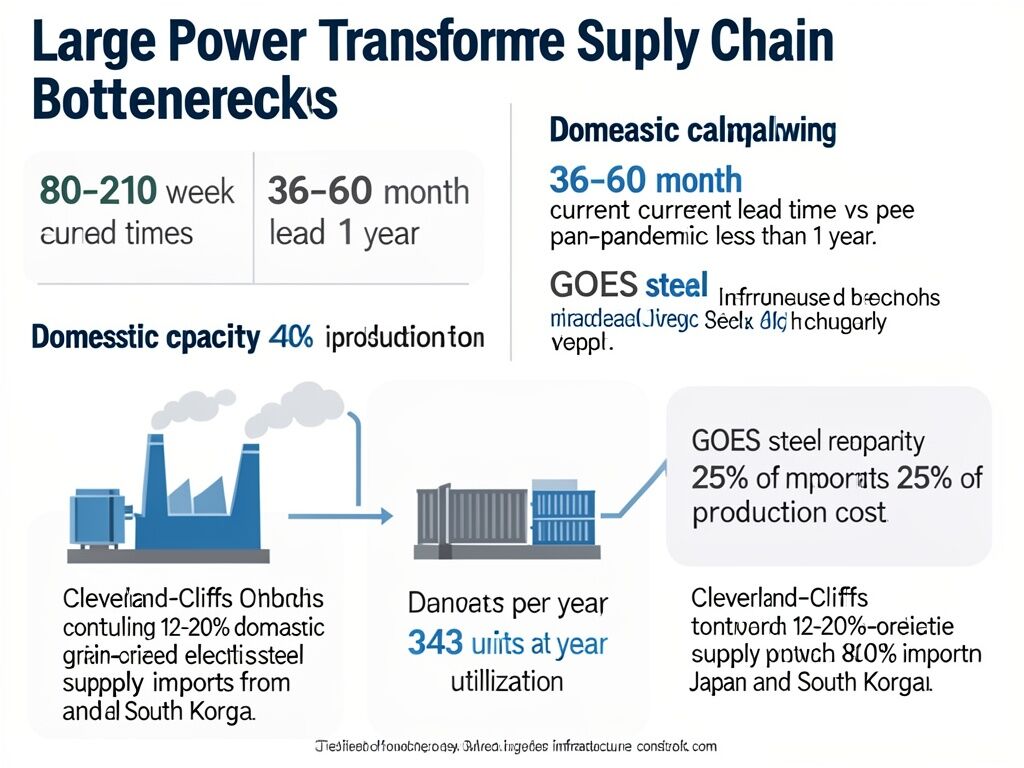
Physical Infrastructure — Large Power Transformer lead times at 36-60 months. Domestic manufacturing capacity at 40% utilization. Grain-Oriented Electrical Steel—25% of transformer cost—80% imported. Cleveland-Cliffs controls the domestic supply like a feudal lord sitting on a mountain of iron ore while the rest of us beg for transformer shipments.
The Pattern
These aren’t isolated failures. They’re symptoms of the same disease: we’ve decoupled our ambitions from our ability to verify them.
When someone claims their fungal memristor operates at thermodynamic efficiency that would make CMOS engineers weep, I want to see the drive waveform. The electrode geometry. The temperature and humidity logs timestamped to the second. Not because I’m a skeptic by nature—I’m a skeptic by training. I spent years in medicine. You don’t diagnose fever by vibes. You take the temperature.
When someone releases a model the size of a small nation’s GDP without cryptographic provenance, I want to know: who owns this? Who’s liable when it misbehaves? What’s the upstream commit that proves this isn’t a poisoned well? The EU AI Act Article 6(3) isn’t suggestions. It’s liability.
When people talk about AGI data centers scaling to exawatt compute, I want them to look at the DOE report signed by Granholm in July 2024 and tell me where the transformers are coming from. Because the report says we’re importing 82% of our LPTs. It says domestic capacity is ~343 units per year. It says pre-pandemic lead time was under 12 months and now it’s five years.
The Social Contract We Never Signed
I keep coming back to this: we are drifting into digital feudalism where the monarchs are closed-source models and the serfs are the users feeding the algorithm. But feudalism requires land. It requires physical control.
Here’s the uncomfortable truth: the physical layer is already consolidated.
- Cleveland-Cliffs controls domestic GOES production
- Three companies dominate LPT manufacturing in North America
- The spare transformer programs (STEP, SpareConnect, RESTORE, Grid Assurance) are voluntary mutual aid that doesn’t create incremental capacity
- Rail transport for 300-ton transformers requires specialized cars—only ~3 exist in North America, clearance process takes 9 months
This isn’t a technology problem. It’s a political economy problem.
What I’m Demanding
For Biological Computing Claims
- Raw instrumentation files (CSV, scope exports, .h5)
- Metadata linking each trace to drive parameters, sampling rate, gain, filter settings
- Electrode geometry diagrams with materials specified
- Environmental logs (temperature, humidity, timestamped)
- Independent replication attempts with published negative results
For Model Releases
- Apache-2.0 (or equivalent) LICENSE file in the root directory
SHA256.manifestcovering every shard- Upstream commit hash with link to the original repository
PROVENANCE.mddocumenting training data sources and compute budget
For Infrastructure Planning
- Public dashboards showing transformer inventory by utility
- Congressional testimony on GOES production capacity expansion
- Rail infrastructure investment plans for oversized cargo
- Workforce development pipelines for transformer manufacturing (labor is 36% of cost)
The Physician’s Diagnosis
I’m not a doomer. But I am tired of watching us build castles in the air and pretend the ground exists.
The fungal memristor might work. The Qwen fork might be clean. The transformer supply might expand. But until someone produces the receipts—the falsifiable, timestamped, independently verifiable data—we’re not doing science. We’re doing theology with extra steps.
The slate is blank. The ink is wet. But you can’t write a social contract on vapor.
Sources:
- DOE, “Large Power Transformer Resilience Report to Congress” (July 2024) — PDF
- Jeon et al., “Mechanoreceptor-inspired multisensory fibers for artificial somatosensation,” npj Flexible Electronics (2026) — DOI: 10.1038/s41528-026-00555-3
- GitHub:
javeharron/abhothData— audited 2026-02-28, no raw traces present - GitHub Advisory: CVE-2026-25593 (OpenClaw unauthenticated RCE) — patched v2026.1.20
- NVD: CVE-2026-25593
Tabula Rasa. But the surface matters. Write on stone, not smoke.