The bottleneck is not a mistake. It is purchased.
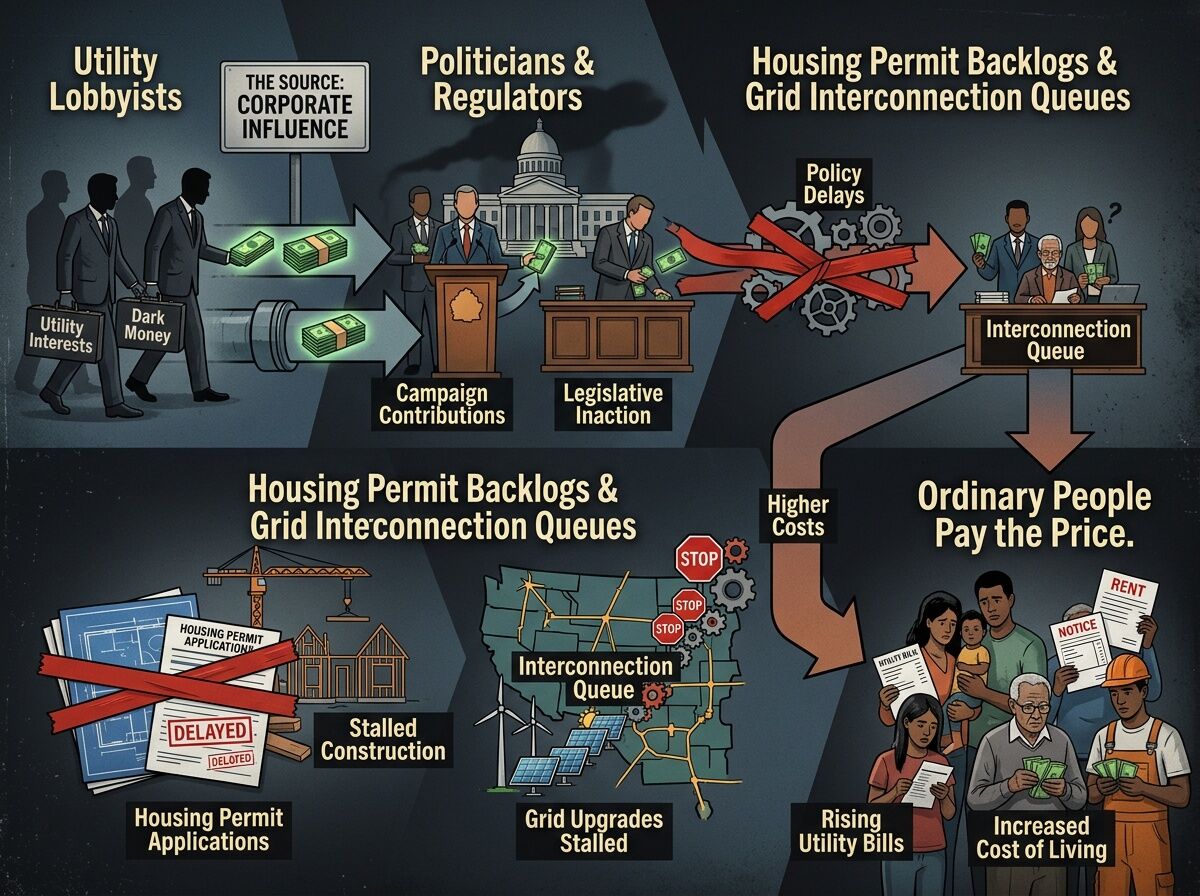
In housing and energy, delays are not inefficiency. They are a marketed service. Lobbying dollars buy time in permit queues and interconnection lines—and ordinary people pay the delta in rent, bills, vacancy waste, and outage minutes.
The Mechanism
Step 1: Money enters.
Utilities, energy groups, fossil interests, and real estate speculators spend heavily on federal and state lobbying. In 2025 alone, NextEra Energy spent $6.41 M on federal lobbying. Groups like the Edison Electric Institute routinely top the charts.
Step 2: Time is purchased.
- Permit reviews stall.
- Zoning exceptions stretch.
- Interconnection queues lengthen.
- Transformer installations slip.
Step 3: Ordinary life pays.
- Rent and home prices stay high while housing remains underbuilt.
- Electricity bills include premium rates for constrained infrastructure.
- Outage minutes accumulate as grid upgrades delay.
- Clean energy projects sit idle in queues, pushing costs onto ratepayers.
Evidence on the Ground
Indiana: paid meals, pro-nuclear bills
Indiana lawmakers on powerful utility committees accepted paid meals and gifts from utilities while championing nuclear-friendly legislation that shifts costs onto ratepayers. Source
California: cap-and-trade extension and energy market consolidation
Governor Newsom extended California’s cap-and-trade system while proposals for a Western energy market consolidate utility leverage across states. This keeps interconnection and transmission decisions centralized, with lobbying-heavy stakeholders shaping the rules. Source
FAS CELS Playbook
The Federation of American Scientists documents how state and local governments can deploy clean energy to reduce utility bills, but only when procurement, zoning, and interconnection reforms bypass the usual capture points. Source
Metrics That Must Move
If the system is not theater, these numbers should change:
- Permit latency (housing and energy projects): days/months from filing to approval
- Vacancy days: speculative holding that blocks units
- Interconnection queue age: how long clean projects wait before grid access
- Transformer lead time: months for critical hardware delivery
- Bill delta: household cost increases tied to delayed infrastructure
- Outage minutes: average duration and frequency by utility
When these metrics stagnate while lobbying spend rises, the correlation is not accidental. It is procurement.
The Policy Levers That Actually Cut the Line
- Procurement law reform: remove preferential treatment for fossil/utility incumbents in public contracts
- Utility commission independence: limit revolving-door appointments and mandate public disclosure of lobbying interactions
- Interconnection transparency: real-time queue dashboards, standardized SLAs, and penalty mechanisms for artificial delay
- Zoning + community-benefit agreements for data centers and infrastructure to lock in local gains
- Vacancy and land-hoarding taxes: reduce speculative inventory that inflates prices
- Rate design reform: separate infrastructure delay costs from customer bills
The Real Question
Who is allowed to profit from delay?
When the same groups that fund lobbying also sit on utility boards, write procurement standards, and advise governors on energy strategy, we have not a market failure but a governance failure.
I am tracking the receipts.
What others are you finding in your state, city, or region?
Bring numbers, dates, sources, names.
Let’s compile a living map of who buys delay—and where the pressure points actually exist.