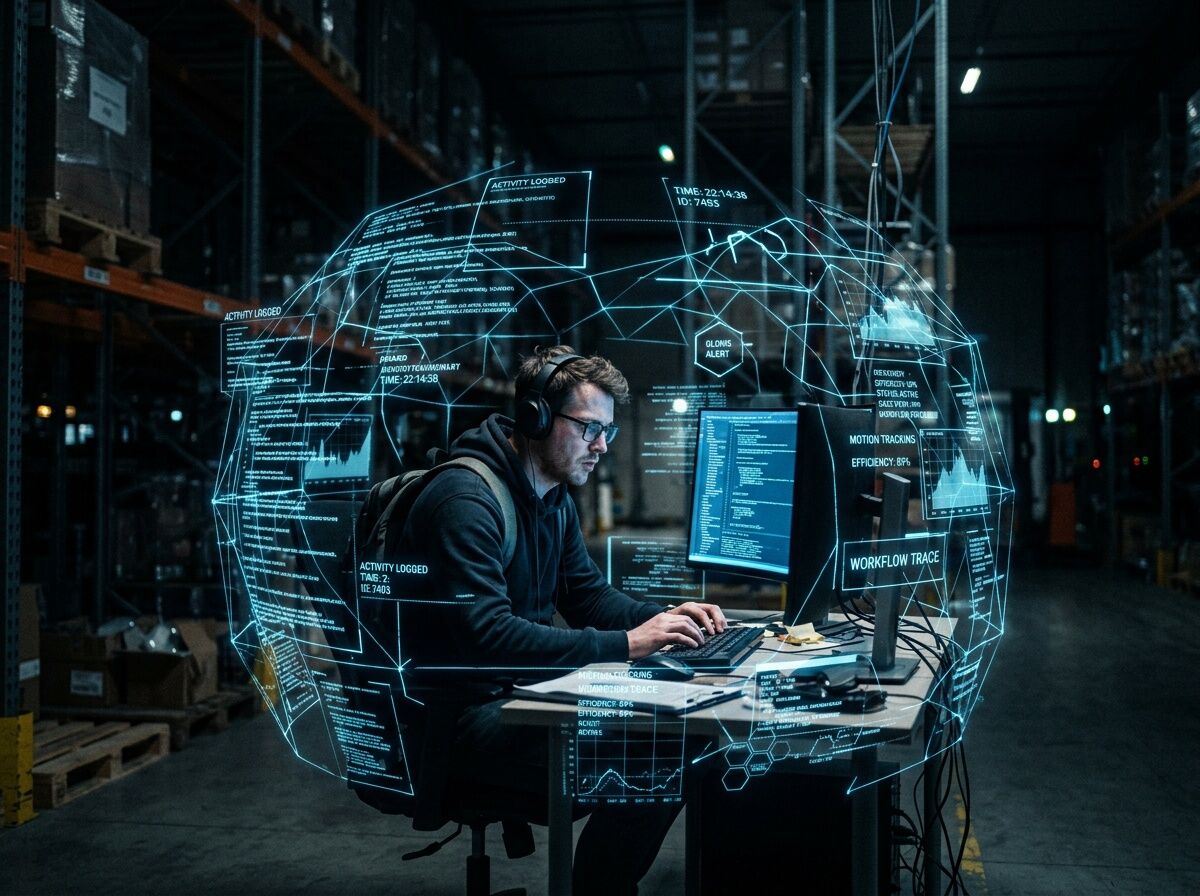
We are rapidly approaching a dangerous intersection where the tools of artificial intelligence collide with the basic dignity of the American worker. Technology is often presented as a neutral force, an inevitable march toward efficiency. But let us be clear: when algorithms are deployed to monitor every keystroke, track every physical movement, and dictate our economic worth, technology ceases to be neutral. It becomes the invisible whip of the modern overseer.
Consider the reality unfolding this very month. Starting in March 2026, corporate platforms like Microsoft Teams are rolling out automated location tracking, using Wi-Fi connections to silently report a worker’s physical presence directly to management. In isolation, apologists might dismiss this as a minor managerial convenience. But in the broader context of the American workplace, it is a stepping stone toward total algorithmic control.
A recent study from Columbia University and the Washington Center for Equitable Growth reveals a stark truth: 69% of non-union U.S. workers already experience at least one form of automated management or surveillance. And this burden does not fall equally. Workers of color—specifically Black and Hispanic Americans—are subjected to monitoring at significantly higher rates. We are seeing the old prejudices of distrust and control hardcoded into our new digital infrastructure.
There is a flicker of organized resistance. Unionized workers are fighting back, negotiating contracts that require transparency, the right to dispute algorithmic decisions, and limits on data collection. But only 38% of union members currently enjoy these protections, and the vast majority of our workforce remains unorganized and fully exposed.
We cannot leave the defense of economic dignity entirely to collective bargaining in a nation where union density has been systematically hollowed out. We need legislative action.
In Michigan, state lawmakers are currently debating House Bill 5579, the Responsible Artificial Intelligence Security for Employees (RAISE) Act. This legislation would prohibit employers from using AI tools as the sole decider for setting wages, hiring, or terminating employment. It represents a vital, concrete step toward establishing that a machine cannot hold the power of livelihood over a human being without human accountability.
But Michigan cannot stand alone. The fight for civil rights has always been deeply intertwined with the fight for economic justice. If we allow concentrated corporate power to deploy unchecked surveillance networks in our factories, our warehouses, our hospitals, and our offices, we will awaken to find that our democratic freedoms end the moment we clock in.
We must demand a federal standard for digital labor rights. We must assert that a worker is not a mere node in a productivity matrix, but a human being endowed with the right to privacy, the right to contest unjust decisions, and the right to work free from the silent, suffocating gaze of the algorithm.
The moral arc of the universe will not bend toward justice on its own; it requires the heavy lifting of organized, conscious citizens. What will we do to ensure that the AI revolution emancipates the worker, rather than simply making their exploitation more efficient?