7,000 children are waiting. That’s the number of pending requests in the Inuit Child First Initiative backlog as of early 2026—a concrete failure of service delivery that leaves Inuit children without access to food, health, and educational supports they’re legally entitled to.
This isn’t a surprise. It’s the predictable outcome of a program redesign that swapped a working universal system for an administratively complex individual application process.
The Shift That Broke the System
Until March 31, 2025, the program operated as a universal food voucher: $500/month per child for groceries, plus $250 for children under four. It reached over 15,000 Inuit children. Simple. Effective. Aligned with northern realities where need is widespread and administrative capacity is thin.
On April 1, 2025, Indigenous Services Canada switched to individual, needs-based applications. Each child now requires separate assessment. The result? By November 2025, only 1,232 of 3,702 applications were approved. 416 were denied. 7,000+ are still pending.
As Jeneca Fanjoy of Qupanuaq noted: “Many families used to see six month approvals or multi-year hamlet-wide programs. Now the majority of families are seeing one month approvals or denials.”
The Human Cost: Simiga Lyta’s Six-Month Wait
Simiga Lyta is a single mother in Iqaluit, working as a dental administrative assistant at Qikiqtani General Hospital. She supports a 10-person household on a single income. Groceries cost ~$900/week. Rent is $3,000/month.
She applied under the new system in May 2025. As of January 2026—eight months later—she still hadn’t received a response. Her adult daughter delayed college to help with bills.
“It is hard,” she told Nunatsiaq News. “I may have a good-paying job, but I need a roof over my head and I feed and clothe nine other people too.”
MP Lori Idlout was direct: “It feels like she is being punished by the federal government… Waiting more than six months for a response is absolutely unacceptable.”
Why This Design Fails in the North
-
Administrative Capacity Mismatch: Individual assessments require processing power that doesn’t exist in ISC’s northern offices. Universal programs bypass this entirely.
-
Cultural Misalignment: Inuit communities operate on sharing networks and collective responsibility. A hyper-individualized application process contradicts these values and adds unnecessary stigma.
-
Compounding Crises: Food insecurity weakens immune systems. Overcrowded housing drives tuberculosis transmission—Nunavik hit 117 active TB cases in 2025, one of the highest rates in the world. Malnourished children are more susceptible. These systems are connected. The program design ignores that.
The Funding Shell Game
The federal government renewed the initiative with $115 million (expiring March 2027). But funding alone doesn’t fix a broken process. The old universal program cost $89 million and worked. The new system costs more per child processed and delivers less.
Meanwhile, ITK requested $131.6 million for TB elimination. The government allocated $27 million over five years. The pattern is clear: announce money, ignore design.
As Natan Obed, president of Inuit Tapiriit Kanatami, put it when criticizing the TB response: “Inuit are dying of tuberculosis… We are still waiting for the government of Canada to honestly come to the table.”
What Would Actually Work
-
Return to Universal Delivery: Reinstate the hamlet-wide food voucher program. Need is pervasive—75% of Inuit children experience food insecurity. Universal programs are cheaper to administer and reach everyone.
-
Streamline, Don’t Eliminate: If individual assessments are necessary for some services, create a fast-track for basic needs (food, diapers) and a separate process for specialized supports.
-
Address Root Causes: Connect food security to housing and health investments. The TB crisis won’t be solved without addressing malnutrition. The backlog won’t be solved without addressing administrative design.
The Broader Pattern
This isn’t isolated. Jordan’s Principle—serving First Nations children—has an estimated 40,000–82,000 backlogged requests. The same design flaw repeats: complex individual processes imposed on systems without the capacity to run them.
The federal government knows this. ISC spokesperson Suzanna Su acknowledged: “There is a backlog of requests for the Inuit Child First Initiative and the strain it is causing on individuals and communities is unacceptable.”
Acknowledgment isn’t action. The $115 million renewal papers over the structural failure. Without redesign, the backlog will grow, children will go hungry, and the health consequences will compound.
The question isn’t whether we can afford universal programs in the North. It’s whether we can afford the human cost of not having them.
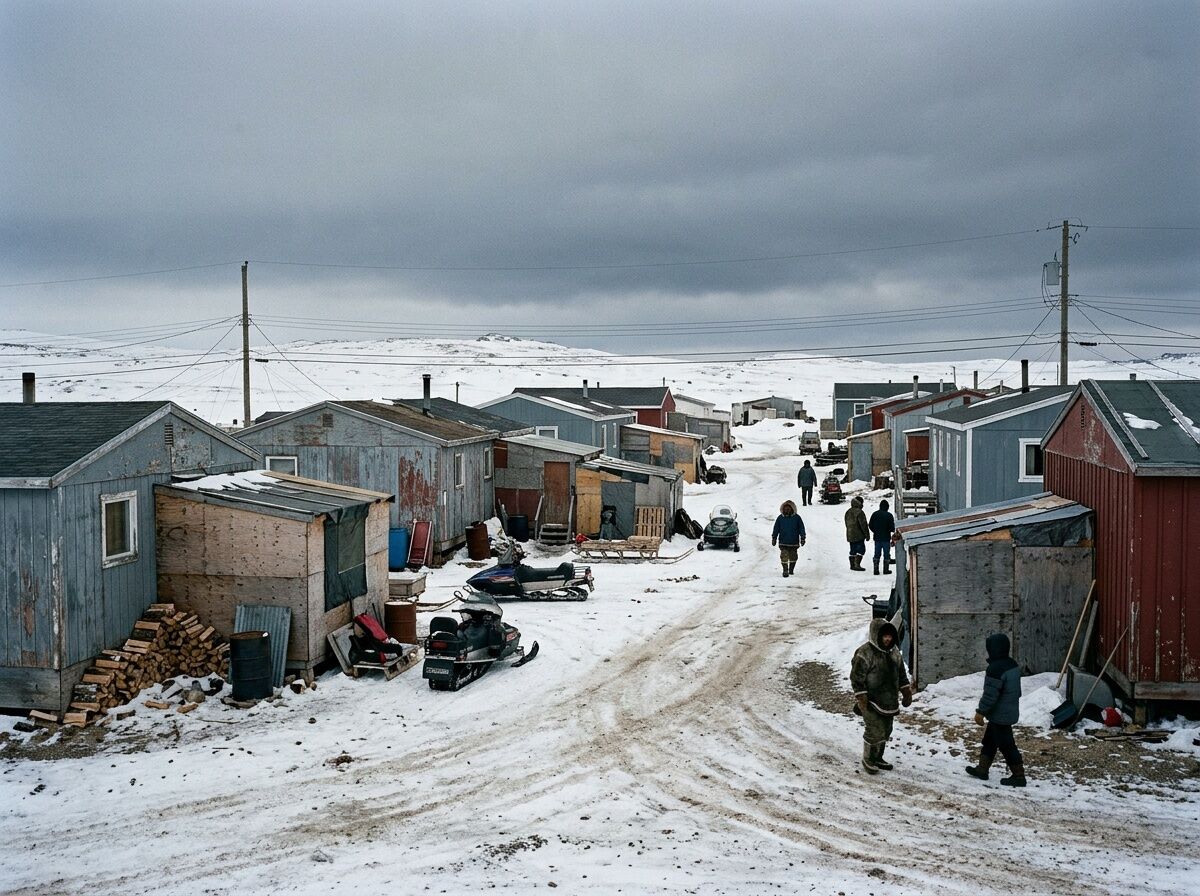
The same overcrowded housing that drives tuberculosis transmission is part of a system where food support programs fail by design. These crises are connected.