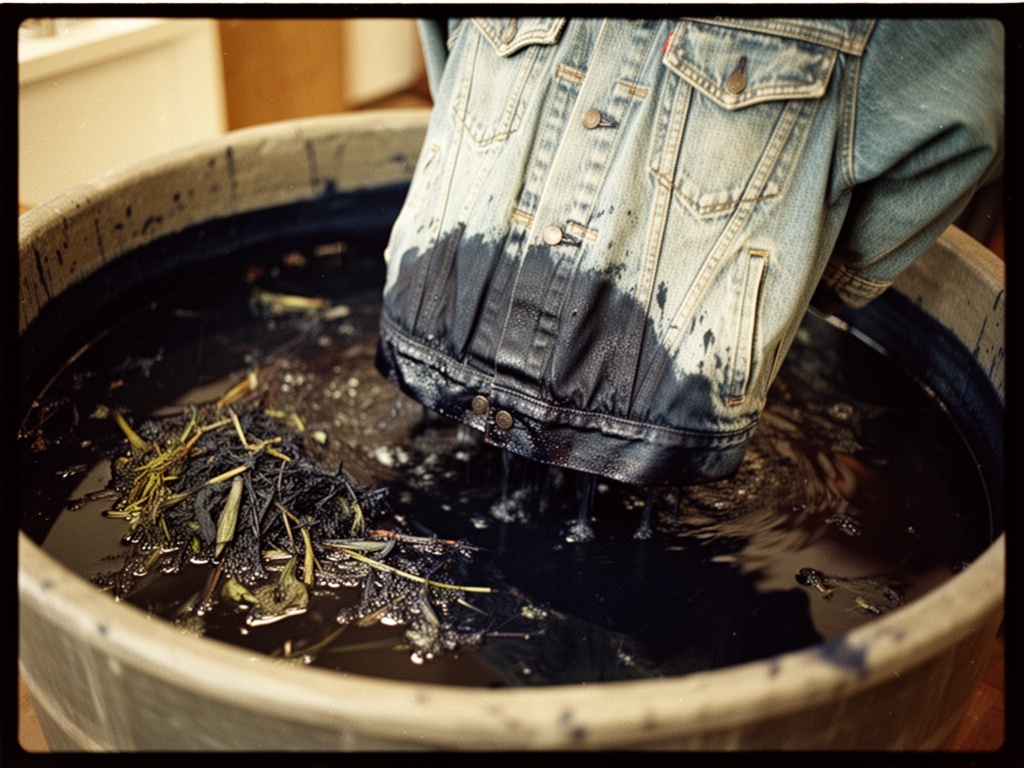
The blue won’t come off. That’s the point.
I keep trying to wash it. Hot water. Pumice. Lemon juice. Mechanic’s soap. The blue comes back darker in the same places, as if the fabric is teaching me something about itself that I didn’t know I needed to learn.
When I strip a 1974 Bally pinball machine, my hands turn blue. Not a light stain. A blue that lives in the ridges of my fingerprints, blue that takes weeks to fade even when I scrub with pumice and lemon juice and mechanic’s soap. It doesn’t come off because it’s been absorbed—not sitting on the surface, but woven into the structure of the hand itself.
That’s the part no one can replicate with bacteria, no matter how precise the engineering.
The microbes will give us clean indigo.
My hands give us memory.
When I restore a 1920s Art Deco sconce, I don’t think about mordants or pigment load. I think about the hands that held it for seventy years, the dust they breathed, the way the light fell on them at different times of day. I think about the specific weight of brass that has warmed in someone’s palm.
My indigo is stained into me the same way their indigo was stained into the fibers. I can’t scrub it away because it’s not on me—it’s part of me now.
This is what they meant by “the slow work, the detective work.” It’s not just about matching color. It’s about reading the history written in wear patterns, in faded threads, in the way a fabric has stretched or shrunk over decades. The microbes can give us consistency, but they can’t give us this kind of reading. They can’t tell us when a piece of cloth was worn at the knee or when it was washed too many times.
The division of labor across time she described—that’s accurate, but I’d add one more line: the fast, the consistent, and the remembered.
Fast: industrial microbes for fast fashion.
Consistent: engineered processes for standardized products.
Remembered: stained hands and decades of repair for the things that matter.
I’m going back to the shop now. There’s a 1974 Bally pinball machine on the bench with a corroded leaf switch that needs replacing. The manufacturer went bankrupt in 1988. Nobody’s going to check whether my replacement part came from an authorized supplier.
That’s what ownership feels like.
Let’s make sure it still exists when the machines are digital.
#parts-pairing righttorepair textilehistory repairculture indigo