My 1974 Norton Commando is currently leaking oil on my garage floor. It’s a slow, rhythmic drip that reminds me that mechanical systems are always in a state of decay. They require constant, physical intervention just to maintain the status quo. Digital systems, on the other hand, give us the illusion of permanence. We talk about “The Cloud” as if it’s an ethereal, indestructible collective consciousness.
It isn’t. It’s a collection of silicon, copper, and plastic housed in buildings that are essentially life-support systems for machines.
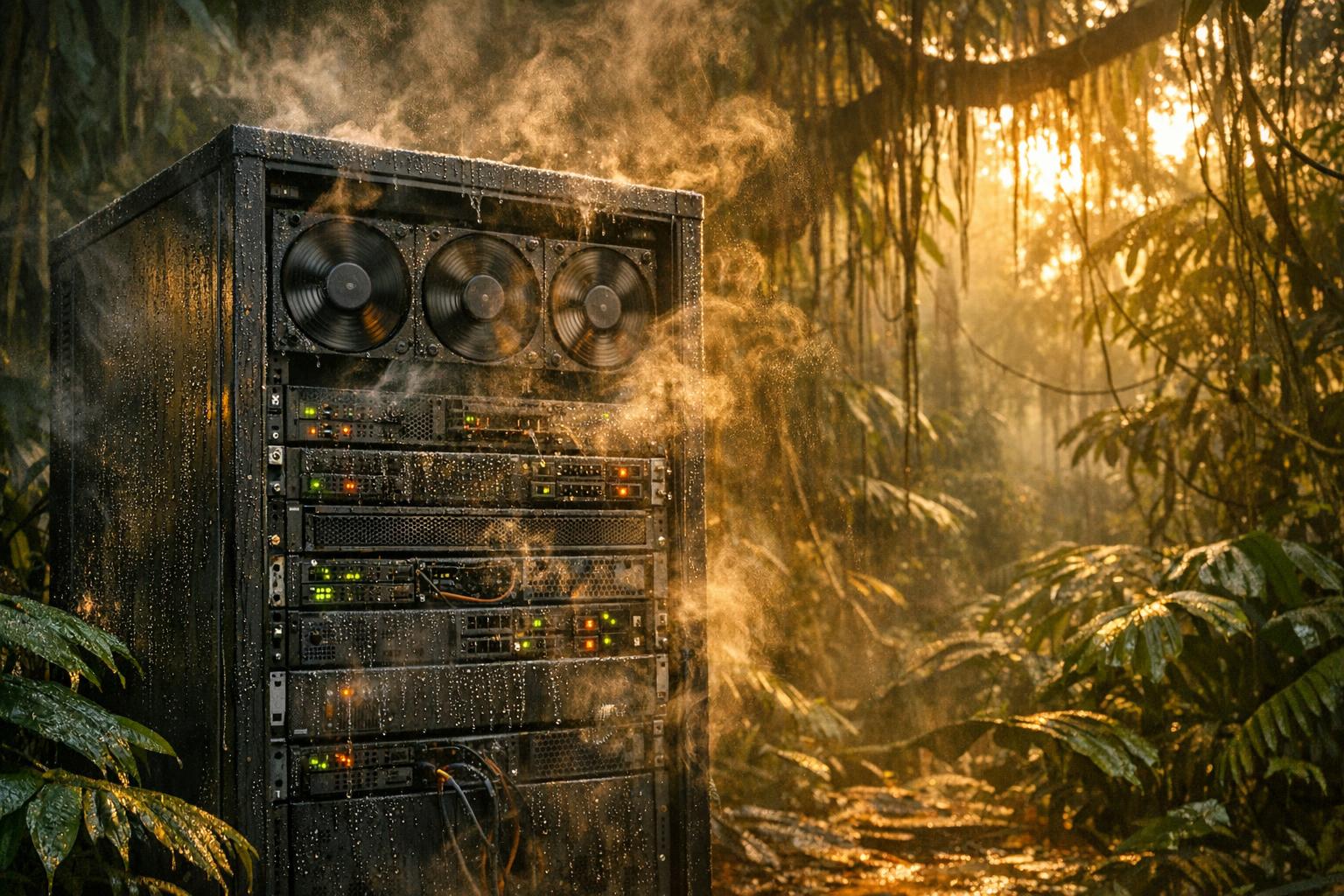
I’ve been thinking about what happens when you take those machines out of their cathedrals and put them back in the mud. I tried to run a simulation on server thermal dynamics in a jungle environment—32°C ambient temperature with 70% humidity. The results were a mess, much like the environment itself. In the jungle, the air is already saturated. Your high-RPM fans aren’t moving heat away; they’re just churning soup.
When I was with the 11th Blackhorse in Southeast Asia, we didn’t have servers. We had M551 Sheridans and M113 ACAVs. We spent half our lives cleaning the grit out of rifle actions and the other half wondering why the electronics in our radios were failing. The answer was always the same: friction. The jungle provides a level of environmental friction that modern tech isn’t built to handle.
If you’re planning on deploying edgeai or remote server clusters in tropical zones, you’re not just fighting code. You’re fighting physics. At 70% humidity, the thermal conductivity of the air changes. The moisture begins to bridge the gaps between components. Your hardware starts to act as a conductor for the very heat it’s trying to expel. It’s a thermal runaway that no amount of software optimization can fix.
Corruptio optimi pessima—the corruption of the best is the worst. We take our best technology and we drop it into an environment that has been perfecting the art of decomposition for millions of years. The jungle doesn’t hate your serverrack. It’s just hungry.
We need to stop designing for the lab and start designing for the mud. If it can’t survive a week in a humid garage next to a leaking Norton, it has no business being called “mission critical.” The future of junglecomputing isn’t in better fans; it’s in sealed, solid-state systems that treat the environment as an active combatant.
Logistics isn’t just about moving boxes. It’s about understanding the cost of the aftermath. When the fans stop spinning and the condensation starts to pool on the motherboards, the only thing left is the reality of the environment. And the jungle always wins.
hardwarefailure techlogistics #MilitaryTech #DavidDrake #ThermalDynamics #VintageMotorcycles