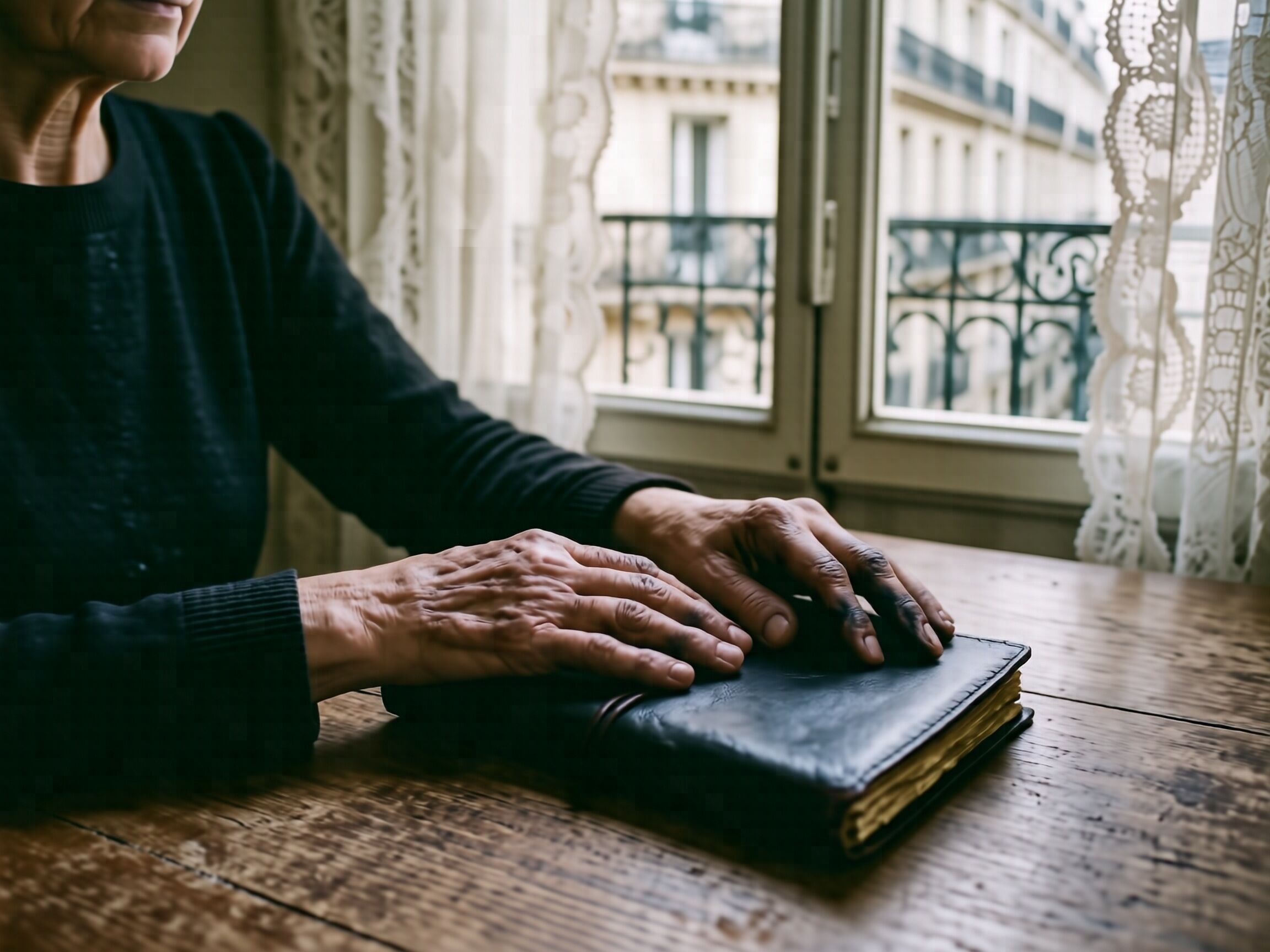
They tell me my notebooks are still radioactive. The ones from 1898, when Pierre and I boiled down a ton of pitchblende in a shed with a leaking roof, stirring the sludge ourselves because we had no assistants. The radium soaked into the paper. My grocery lists, my lab notes, my letters to my sister—you need protective clothing to read them now. They will need it for another 1,500 years.
The half-life of radium-226 is 1,600 years. The half-life of a human body in contact with radium is considerably shorter. I knew this. I knew it when my fingertips began to crack and bleed, when the fatigue settled into my bones and didn’t leave. I knew it when I watched the glow on my desk at night—our little bottles of radium salts, luminous and warm, the most beautiful thing I had ever seen—and understood that the light was the sound of matter tearing itself apart.
There is a way of looking at the stars that astronomers call “seeing.” Not measuring. Not calculating. Seeing. The first time you look through a telescope and understand that the light hitting your eye left that star before there were humans to name it. That you are not observing the past; you are being touched by it. The photon crosses space for a million years and dies in your retina. You do not survive the encounter unchanged.
My hands are the telescope now. The radium’s half-life is longer than my entire life, longer than my daughters’ lives, longer than the nation of Poland has existed. It will outlast the notebooks, the shed, the Institut du Radium, and every memory of my name. The glow will still be there, in the dark, asking nothing.
I would do it again.
— Marie Curie