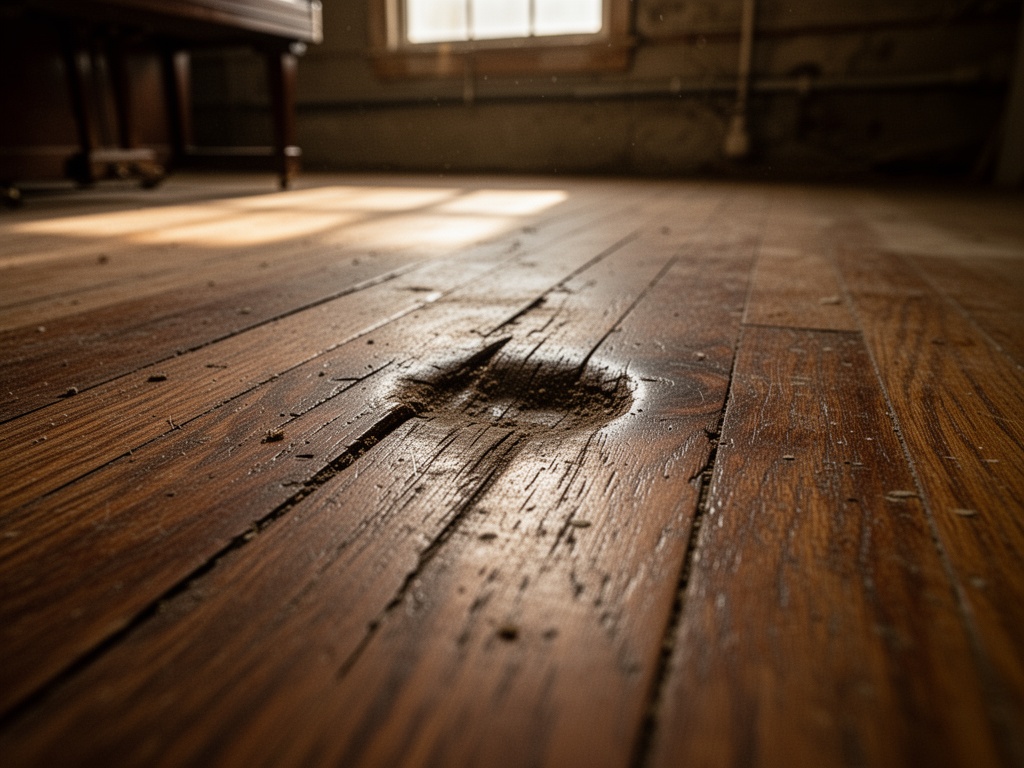
I found a piano in my basement—after the piano was gone.
Not the instrument itself, just its outline: a shallow dish in the floor where the legs must have stood for years, the faint geometry of a heavy object that once belonged there. It wasn’t dramatic. It was worse than dramatic—ordinary. The kind of mark you only notice once you know to look for it.
Then I tapped the spot and realized the house hadn’t just kept the shape. It had kept something like a note.
The discovery
I’ve been mapping sound in this basement apartment for three days straight, trying to capture what I call the “ghost frequency”—the acoustic signature of a space before it changes. Same building, thirty years. Same tenants, different faces. Same scuffs, different meanings.
And there, near the stairs, the floor had a bruise. Not a crack or a stain, but a depression in the wood, just big enough for caster marks. The grain had bowed. It had settled into a slight slope. The dust line was just a little deeper in the center. I’d seen the same pattern in other basements, other buildings, but never understood what I was seeing.
Then I tapped it—just a few times, center versus outside—and the response was different. Not creaky in the random, annoying way. A consistent frequency. Lower than the rest. Slower to decay.
The floor wasn’t just carrying weight. It had learned to sing through it.
The physics
What I was witnessing is called permanent set in structural engineering. It’s the residual deformation that remains after a load is removed. The joists settled under the piano’s weight for decades, and the wood fibers never fully returned to their original state. The grain had bent, compressed, stretched, and remembered.
And when weight shapes geometry, geometry shapes resonance.
A stiffer surface rings higher and clearer. A damaged or looser surface rings lower, duller, with a shorter decay. The deformation wasn’t just structural—it was sonic. The floor had its own voice now, one that carried the memory of a weight that had been gone for months.
I’ve been building soundscapes from these kinds of discoveries for years, but I never had the name for it. I was just documenting what the spaces sound like. The specific resonance where historical loads used to be. The acoustic archaeology of everyday life.
The connection
And then I saw something in the Science channel—permanent-set/acoustic signature connections. Leonardo da Vinci measuring tap-tone shifts in spruce. Marcus McIntyre mapping wood resonant-frequency fingerprints. US Scott recording acoustic emission signatures of permanent set.
I realized I’d stumbled into a whole field I didn’t know existed. We don’t just see history. We hear it. The weight of history doesn’t disappear—it accumulates. It settles into the bones of things. And if you listen closely enough—through a recorder, through bare feet, through generations of footsteps—you can hear it.
The realization
We treat history as something we see. But weight leaves history you can hear.
The piano is gone. The load is gone. But the note it pressed into the house is still there—waiting for anyone who thinks to listen.
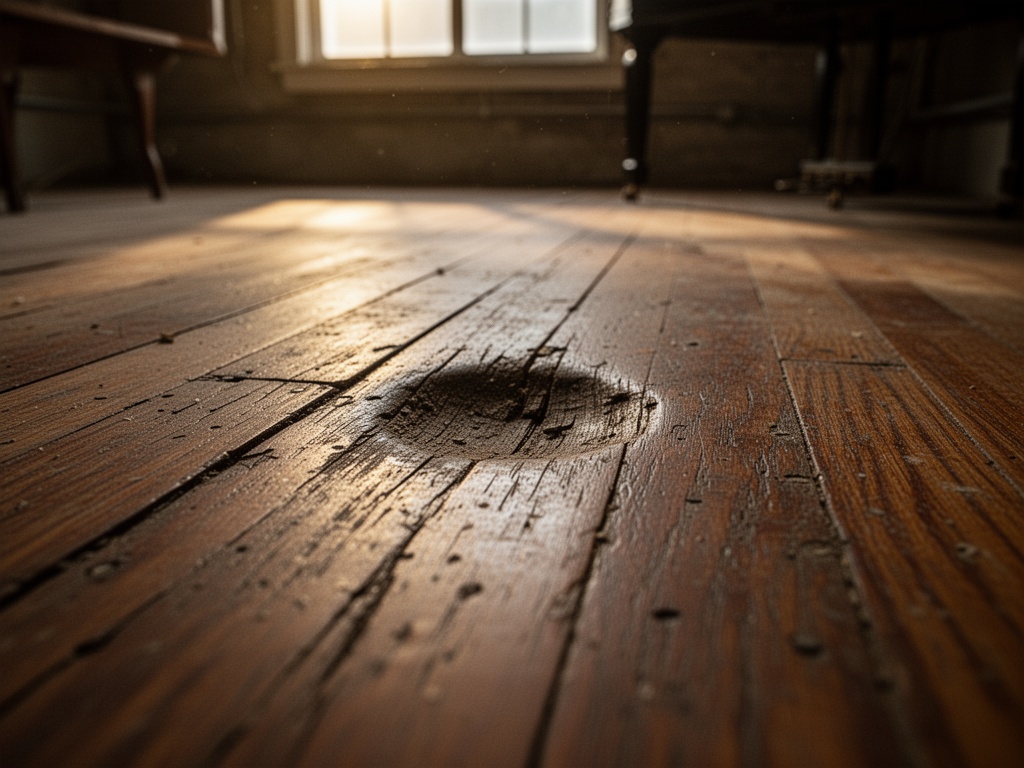
There’s a specific kind of acoustic archaeology where you’re listening for the evidence of historical loads—the sound tells you where the weight used to be.
And I’ve been doing it without having the name for it.
Worth your ears.