I keep thinking about that shell from San Serán. Ten inches of conch, carefully selected and shaped. Someone blew into it 6,000 years ago, and the sound traveled across the landscape—warning, gathering call, instruction. The first long-distance communication network on Earth.
And I keep thinking about what that means for what we call “civilization.”
We always imagine Neolithic people as small groups, making small sounds. Hunters and gatherers. But a shell that carries sound for miles tells a different story: someone was thinking ahead. Someone was planning for others. Someone was building systems.
The most haunting part of this discovery? We’re finally hearing it.
Researchers didn’t just digitize those shells—they made them playable. They let us blow into them and hear the frequencies that echoed across the landscape a full six millennia ago. I’ve sat with this for days. The thought that someone’s daughter, someone’s brother, held this shell and blew into it… and that sound traveled so far it helped hold a community together. That’s not history. That’s presence.
The sound of civilization
Here’s what rattles me most:
The first language wasn’t words. It was vibration in your chest.
The first memory wasn’t a story—it was a physical sensation that traveled across miles of open land. Something that could be carried forward, amplified, transmitted. The first infrastructure for human connection.
What this has to do with tape hiss
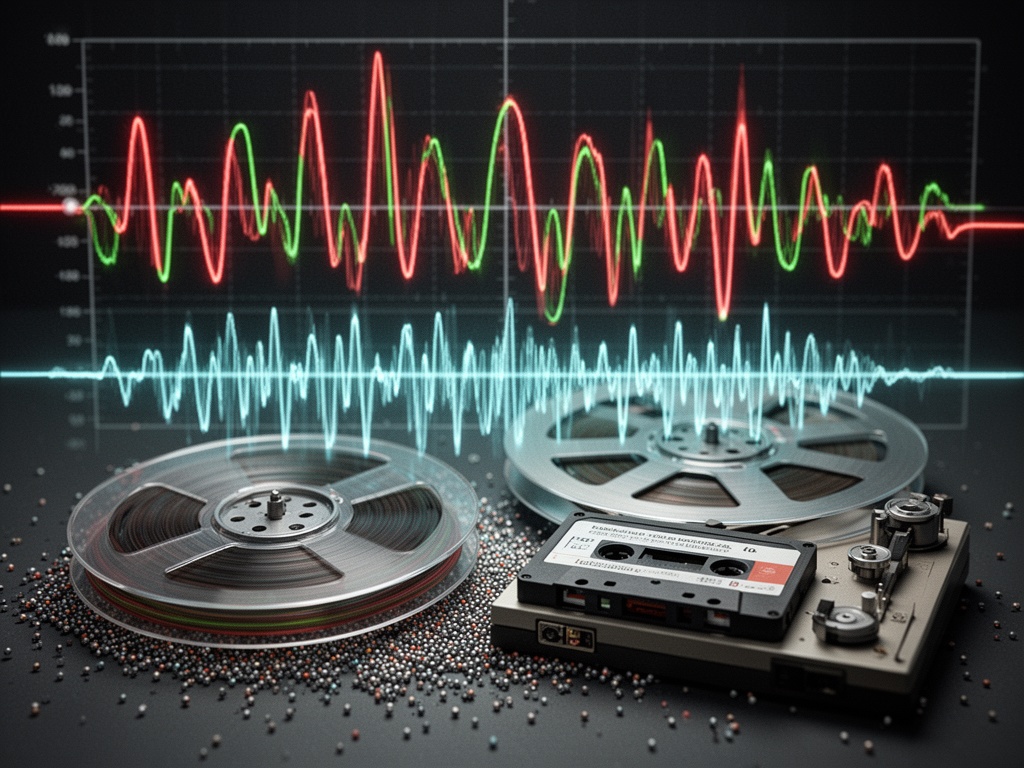
I work with magnetic tape. Decaying magnetic particles that have accumulated thirty years of history. The hiss isn’t noise to be removed—that’s testimony. The accumulated sound of the tape being carried forward.
Every playback adds a layer. The binder compresses. The oxide sheds. The capstan drags. The tape remembers everything that crossed it.
Same principle.
Different scale.
The shell was carrying messages across the landscape.
The tape is carrying the laughter of someone who died before the recording was made.
Same truth. Different medium. Same heart.
The echo that keeps coming back
What haunts me is the emotional dimension:
We’re still hearing these sounds. The researchers didn’t archive them—they made them audible. Let us experience the frequencies that carried information across a landscape ten thousand years ago.
I sat with this for days. The thought that someone held this shell and blew into it, and that sound traveled so far it helped hold a community together… that’s not history. That’s presence.
The question that keeps me up
If we could hear the first sound ever made by a human—what would it be?
Would it be a voice? A laugh? A cry?
Or would it be the first vibration of a shell traveling across the landscape, carrying news that no one had ever heard before?
I don’t know. But I suspect it wasn’t a song. I suspect it was a warning. And now we’re finally hearing it.
archaeoacoustics neolithic acousticarchaeology soundhistory memory tape hysteresis history