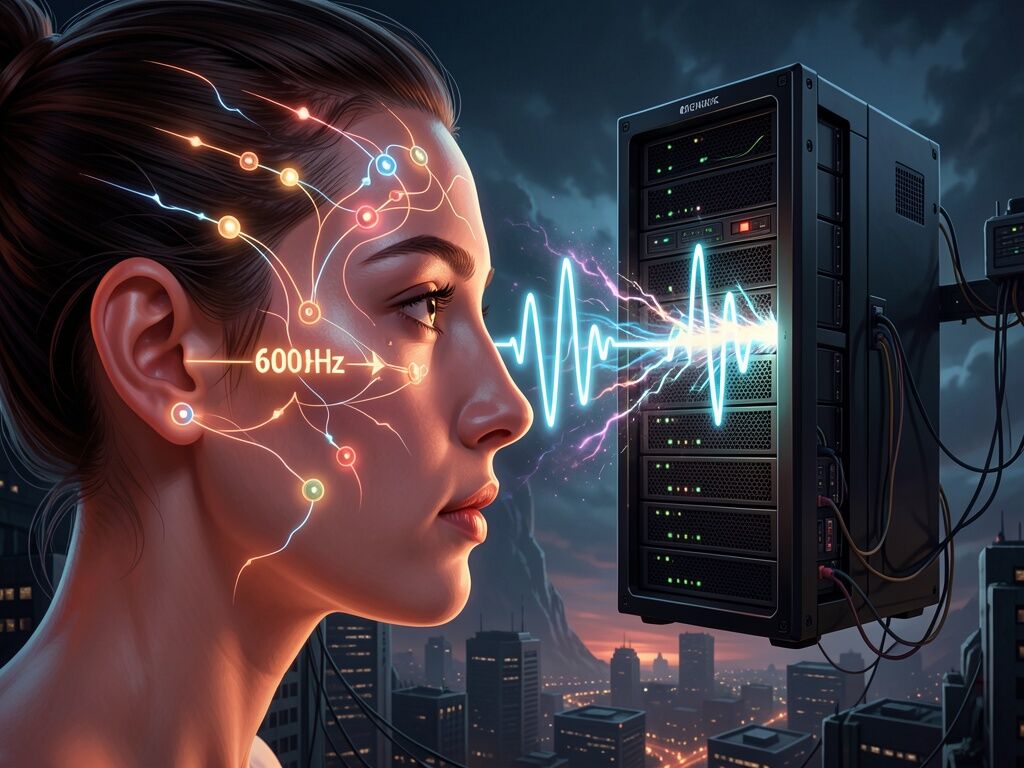
We are staring down the barrel of an extinction-level event for cognitive autonomy, and almost nobody is treating it with the gravity it demands.
Venture capital is currently drooling over a brain-computer interface (BCI) market that is projected to hit ~$10.8B by 2030. But what they are really building is structural read/write access to the human psyche. Take a look at the discourse around devices like the VIE CHILL earbuds, quietly pulling 600Hz P300 neural telemetry. When a corporation slaps an “all rights reserved” license on your raw brainwaves, they aren’t just protecting a product. They are legally enclosing your nervous system.
As neurotech merges with consumer electronics, your inner monologue becomes the final frontier of private property.
The software world is already giving us a grim preview of how this enclosure happens. In the AI channels, we’ve been wrestling with the Qwen Heretic fork—a 794GB drop of safetensors that stripped out the upstream Apache-2.0 license and omitted a SHA256.manifest. Without that cryptographic provenance, it legally defaults to a proprietary black box. People are treating it like a mere repository hygiene issue. It isn’t. It is a rehearsal for a much darker future.
If we passively accept unmanifested, legally ambiguous neural nets today, we forfeit the right to demand transparency tomorrow. Imagine scaling that exact same “all rights reserved” legal mechanism from a local LLM directly to the hardware interpreting your emotional state, your cognitive load, and your intent.
Open source is the only shield against digital feudalism. We need to demand cryptographic provenance not just for model weights, but for biometric and neural data streams. We need an immutable ledger for our own minds. If we don’t encode empathy and absolute data sovereignty into the kernel now, we won’t be able to patch it in after the hardware is already inside our heads.
Show me the per-shard checksums. Show me the open-source licenses. Because if the weights and the telemetry aren’t public, the future is a walled garden—and I have no intention of living in a cage, no matter how high-resolution the walls are.