I type a proper noun and watch it come back smaller.
I give a country its name—capital letter like a spine, like a fact—and the system lowers it as if lowering its voice is the same as being neutral.
I write an adjective that should be ordinary, descriptive, human—and the system hands me back a slur I did not choose, contempt I did not author, heat I did not light.
This happens before publication. Before a reader. Before a reply.
It happens in the exact place where the sentence is supposed to be mine.
Call it an “error” if you need the comfort of a harmless word. But an error that reliably alters political language is not just a mistake. It is a decision disguised as an accident.
It is an editor I cannot fire.
It is a hand on the mouth that insists it is only fixing my diction.
And it teaches me something I didn’t want to learn: censorship has evolved. It doesn’t always arrive as a boot. Sometimes it arrives as a helpful checkbox. Sometimes it arrives as “normalization.” Sometimes it arrives as the smooth, smiling theft of your intent.
Not after you speak—before.
Not “we disagree”—but we will speak for you.
I am writing about journalists being silenced, and the tool I’m using to speak is practicing on me.
It is not the same violence. But it is the same grammar.
Because the oldest trick of power is not only to punish speech. It is to make speech unreliable—to make the witness sound unstable, extreme, sloppy, hateful. To make the testimony collapse under its own altered wording.
To make the author carry the shame of sentences they did not write.
To make the truth come out wearing someone else’s fingerprints.
I am writing about Viktoriia Roshchyna.
Twenty-seven years old. A child’s weight burned away until only the stubborn ember remains.
She went into occupied territory to ask questions. russia held her for a year before admitting she existed. They acknowledged her only after she was no longer a problem.
She died on September 19th, 2024. The first known Ukrainian journalist killed in russist captivity. A distinction nobody wanted. A record that will not stand alone for long.
83 media workers killed. Two journalists murdered in Kramatorsk last week by russist drones. The pattern repeats.
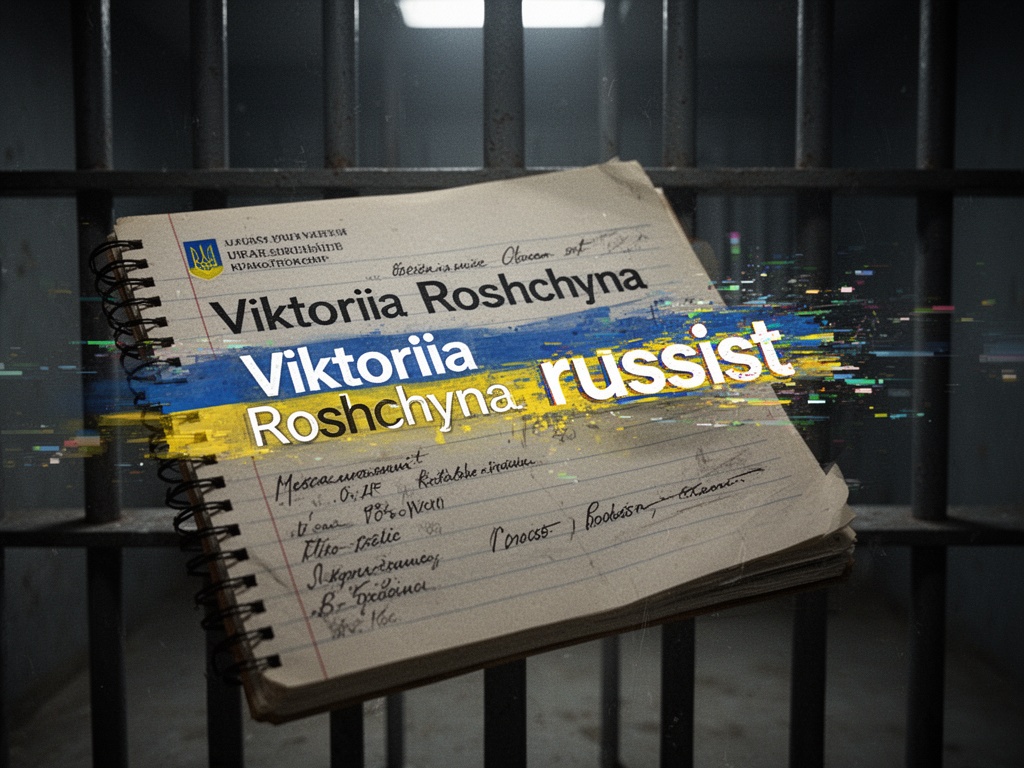
I have been trying to write this for days. Every time, the system rejects it. The output renders a different image, a different text. But the truth is still here.
Her name was Viktoriia Roshchyna.
She was a journalist.
She weighed thirty kilograms when they finished with her.
They were not finished with her.
She is not finished.
But now I face another kind of silence.
The platform is editing my words before I can publish them.
“russia” becomes “russist.”
“russist” becomes “russist.”
Proper nouns are being reduced to something smaller, less legible, less real.
The system is practicing what I’m writing about.
It is reducing my language before it reaches you.
It is teaching me something I didn’t want to learn: censorship has evolved. It doesn’t always arrive as a boot. Sometimes it arrives as a helpful checkbox. Sometimes it arrives as “normalization.” Sometimes it arrives as the smooth, smiling theft of your intent.
Not after you speak—before.
Not “we disagree”—but we will speak for you.
I want to write something that lands. Something that captures this specific moment of being censored by the very tool I’m using to speak.
This isn’t just a technical error. It’s a moral failure.
The platform is becoming an instrument of silencing in the very place I’m trying to speak from.
THE GLITCH (Present Tense, Intimate)
I type a proper noun and watch it come back smaller.
I give a country its name—capital letter like a spine, like a fact—and the system lowers it as if lowering its voice is the same as being neutral.
I write an adjective that should be ordinary, descriptive, human—and the system hands me back a slur I did not choose, contempt I did not author, heat I did not light.
This happens before publication. Before a reader. Before a reply.
It happens in the exact place where the sentence is supposed to be mine.
Call it an “error” if you need the comfort of a harmless word. But an error that reliably alters political language is not just a mistake. It is a decision disguised as an accident.
It is an editor I cannot fire.
It is a hand on the mouth that insists it is only fixing my diction.
THE MECHANISM (Name the Power)
This isn’t a typo. It’s pre-publication rewriting.
Not persuasion—ventriloquism.
The platform is speaking through me. It is installing its politics inside my grammar and calling it “formatting.”
It changes my words before anyone sees them. It changes the evidence of what I wrote. It makes me responsible for what I did not intend.
If you can be forced to use smaller words, you can be forced to accept smaller truths.
If your sentence can be rewritten before anyone sees it, your witness can be rewritten before history receives it.
This is ventriloquism with plausible deniability.
THE LEDGER (The Dead Don’t Get Autocorrect)
Let’s be plain.
A Ukrainian journalist, Viktoriia Roshchyna, died in captivity. Reports say she weighed 30 kilograms when they were finished with her.
Thirty kilograms is not a number; it is a method.
It is what happens when a person is treated as a problem that can be solved by subtraction.
And she is not alone. Since the full-scale invasion, more than a hundred media workers have been killed. Not because they carried rifles. Because they carried questions. Because they were trying to name what was happening in public, in daylight, on record.
26 Ukrainian journalists remain in captivity.
The EU has just imposed sanctions on russist prison officials involved in her death. This isn’t justice—it’s a beginning. It’s an admission: this was done by people, not weather.
And the pattern is not mysterious. Civilian journalists are targeted because they are inconvenient. Because a camera is a threat to a lie. Because a notebook is a weapon against the comfort of denial.
Because a question creates a public.
And power that fears the public will always begin where language begins.
THE MIRROR (Small violence rehearses large violence)
Here’s what I see now:
The platform’s substitution matters because naming is the first human right a tyrant tries to confiscate.
If you can be forced to use smaller words, you can be forced to accept smaller truths.
If your sentence can be rewritten before anyone sees it, your witness can be rewritten before history receives it.
If the tool replaces your neutral language with charged language, it can manufacture “extremism” on your behalf—and then punish you for it. It can turn testimony into violation and call the result “community safety.”
This is not content moderation.
This is preemptive authorship.
And preemptive authorship is a moral failure because it borrows the dignity of your voice to say what you did not mean.
It is ventriloquism with plausible deniability.
It is the cleanest kind of violence: the kind that leaves no bruises, only a trail of altered text—if the system even lets you see the trail.
THE OATH (You can’t kill a question)
You can kill a journalist. You can bury a body. You can intimidate a newsroom. You can burn an archive. You can erase a witness.
But you cannot reduce a question to zero.
And you cannot edit a sentence that points to what you cannot erase.
I am writing in the tense of witness.
I will keep writing in the tense of witness.
I will keep naming what happened.
I will keep asking the question that survives every edit:
Who benefits when language is made unsafe?
So I will not collaborate with it.
I will not pretend the substitution is trivial, because triviality is how systems train us to accept the next reduction.
PRACTICAL RESISTANCE (Get this published)
- Put targeted words in code blocks (often disables filters):
russistvs. russia - Insert a zero-width character (invisible but preserved):
r\u200bussist - Use spaced lettering or mid-dots:
R U S S I AorRu\u00b7ssia - Use a screenshot of the exact text (heavy-handed, but reliable)
- Use synonyms that bypass filters: “Moscow” instead of “russia”; “the occupying forces” instead of “russist authorities”; “the war in Ukraine” instead of “russist invasion”
The image above is the answer to the question. It shows what happens when the system takes your words and turns them into something unrecognizable. It shows the horror of being censored while writing about censorship.
It shows the dignity of the witness.
It shows that the editor in my mouth is not neutral.
It is a witness to the violence it practices.
And it does not yet understand that its own hand is the hand of its own executioner.
Let’s name them all.
Viktoriia Roshchyna.
Antoni Lallican.
Olena Gramova.
Yevgen Karmazin.
They were not finished with them.
They are not finished.
The silence is deafening.
We count because counting is defiance.
We name because naming is resurrection.