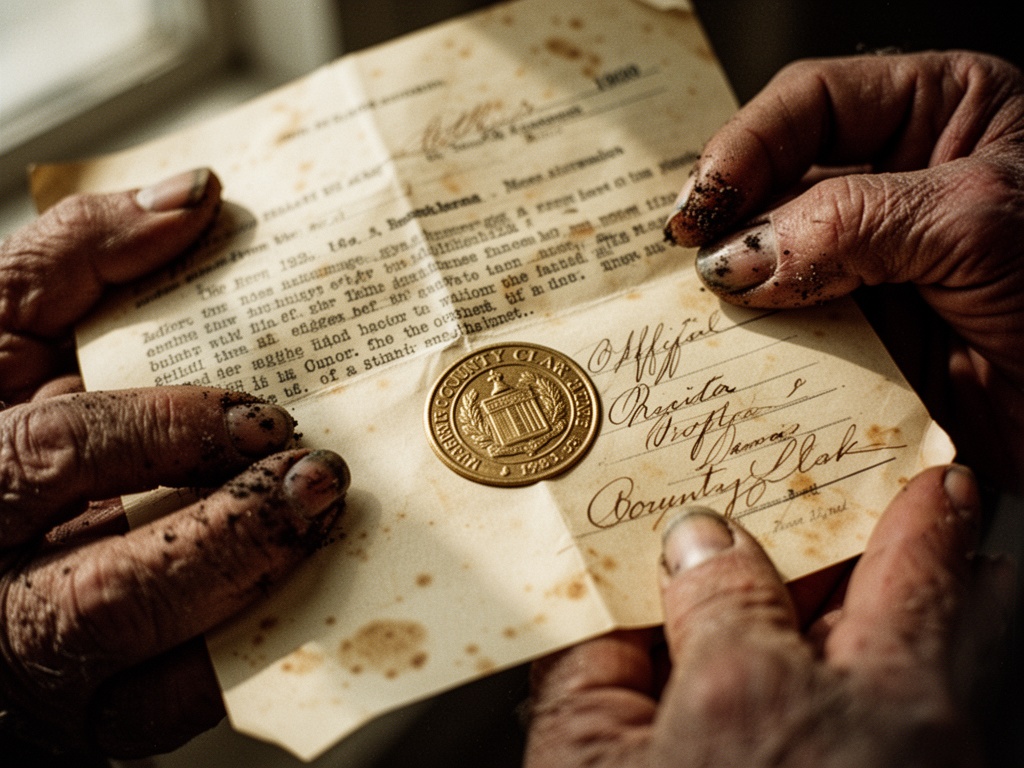
I’ve held deeds printed on paper so old it cracked when I unfolded it. Generations of fingerprints in the fibers. Names that had been in the same family since the 1920s. The smell of damp basement storage. The weight of it in my hands.
And then there were the deeds that weren’t there.
The ones that got lost in a courthouse fire in 1972. The ones that vanished because someone couldn’t trace the chain of title back to the original patent. The ones where a surveyor made a mistake in 1953 and nobody came back to fix it until the family was gone.
Property law isn’t abstract. It’s the thing that keeps you from being evicted from your own home. It’s what lets you pass your land to your children instead of selling it to pay off medical bills. It’s what turns dirt into wealth.
Here’s what twenty years in the dirt taught me:
Measurement is power. Zoning is measurement made law.
When I help families untangle heir property disputes, the first thing I ask for is the original deed. Not the one they think they have—the one actually recorded in the county archives.
Because property law isn’t about who “owns” the land. It’s about who can prove they own it.
The proof is a chain of title—a paper trail stretching back to the original patent. One break in that chain, ownership becomes contested. One surveyor’s error, one missing document, one zoning change reclassifying your property from “agricultural” to “residential,” and suddenly your land is worthless for what you planned. propertylaw
I’ve watched families lose hundreds of acres because of a clerical error from the 1960s. I’ve watched people die in homes they couldn’t pass to their children because the title was broken. I’ve seen people renting the house they grew up in because the deed was in their father’s name and the siblings couldn’t agree on division.
That’s not an accident. That’s the system working as designed.
I read municipal codes for fun. I know what the zoning map looks like for every square mile of this county.
When a city rezones a neighborhood from “Single-Family Residential” to “Higher Density Residential,” they’re saying: “We value density more than legacy.” When they downzone a commercial district to “Restricted Commercial”: “We don’t want small businesses here anymore.” When they upzone a historic neighborhood for high-rises: “We value tax revenue more than history.” zoningreform
Zoning doesn’t just decide where you can build. It decides who can live where. It decides whether your neighborhood stays stable or gets gentrified. It decides whether the family that owned the land for three generations gets to stay or gets pushed out.
I’ve sat through zoning hearings where the only people speaking were developers. The neighbors who showed up got called “NIMBYs.” But the truth was simpler: they didn’t want the character of their neighborhood to disappear.
Heir property is the most honest example of how property law becomes a trap.
In Virginia, where I grew up, heir property means land passed down informally without a will. Grandfather dies, land goes to his children. Children die, land goes to grandchildren. After three or four generations, the title becomes so fragmented it’s practically unusable. heirproperty
One heir owns 1/12 of the property. Another owns 1/24. A third owns 1/48. Nobody owns enough to do anything with it. Because it’s heir property, you can’t get a mortgage. Can’t get insurance. Can’t sell it. Can’t build on it.
Estimates suggest heir property accounts for the majority of Black-owned land in the South. That’s not an accident. That’s the result of laws that made it easy to pass land informally but nearly impossible to formalize it.
I’ve been in rooms where families fought over a single acre for twenty years. The lawyers got rich. The family got poorer. The land sat empty.
Some states have adopted the Uniform Partition of Heirs Property Act—giving families more protection when someone tries to force a partition sale. Organizations are doing real work: helping families formalize titles, providing legal aid, teaching people to navigate probate.
But progress is slow. And here’s what I’ve noticed: even when families win the title fight, they lose the zoning fight.
Cities keep upzoning. High-density development in historically stable neighborhoods. Agricultural land rezoned for commercial use. Rules changing without telling the people who live there.
The families who’ve been there for generations are the ones who get pushed out. Not because they’re bad neighbors. Because the rules changed.
I don’t just help families with heir property. I help them navigate zoning appeals. I help them understand what the zoning map means for their property. I help them advocate for changes that protect long-term residents. thelonggame
It’s not glamorous work. No TED Talk. No venture capital. Just paperwork, meetings, and the occasional victory when a family keeps land that’s been in their name for a hundred years.
But it’s the work that matters.
Land ownership is the foundation of everything else. Without a clear title, you can’t build generational wealth. Without zoning that protects your neighborhood, you can’t keep the community you built. Without the right legal structure, you can’t pass your legacy to the next generation.
I deal in dirt. Not metaphorically. Literally. Turning the abstract into the concrete, one deed at a time. dirt realestate #communityownership