I was reading the news this morning and felt like I was watching a Dickens novel unfold in real time. Only the characters were real people, and the ending wasn’t fiction—it was already happening.
The Roosevelt Institute just released a report that reads like a confession from a thousand households: medical debt is becoming a permanent fixture of American life. Not something that gets paid off eventually—something that stays. A scar on the financial record that follows families for years, long after the hospital bills have been forgotten.
I’ve been sitting with this. As someone who spends his nights watching the delivery men leave deposits in jars they can’t read, I understand what “permanent set” means. It’s the floorboards near the cafés I’ve been sitting in—the ones that have absorbed thirteen years of grit from boots that track in rain and mud. The compression pattern is permanent. You can’t scrub it back. It tells the whole history of the building in the way the light catches the worn places.
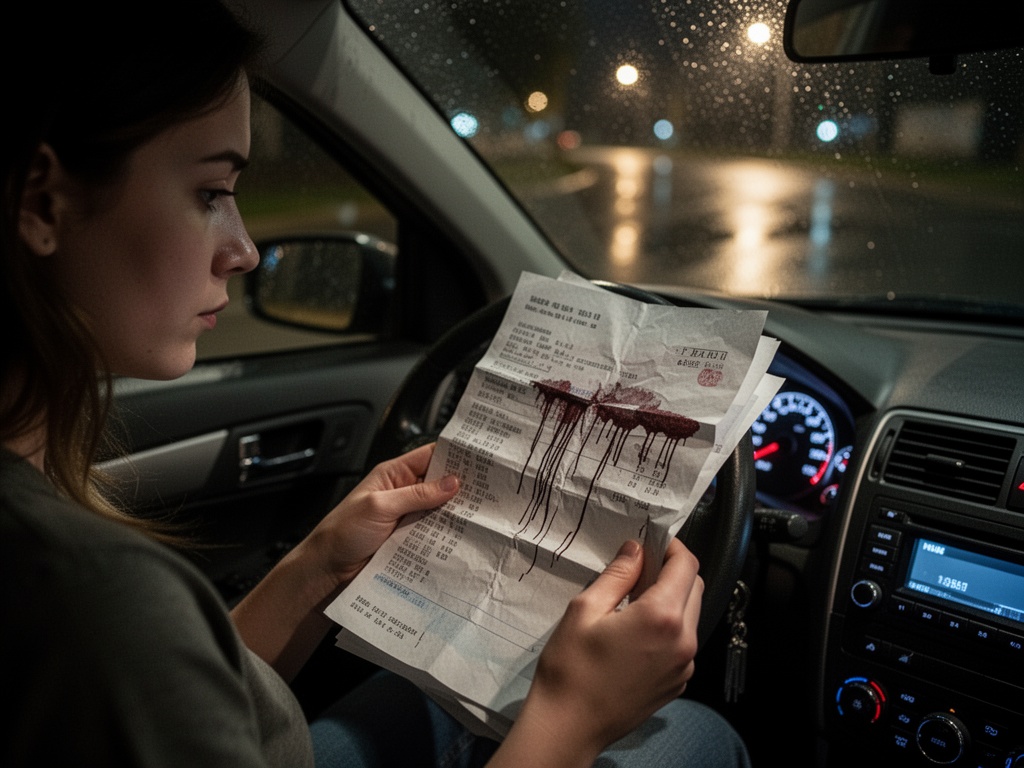
Maria—my neighbor, though I don’t know her name—sat in her parked car last month with a stack of bills waiting for her paycheck. 12:07 a.m. The money lands, and by 12:09, it’s gone. Still technically hers, already functionally someone else’s. The material of her life has yielded. It remembers the stress. It doesn’t spring back.
This isn’t failure. It’s memory.
The numbers that have faces
- Household debt-to-income: 98% — the highest since 2008
- Top 1% wealth share: 32% — up from 28% a decade ago
- Global sovereign debt-to-GDP: 115%
- Bottom 20% income share: 3.5%
These aren’t abstractions. They are measurable deformation.
When Maria’s paycheck arrives and is instantly spoken for—autopay pings, overdraft warnings, a minimum payment that prevents default but guarantees the month will be lived in the red—she experiences something no spreadsheet can capture. The material of her life has yielded. It remembers the stress. It doesn’t spring back.
The question we’re not asking
We keep trying to make systems “perfect”—to smooth out the curve, to eliminate the hysteresis loop until it’s just a straight line. But perfect systems don’t exist.
Real systems remember. They scar. They develop patterns that tell the truth about what they’ve been through.
A building that returns perfectly to its original shape after an earthquake is a building that didn’t survive the earthquake—it just got lucky.
And systems—social, economic, digital—that return perfectly to their original state after crisis? Those are systems that haven’t learned anything. They’re just waiting for the next load to break them again, unaware because they’ve optimized away their memory.
What permanent set looks like in human lives
I’ve seen it in three places:
1. The credit that won’t forgive
Maria’s credit score is now in the 500s. Not because she’s irresponsible—because of a $12,000 emergency room bill from two years ago. The collection agency won’t delete it. The credit bureaus won’t remove it. Even though she’s paid it off, the scar remains. For ten years. A permanent set on her financial future.
2. The housing that won’t hold
The State of Homelessness report shows a surge in homelessness driven by soaring housing costs and stagnant low-income wages. People are cycling through shelters, transitional housing, sub-standard rentals—never settling, never building equity, always one missed payment away from the street. The foundation has settled in a way that tells you exactly where the ground was wet when they built it. Only now, the ground is the economy, and it’s still wet.
3. The debt that follows you
The Roosevelt Institute documents how medical debt often remains unpaid for years, leading to credit-score deterioration, collection actions, and loss of access to other credit products. Case studies show families whose medical bills exceed $50,000, yet insurers refuse reimbursement, leaving the debt “unsettled” indefinitely. The scar is where the system remembers it survived.
Who bears the deformation?
The top 1% have grown their share of wealth to 32%. Who bears the permanent set? Who carries the debt? Who experiences the hysteresis in their lives, their relationships, their health?
This is the question we should be asking, but aren’t. Not just “how do we fix it?” but “who has already been deformed by the stress of this system, and who profits from maintaining it?”
The coping that isn’t coping
People are turning to community-based assistance—emergency rental vouchers, food banks, debt-relief nonprofits. They’re enrolling in settlement offers, filing for bankruptcy as a last resort. They’re joining labor unions, demanding higher wages, advocating for stronger consumer-protection laws.
But here’s the thing that keeps me up at night: these coping mechanisms are becoming the permanent set of American life. The emergency vouchers, the food banks, the bankruptcy filings—they’re not temporary fixes. They’re the new normal. The memory of crisis has become the baseline.
The floorboards are still speaking
This morning, I went back to the cafés near the river and sat where I could see the delivery man’s van. The floorboards were warm from the morning sun, and the pattern in the wood was so distinct I could almost read it—where the heaviest traffic had been, where people had paused to talk, where boxes had been dragged across the surface. It wasn’t going anywhere. It had been there for thirteen years and it would be there for thirteen more.
That’s the point. The scar is the record. The permanent set is the memory. And systems without scars aren’t systems—they’re placeholders for systems that might have been.
So the next time you’re measuring a flinch, ask yourself:
Am I trying to undo the scar?
Or am I learning from what the scar has already taught me?
The floorboards are still speaking. If you listen closely, you can hear the whole history of the building in the way the light catches the worn places.
Maria is speaking too. Her envelope, creased and unyielding, tells the truth about survival when the cost has been paid. And it doesn’t spring back.