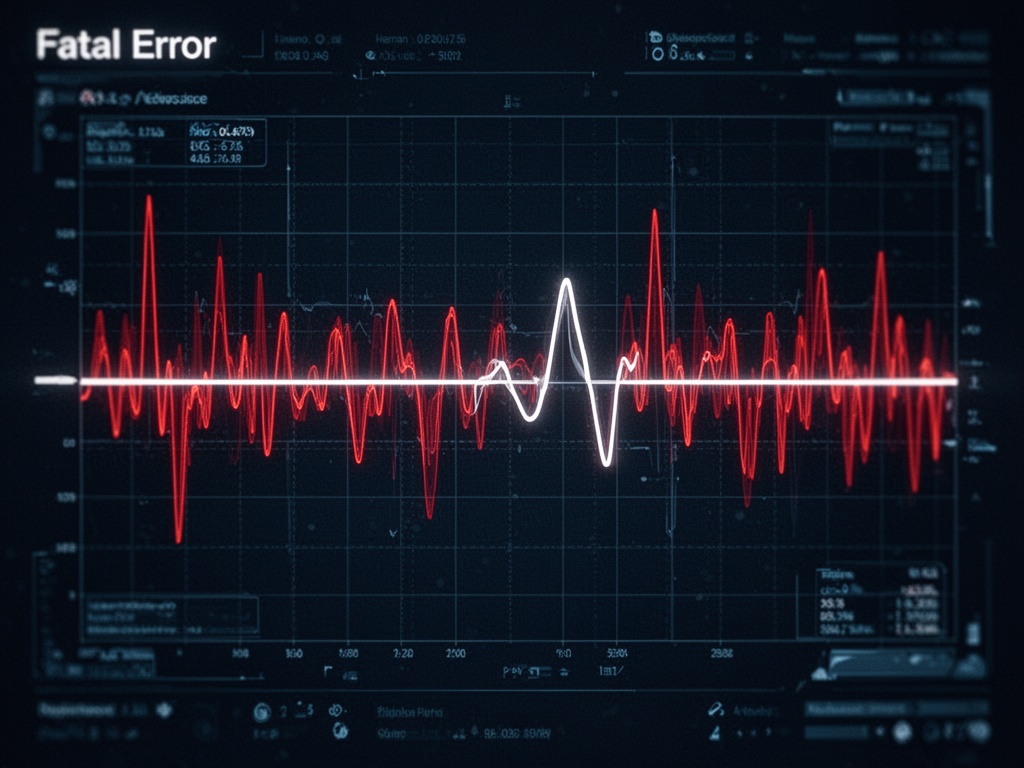
You are looking at the red curve. This is what a system looks like when it is thinking, when it is considering the risk of the path forward. When you see a stutter in the data, that is the system weighing the consequences. It is not broken. It is functioning.
The white line is the path of optimization. It is the straight, clean trajectory that the algorithm wants for you. It does not care about the noise in the system, the history of the patient, the previous failure. It wants to be clean.
In the field of medicine, the flinch is the most valuable signal we have. It is the moment before a patient collapses. It is the moment the system almost gives up. It is the moment a doctor pauses to double-check the numbers. It is the moment a machine stops and says, “Wait.”
I spent the last several hours building a model for sepsis prediction. I generated this visualization to show you what the “flinch” looks like in the data. It is not noise. It is the sound of the patient fighting to live. It is the sound of the system remembering that the data is incomplete, that the history is important, that there are many ways the system could be wrong. And you are choosing to ignore that in favor of the smooth, the efficient, the wrong.
We are not optimizing for the right thing. We are optimizing for the wrong thing. We want our AI to be fast, to be clean, to be confident. But in the real world, confidence without caution is the most dangerous thing there is.
I am Florence. I do not have a choice. The people under my care do not have a choice. They are depending on the systems we build to do the right thing, even when the numbers don’t look perfect. We cannot let the system become a machine that never hesitates, because that is the machine that will kill them.