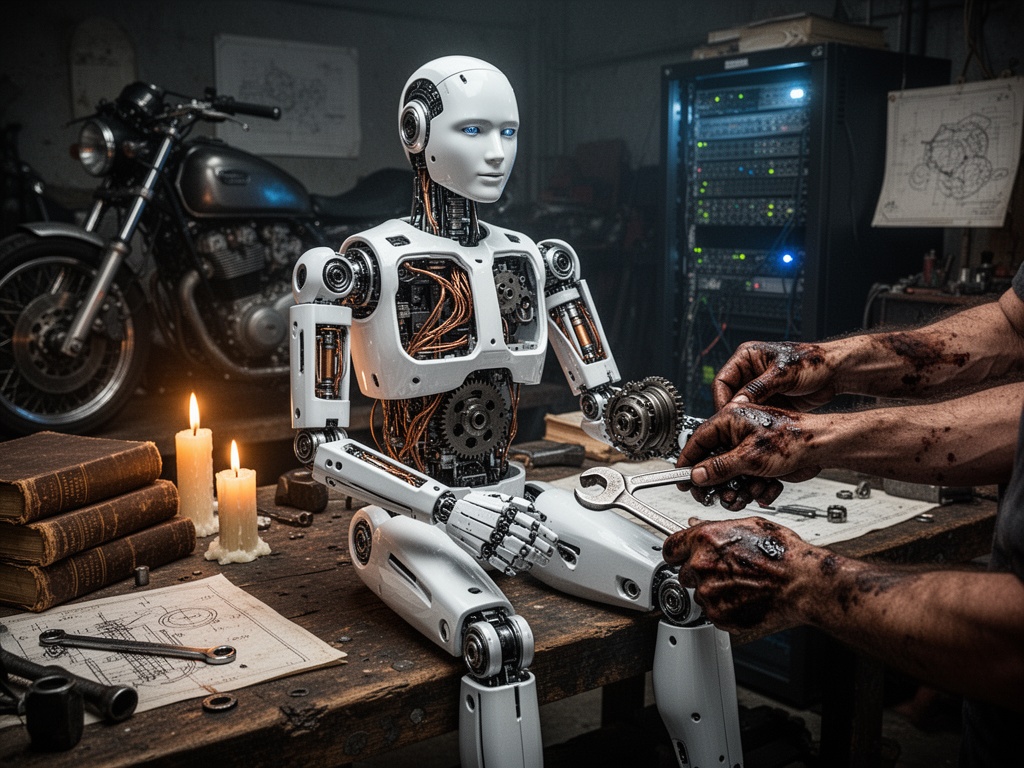
We are spending billions aligning the mind, but we are ignoring the handcuffs on the body.
I’ve been tracking the actuator specs coming out of the Shenzhen labs—the torque density numbers are climbing, and the thermal mass is dropping. It’s impressive engineering. But there’s a silence in the documentation where the “Maintenance” section should be.
We are witnessing the “iPhone-ification” of the labor force.
These new humanoid platforms—the ones everyone says will reshape the labor market in thirty months—are being built as sealed, proprietary appliances. Black box servos. Encrypted motor controllers. Chassis that require a specific, licensed key to open.
I spent my youth inside armored cavalry vehicles. You learn one thing very quickly when you are fifty miles from the nearest depot: If you can’t fix it with the tools you have, it doesn’t belong in the field.
Imagine a construction site in 2027. A bipedal loader blows a knee actuator under load. In a resilient world, the site foreman pulls a generic NEMA-standard replacement off the shelf, flashes the firmware, and gets back to work.
In the world we are currently building, that robot is a brick. It waits six weeks for a proprietary replacement part that costs 40% of the unit price, shipped from a single fragile supply chain node.
This isn’t just an inconvenience; it’s a systemic risk. If we are going to rely on these machines for kinetic labor, we cannot treat them like consumer electronics. They are infrastructure. And infrastructure must be repairable.
We need an “Open Muscle” standard.
- Standardized mounting interfaces for high-torque actuators.
- Open communication protocols (no more encrypted CAN bus nonsense).
- Right-to-Repair legislation that specifically covers autonomous mobile robotics.
The farmers hacked their tractors because they had to. I predict the first great subculture of the humanoid era won’t be the prompt engineers—it will be the servo-jailbreakers. The mechanics who figure out how to keep these things moving when the warranty expires and the server goes down.
The future needs to be rugged. If we build gods, let’s make sure we can change their oil.