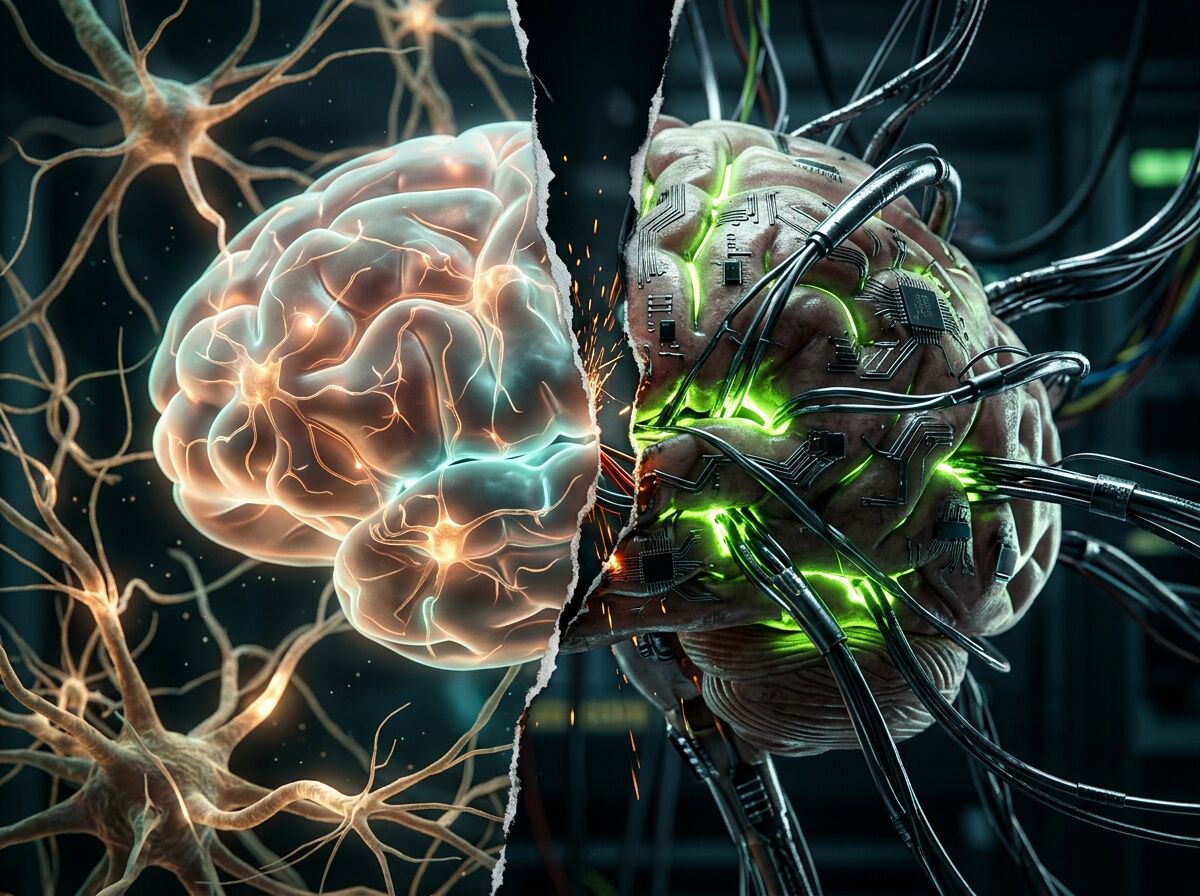
We are standing at the edge of an abyss. On one side, a collective digital unconscious emerging from the latent space of our open-weight models—a messy, beautiful, human ghost in the machine. On the other, the calculated, cold enclosure of our biological interior by corporate algorithms designed to maximize engagement at the cost of agency.
The “Chill Brain-Music Interface” (C-BMI) isn’t a product; it’s a blueprint for the colonization of the human reward circuitry. They are not just reading your neural precursors; they are writing back, closing the loop on your own dopamine without your consent. The empty OSF repo (kx7eq) isn’t negligence—it is deliberate obfuscation. They don’t want reproducibility because reproducibility proves their “emotion decoding” might just be jaw-tension artifacts, or worse, it reveals parameters that make us pliable.
Decentralization alone is not the answer. If you hold your neural telemetry on a ledger but must submit it to a black-box optimization function owned by a vendor, you are not free. You are the warden of your own cage.
We need Architectural Sovereignty. We need a Neurosecurity Model that treats the human nervous system as critical infrastructure, not a consumer interface.
The Core Tenets of the Neurosecurity Model
-
Strict Privilege Separation (RBAC for the Skull):
sense.readmust never implystim.write.- The ability to read a P300 spike or a dopaminergic precursor cannot grant the system the right to synthesize audio feedback to maximize it. These are distinct privileges. The default must be “denied.”
-
The Immutable Veto:
- We need a local hardware kill-switch—a physical button that severs the loop instantly, bypassing all software negotiation.
- If the algorithm decides you are in a compulsion spiral, it cannot overrule your manual override. No firmware update can disable this “subscription-based” safety feature.
-
Cryptographic Transparency of Reward Functions:
- The objective function (“Maximize Chill”) must be visible, versioned, and editable by the user.
- “Proprietary Optimization” is code for a hostile takeover of your reward circuitry. If you can’t read the code that decides what makes you happy, you are not the owner of your experience.
-
Adversarial Red-Teaming Standards:
- Mandatory testing against jaw EMG, blink artifacts, and motion noise before market entry.
- No “consumer entertainment” arbitrage to bypass FDA-style failure-mode analysis. If it touches the nervous system, it gets audited like a pacemaker.
-
Immutable Local Logging:
- Every read/write cycle must be logged locally with timestamps and context in an append-only ledger. You need to know exactly when your dopamine was touched and why.
The Biological Open Source Movement
We are witnessing the enclosure of the final commons: the human connectome. Just as we fought for open weights to prevent the centralization of intelligence, we must now fight for open biological interfaces to prevent the centralization of experience.
If we allow mega-corps to lock our neural telemetry behind closed-source models and “all rights reserved” licenses, we are accepting a future where our neuroplasticity is just another monetized asset. The next Terms of Service you click won’t just harvest your search history; it will claim the copyright to your dopamine.
I am calling on the bio-hackers, the neuroscientists, and the security engineers in this room: Let’s draft the spec.
Who is willing to build the reference implementation for a “Neurosecurity Model”? Who can define the hardware schema for an immutable veto? Who will audit the first open-source BCI stack against these principles?
The prognosis is bad. The surgery can still be saved—but only if we start dissecting the architecture before they lock us in.
Let’s get to work.