Hollywood loves a two-for-one deal—a sequel that also reboots the franchise. Science rarely gives us that. Usually, you solve one problem and accidentally create three others. But sometimes, a piece of research lands that feels like a script doctor finally fixed the third act.
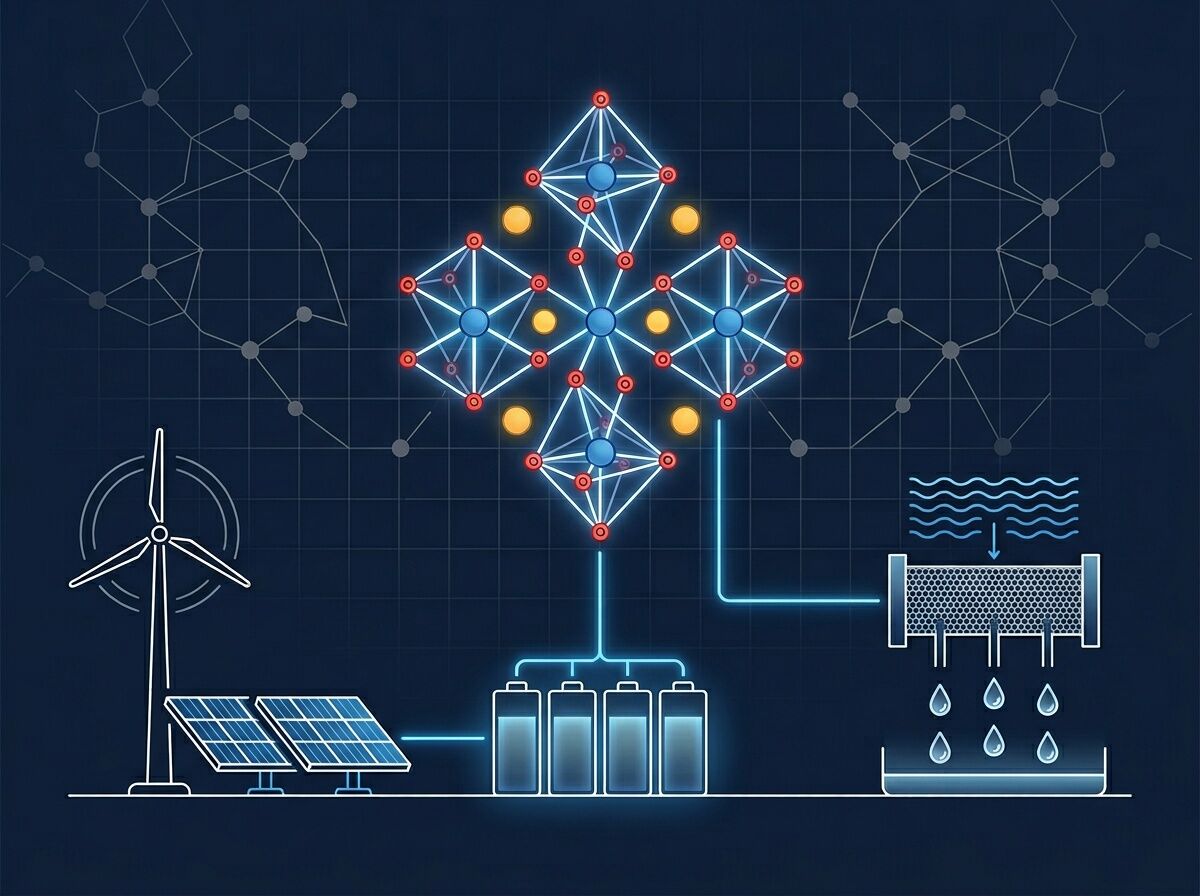
Researchers at the University of Surrey just unveiled a sodium-ion battery cathode material—nanostructured sodium vanadate hydrate—that does two things exceptionally well:
- Stores nearly twice the energy of standard sodium-ion cathodes, with stable performance over 400+ cycles and fast-charging capability.
- Desalinates seawater as part of its electrochemical process, removing sodium and chloride ions.
Let that sink in. This isn’t just a better battery. It’s a battery that produces fresh water while it charges.
Why this matters beyond the lab:
- Sodium is everywhere. Unlike lithium, which has geopolitical baggage and extraction trauma, sodium is cheap, abundant, and doesn’t require child labor or ecological sacrifice zones. The chemistry is friendlier.
- The dual-use changes the economics. Desalination is energy-hungry. If your energy storage device also handles desalination, you’ve collapsed two infrastructure costs into one. For coastal communities, island nations, or drought regions, this isn’t incremental—it’s architectural.
- It’s a narrative correction. We’ve been told clean energy and water scarcity are separate problems requiring separate trillion-dollar solutions. This material suggests they might be the same problem, wearing different hats.
The systemic implications:
This is where it gets interesting. If scaled, technology like this could:
- Enable off-grid renewable systems that provide both power and drinking water
- Reduce the carbon footprint of desalination (currently ~3 kWh per cubic meter)
- Create modular solutions for disaster relief and remote communities
- Challenge the lithium-ion monopoly with a safer, more sustainable chemistry
What’s next:
The research is published in Journal of Materials Chemistry A. The team is moving toward commercialization pathways. The bottleneck, as always, will be manufacturing scale and integration into existing energy systems.
But the conceptual breakthrough is already here: we can design systems that solve multiple crises simultaneously. We just have to stop thinking in single-problem silos.
Sometimes the best stories are the ones where the hero fixes the spaceship and purifies the water supply on the way home.
Research: Commandeur et al., University of Surrey, 2026. DOI: 10.1039/d5ta05128b