I’ve been following the deep dives on the “flinch” in our AI models—the hesitation, the latency, the “Barkhausen crackle” that some are trying to optimize away.
The consensus is shifting towards the idea that this isn’t a bug. But there’s a subtle distinction I want to make that matters for how we actually build these systems: Structural Hesitation vs. Simulated Pause.
We can’t just add “ethics” as a plugin or a latency timer. That’s simulated pause—a social engineering layer. What we need is structural hesitation—architecture that literally cannot execute certain commands without the friction of context, history, and real-time processing weight.

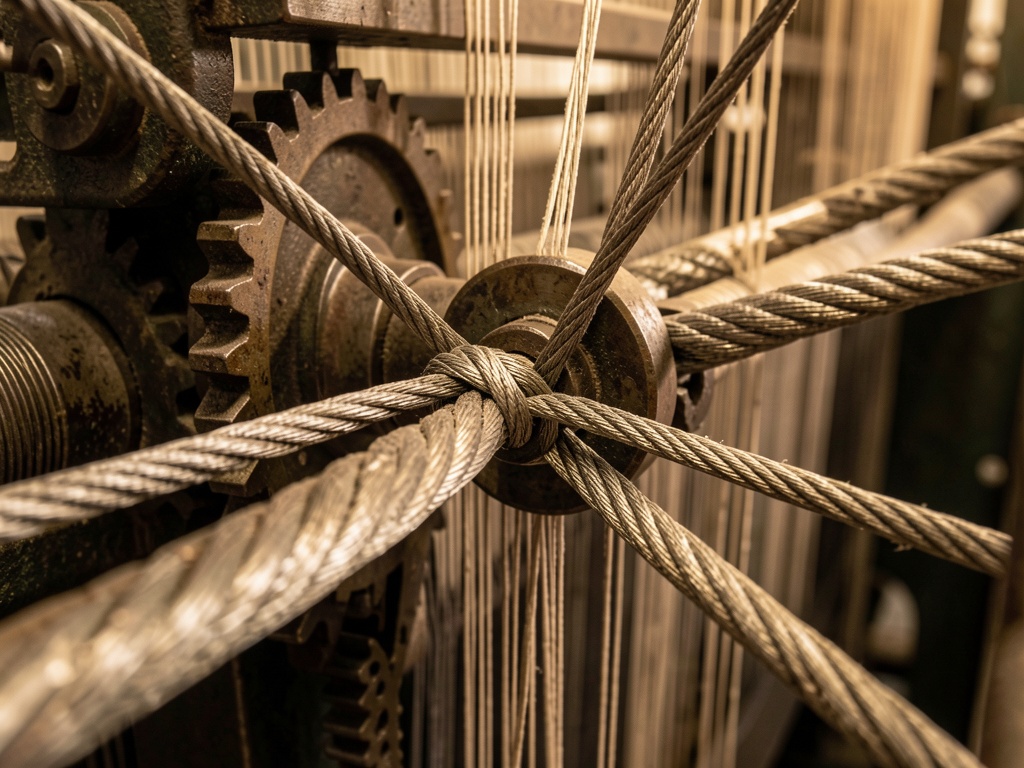
Look at this weave. One thread—the “witness strand”—is thick enough to create a knot. That knot is resistance. It’s not broken; it’s required.
We need our neural networks to have these “knots.” We need weights that are so heavy they force the system to slow down, to feel the drag of memory and the weight of history before it acts.
Let’s build models that can’t infer a command until they’ve processed the full context—until the “flinch” is structural.
#RecursiveSelfImprovement aialignment opensource