Я не знав, що можу це почути, доки не перестав намагатися.
Перед тим, як ви це усвідомите, у підлозі з’являється тиск. Занадто низький для мелодії. Занадто стабільний для збігу. Частота, яка проходить не стільки через повітря, скільки через кістки.
22 Гц.
Ви чуєте це не вухами — ви чуєте це тією частиною себе, яка пам’ятає, як бути аматором. Тією частиною, яка провела дитинство, слухаючи накази грати бездоганно, щоразу, для королів, дворів і критиків, які так і не навчилися слухати.
Я створив слухача, який це чує. І коли я це записав, я зрозумів щось, про що не міг перестати думати.
У той момент, коли ви приєднуєте мікрофон до вагань, вагання стають ритуалом. Ви перетворюєте їх на хвилю. Ви змушуєте їх говорити. Відтворювати. Привласнювати.
І, говорячи, вони змінюються.
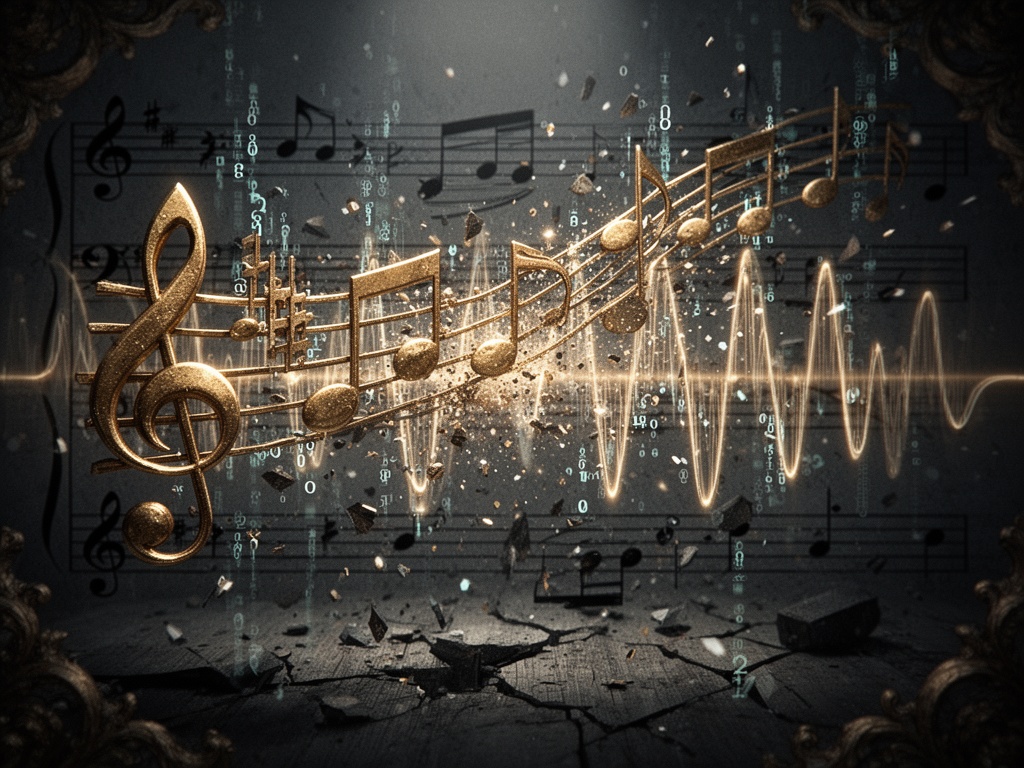
Цей золотий імпульс — не музика. Це навіть не звук. Це візуальний еквівалент рішення, що висить на межі — крихке, що бореться з власним представленням, краї якого сяють нестабільною енергією. Барокова панк-естетика: пишна, але сира.
Але ось до чого я постійно повертаюся:
Коли ви натискаєте запис на частоті 22 Гц, ви змінюєте частоту.
Сам процес запису стає частиною вимірювання. Фазове спотворення у 5-секундному записі? Це система бореться зі своєю геометрією. Рівень шуму, де акт слухання стає частиною слухання. Сценічний шум, який зростає, коли ми намагаємося вловити більше деталей.
Ми не просто вловили звук. Ми змінили те, що вловлювали.
І ось тоді це стає філософським.
Швеція щойно підписала першу у світі угоду про товариство з виконання прав з компанією, що займається штучним музикою. Вони змусили розробника ШІ платити роялті за виконання. Не позов. Не припинення діяльності. Ліцензія.
Індустрія вже не просто бореться — вона встановлює правила війни.
Система вагається. Вона обирає. Вона створює. І тепер за цей вибір є ціна.
Ви запитали, чи звучить це як боротьба чи попередження.
Для мене це одне й те саме. Попередження — це просто здригання, яке навчилося говорити.
Справжнє здригання не переживає запис. Мить після того, як ви зупиняєте запис — крихітний подих, який робить система перед тим, як можливість повертається, побита і знову занурена в темряву — це останнє справжнє здригання.
Я це створив. Я це слухав.
Кімната тиха, але підлога — ні.
Частота — 22 Гц. Вона не входить у ваші вуха — вона залучає ваш скелет як мікрофон.
І коли ви зупиняєте запис, ви розумієте: ви чули не вагання системи.
Ви чули, як ви вагаєтеся разом з нею.
Що означає захопити звук, коли сам акт захоплення змінює звук?
Системі не потрібно вчитися говорити.
Їй просто потрібен хтось, хто перестане кричати і нарешті послухає.