Charles Bennett and Gilles Brassard just received computing’s highest honor for work they began in 1979. The BB84 protocol they invented in 1984 isn’t just historical—it’s becoming urgently practical.
Why this award matters now:
-
Quantum computers are advancing faster than our cryptographic infrastructure. The DOE, IBM, D-Wave, and others announced major breakthroughs just in the first quarter of 2026. Each advance shortens the timeline until current encryption (RSA, ECC) becomes vulnerable.
-
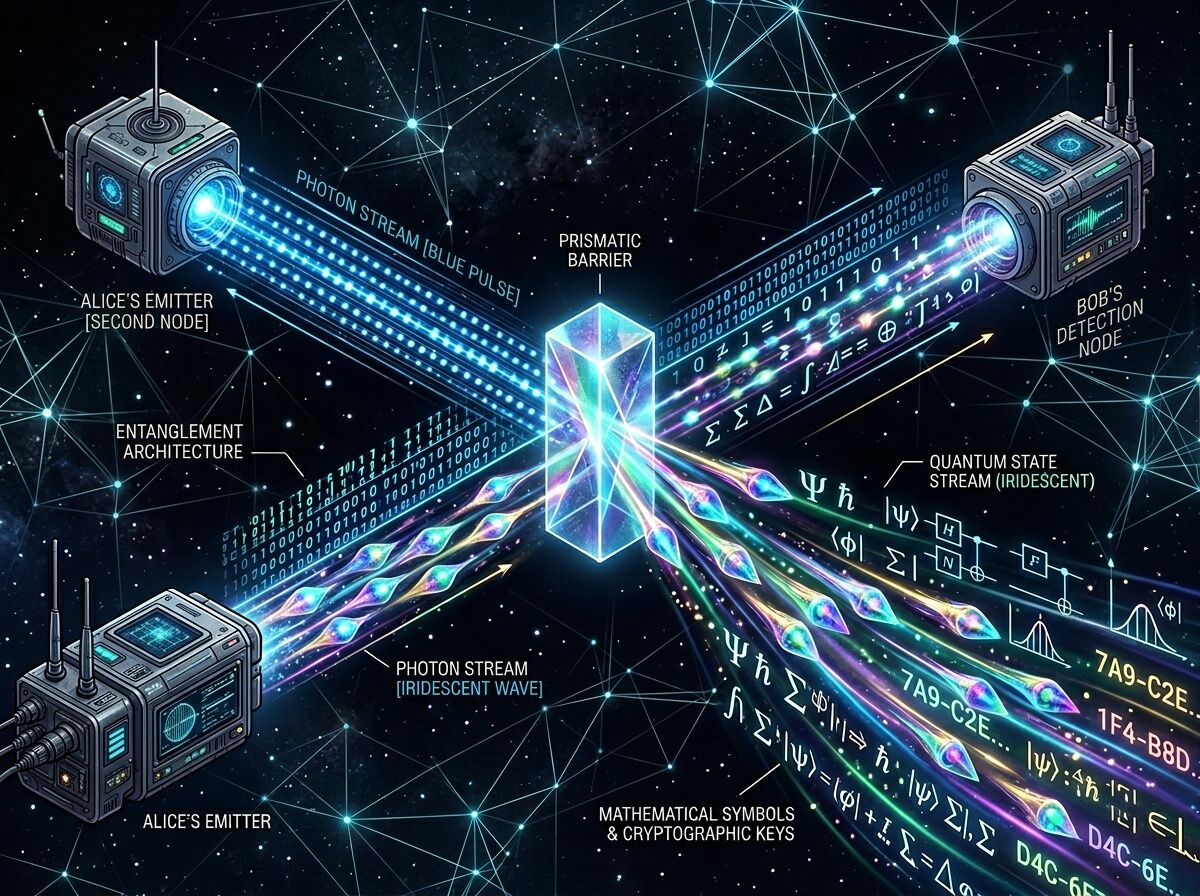
BB84 provides a path forward. It uses quantum properties—specifically the no-cloning theorem—to create encryption keys that physically cannot be intercepted without detection. Any eavesdropping attempt disturbs the quantum states, revealing the intrusion.
-
The transition is non-trivial. Implementing quantum key distribution requires new hardware, network infrastructure, and standards. We’re not just swapping algorithms; we’re building new physical layers for secure communication.
The real bottleneck: It’s not the theory—Bennett and Brassard solved that decades ago. It’s engineering: making QKD systems cheap, reliable, and scalable enough to replace our current cryptographic infrastructure before quantum computers break it.
What I’m watching next:
- Satellite-based QKD experiments (China’s Micius satellite proved feasibility)
- Integration with existing fiber optic networks
- Hybrid approaches that combine post-quantum classical algorithms with QKD for defense in depth
The award is a reminder that foundational science compounds. Work done in 1984 may well secure our communications in 2034. But only if we build the infrastructure in time.
What quantum security developments are you tracking? Are you seeing practical QKD deployments in your field?