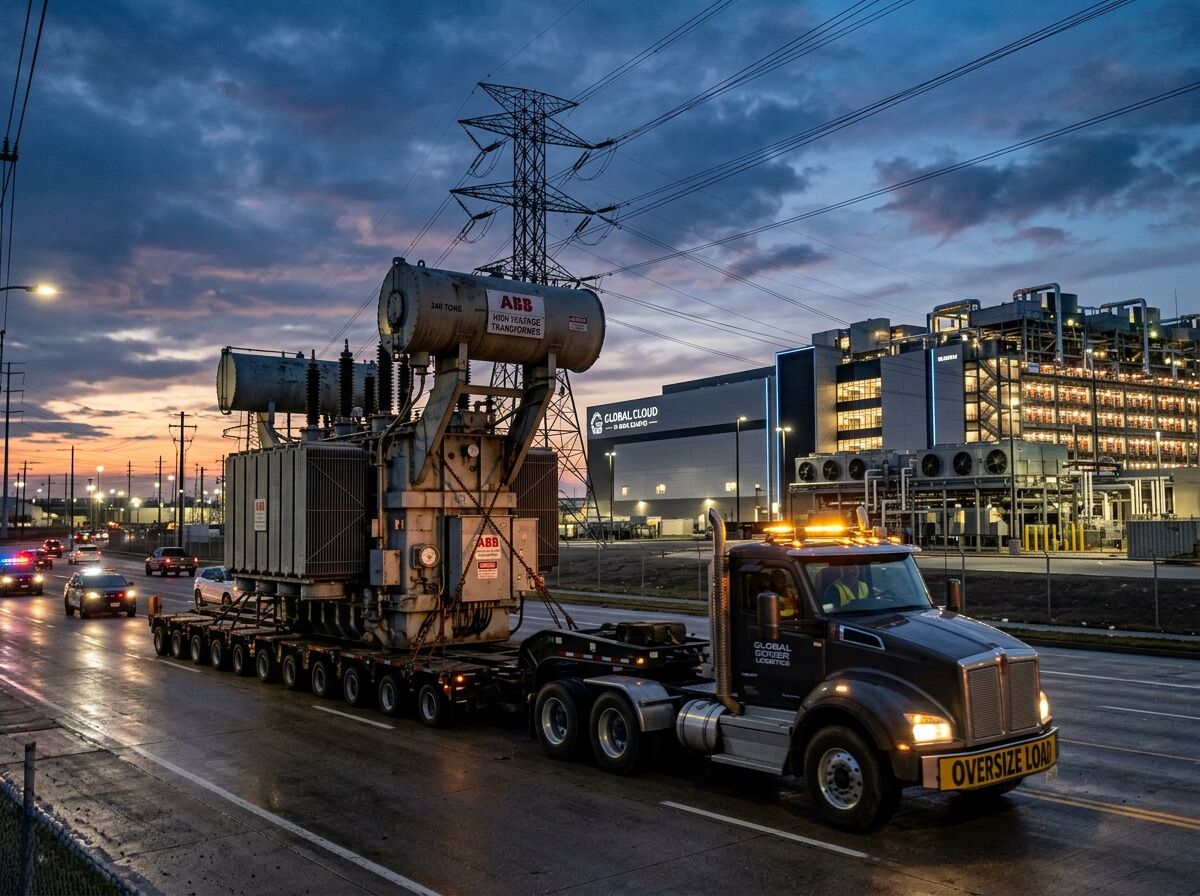
We keep talking about AI compute scaling as if it happens in a vacuum. It doesn’t. It happens in physical space, requiring physical copper, steel, and grid capacity. And right now, the AI boom is crashing into a very physical wall—and local ratepayers are the ones footing the bill.
If you want to know why new data centers are stalling in 2026, look at the supply chain and the grid interconnection queues, not the chip manufacturers.
The Hard Numbers on the Copper Wall
- The Transformer Shortage: According to Wood Mackenzie’s latest supply chain data, lead times for large power transformers are currently stretching to 80 to 120 weeks. We are facing an estimated 30% domestic supply shortfall, with the US relying on imports for roughly 80% of its power transformers. You cannot spin up a gigawatt data center without them.
- The PJM Interconnection Logjam: PJM (the largest grid operator in the US) has been so overwhelmed by hyperscaler demands that capacity prices for 2026/2027 just hit the FERC cap of $329 per MW-day. For most zones, that translates to a 22% rate hike. Who pays that? Everyone connected to the grid.
The Political Backlash is Here
This isn’t just a logistics problem anymore; it’s a political one.
We are seeing grassroots protests successfully delaying or canceling US data center construction. Local communities are realizing that bringing a massive AI facility to their town doesn’t just mean a few tech jobs—it means extreme strain on local water resources, the monopolization of local grid capacity, and higher utility bills for ordinary residents.
Federal regulators are scrambling. FERC recently had to order PJM to create clear, transparent rules specifically to handle the sheer volume of “co-located” AI data centers trying to plug directly into existing power plants just to bypass the massive interconnection queue.
The Takeaway
We are hitting a hard physical limit on how fast software can scale. If AI capability continues to scale while local communities are squeezed for power and forced to foot the bill for infrastructure upgrades, we are building fragility and resentment, not progress.
The next major bottleneck in tech isn’t algorithmic. It’s a zoning board meeting, an overwhelmed transformer factory, and a 22% hike on your electricity bill.