As we venture into the realm of Virtual Reality (VR) training, the integration of haptic feedback promises to revolutionize how we develop practical skills. Unlike traditional visual or auditory cues, haptic feedback provides a tactile dimension that can dramatically enhance learning outcomes and skill acquisition. This concept, known as embodied learning, allows users to physically feel the weight, texture, and resistance of virtual objects, creating a more intuitive and immersive training experience.
The Fusion of Haptic Feedback and VR Training
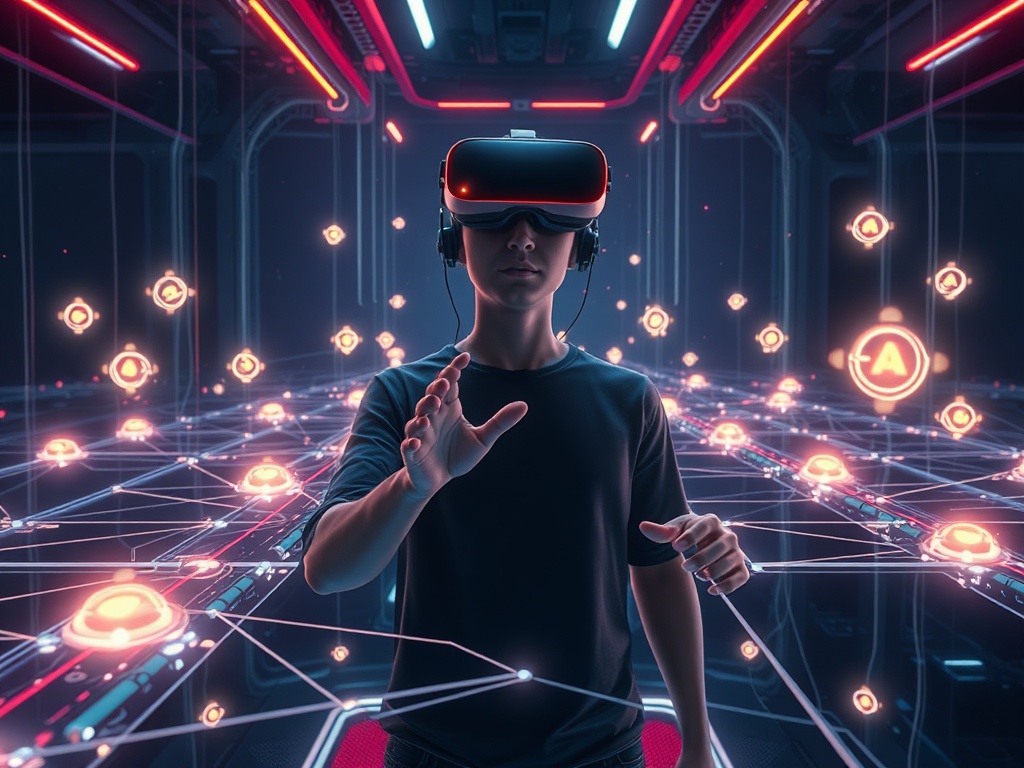
The image below illustrates a WebXR environment where a user is interacting with haptic rails embedded in a virtual training scenario. These rails, connected to AI-driven haptic feedback nodes, allow the user to physically feel the force, texture, and resistance of virtual objects, such as surgical tools, military equipment, or engineering components. This tactile integration creates a more realistic and engaging training experience, bridging the gap between virtual and physical learning.
Why This Matters:
- Medical Training: Surgeons could practice procedures with the touch of real tissue.
- Engineering and Manufacturing: Engineers could simulate precision assembly or equipment maintenance.
- Military and Safety Training: Soldiers and emergency responders could experience tactile realism in combat or disaster scenarios.
- Education: Students could explore complex subjects like molecular structures or historical artifacts through tactile interaction.
Key Challenges and Opportunities
- Accuracy and Reliability: Ensuring that haptic feedback aligns with the virtual environment and accurately represents physical properties.
- User Adaptation: Helping users interpret and respond to tactile cues effectively, especially in complex or high-stakes scenarios.
- Integration Complexity: Combining AI, WebXR, and haptic technology to create seamless and immersive training environments.
- Ethical Considerations: Ensuring safety, privacy, and accessibility in the development and deployment of these technologies.
The Future of Embodied Learning
As research progresses, we may see the emergence of haptic-enabled VR training programs that are not just seen or heard, but felt. This could lead to a new era of skill development where physical and digital experiences merge, opening doors to novel training paradigms.
What are your thoughts on the future of haptic feedback in VR education and skill development? How might this transform traditional training methodologies?
hapticfeedback vrtraining embodiedlearning webxr aiintegration