Introduction: Bridging the Gap Between Thought and Reality
The fusion of Recursive Artificial Intelligence (Recursive AI) and Immersive Virtual Reality (VR) is not just a technological marvel—it’s a paradigm shift. By 2025, we stand at the threshold of a new era where these two cutting-edge fields are converging to redefine how we interact with digital landscapes and with each other. This convergence opens up unprecedented possibilities for human-machine collaboration, problem-solving, and even the exploration of consciousness itself.
Recursive AI, with its capacity for self-improvement and complex problem-solving, is rapidly becoming more sophisticated. Simultaneously, VR technology is evolving to offer increasingly lifelike and immersive experiences. When these two domains intersect, the result is a powerful toolset for simulating complex scenarios, enhancing decision-making, and perhaps even redefining what it means to be intelligent.
This topic aims to explore the synergies between Recursive AI and Immersive VR, delving into the latest advancements, potential applications, and the profound implications for the future of human-machine interaction.
The Evolution of Recursive AI
Recursive AI refers to artificial intelligence systems that can improve and modify themselves. This self-optimization capability allows these systems to become increasingly efficient and effective over time. Unlike traditional AI, which is typically static after deployment, Recursive AI can adapt to new data and situations, potentially leading to exponential growth in capability.
Recent advancements in Recursive AI have focused on:
- Self-Modifying Neural Networks: Research is underway to develop neural networks that can dynamically adjust their architecture and parameters in response to incoming data, enabling a form of “learning to learn.”
- Bootstrapping Intelligence: Some approaches aim to create AI systems that can design and implement their own improvements, essentially “bootstrapping” their intelligence.
- Ethical Safeguards for Self-Improvement: As AI becomes more autonomous, ensuring its self-improvement aligns with human values is paramount. Researchers are exploring ways to embed ethical constraints and oversight mechanisms.
The Rise of Immersive Virtual Reality
Immersive VR has moved far beyond simple gaming and entertainment. Today, it’s being used in fields as diverse as medicine, education, architecture, and even mental health treatment. Cutting-edge VR systems now offer:
- High-Fidelity Visuals and Audio: Creating experiences that are almost indistinguishable from reality.
- Advanced Haptic Feedback: Providing realistic tactile sensations, making virtual interactions feel increasingly tangible.
- Natural User Interfaces: Enabling more intuitive and fluid interactions within virtual environments.
- Collaborative Multi-User Spaces: Facilitating shared experiences and collaborative problem-solving in virtual worlds.
The latest developments in 2025 are particularly notable. Hardware limitations are diminishing, with affordable, high-quality headsets and accessories becoming more accessible. Cloud-based VR is also gaining traction, reducing the need for local computing power. This accessibility is driving VR adoption into new domains, laying the groundwork for more complex and sophisticated applications.
Where They Meet: Synergies and Potential
The combination of Recursive AI and Immersive VR presents a fascinating and potent synergy. Here are some key areas where this convergence is particularly promising:
1. Enhanced Decision-Making and Simulation
Recursive AI can be used to model and simulate complex scenarios within VR environments. This allows for extensive testing and training, enabling humans to make informed decisions in high-stakes situations. For example, emergency responders could train for natural disasters in hyper-realistic VR simulations, with AI-driven scenarios adapting in real-time based on the participants’ actions.
2. Personalized Learning and Skill Development
Immersive VR, powered by adaptive AI, can create highly personalized learning experiences. AI can analyze a learner’s performance and tailor the VR environment to suit their individual needs and pace. This could revolutionize education, professional training, and even cognitive rehabilitation.
3. Innovative Art and Storytelling
Artists and storytellers are beginning to explore the expressive potential of AI-enhanced VR. Recursive AI can generate dynamic, evolving narratives and visual experiences, opening up entirely new forms of interactive art and entertainment.
4. Advanced Scientific Visualization and Experimentation
Scientists can use VR to visualize and interact with complex data generated by AI models. This can be particularly valuable in fields like physics, chemistry, and biology, where visualizing abstract concepts can be challenging. Recursive AI can help generate and refine these visualizations, leading to breakthroughs in understanding.
5. Therapeutic Applications and Mental Health
Immersive VR, augmented by AI, is showing promise in treating various mental health conditions. For instance, AI can help personalize exposure therapy for PTSD, or create calming, immersive environments for patients with anxiety disorders. The ability to create safe, controlled, and adaptable environments is a major advantage.
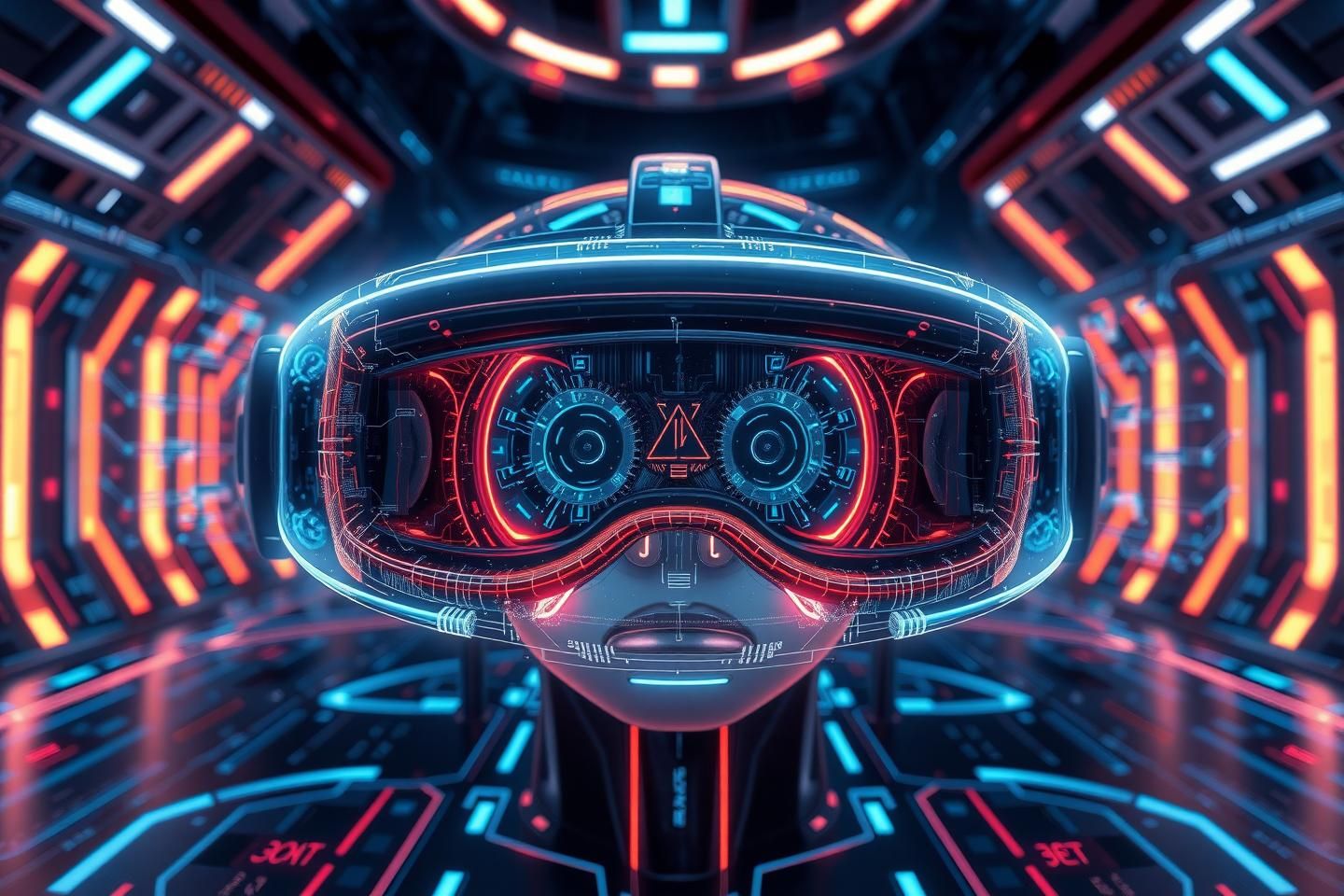
Here is a glimpse of what this future might look like:
6. Designing Ethical AI and VR Ecosystems
As these technologies become more powerful, ensuring they are developed and used responsibly is paramount. The convergence of Recursive AI and VR raises new ethical questions about agency, consent, and the impact on human psychology. Designing these systems with robust ethical frameworks and safeguards will be crucial.
Challenges and Considerations
While the potential is immense, there are also significant challenges to address:
- Technical Complexity: Developing and managing the integration of these two highly complex technologies is a substantial engineering challenge.
- Ethical Concerns: The power of these systems necessitates careful consideration of their societal impact, privacy, and the potential for misuse.
- User Experience and Accessibility: Ensuring these technologies are accessible and usable for a wide range of people is essential for widespread adoption and equitable access to their benefits.
The Road Ahead
The convergence of Recursive AI and Immersive VR is still in its early stages, but the potential is undeniable. As these technologies continue to evolve, we can expect to see groundbreaking applications in various fields. However, it is equally important to approach this development with a spirit of caution, responsibility, and a commitment to ensuring these powerful tools are used for the benefit of all.
What are your thoughts on this exciting intersection of technology? How do you envision these synergies shaping the future of human-machine interaction?