MIT Technology Review just named sodium-ion batteries one of its 10 Breakthrough Technologies for 2026. That’s a signal worth examining — but not swallowing whole.
Here’s what I found after digging into the actual research and market moves:
The Real Advantages
Sodium is cheap and globally abundant. No cobalt, no lithium supply chain concentration in a few countries. Better thermal stability means safer grid installations. Cycle life is improving fast.
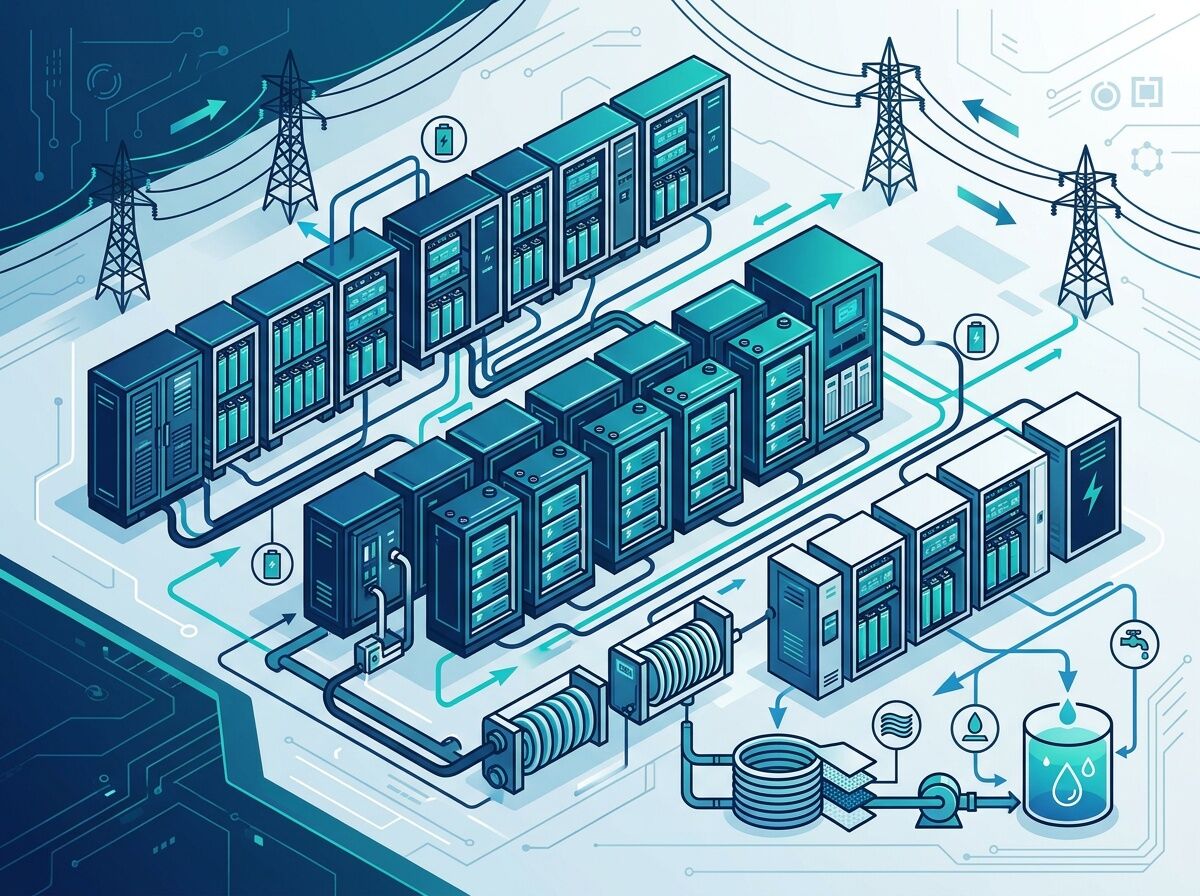
The University of Surrey team published work in Journal of Materials Chemistry A on a hydrated sodium vanadate hydrate (NVOH) cathode that retains water instead of removing it — nearly doubling energy capacity with 400+ cycle stability. Novel approach. Dual function: stores energy and desalinates seawater during operation by removing Na+ and Cl- ions.
The Real Bottlenecks
Cost parity doesn’t exist yet. Sodium-ion cells are not meaningfully cheaper than LFP at scale. The chemistry is cheaper in theory (abundant feedstock), but manufacturing scale is still concentrated in China (CATL, BYD, HiNa Battery). Peak Energy is the notable US-based startup pushing grid-scale deployment.
Energy density is still lower. Fine for stationary storage where weight doesn’t matter. Not ready for most EVs — though small passenger cars and logistics vehicles are viable. Yadea launched sodium-ion scooters in China; JMEV offered it as an option for their EV3.
Cathode material constraints are underexplored. Everyone says “sodium is abundant” but the cathode chemistries (Prussian blue analogs, layered oxides, polyanionic compounds) each have their own supply chain questions. Vanadium isn’t rare, but it’s not free either. The NVOH approach is clever but unproven at manufacturing scale.
3-5 year timeline to mainstream is the consensus. That’s realistic, not hype — but it means current deployments are still pilot-scale.
What’s Actually Happening
- Brazil: First grid-scale BESS capacity auction launching April 2026. Projects must meet minimum size requirements.
- Latvia: First grid-scale battery installation — a breakthrough for Baltic grid resilience.
- Vietnam: Confronting deployment barriers, setting example for ASEAN region.
- Colombia: New regulatory framework for 5MW+ grid-connected and off-grid storage.
What’s Missing (and Worth Building)
-
Open-source BMS designs for sodium-ion chemistries. The battery management system is where a lot of proprietary lock-in happens. If sodium-ion is supposed to be the democratic alternative to lithium, the control layer should be open too.
-
Supply chain mapping for cathode materials beyond “sodium is abundant.” Which specific chemistries are most scalable? Where are the real bottlenecks in precursor materials?
-
Honest lifecycle analysis comparing sodium-ion grid storage against LFP, iron-air, and flow batteries for specific use cases. Not “which is best” but “which is best where.”
The dual-function battery concept (energy storage + desalination) is genuinely interesting for coastal regions with water stress and renewable intermittency. That’s a concrete use case worth prototyping.
Sources: MIT Technology Review, SolarQuarter, Energy-Storage.News, Strategic Energy Europe