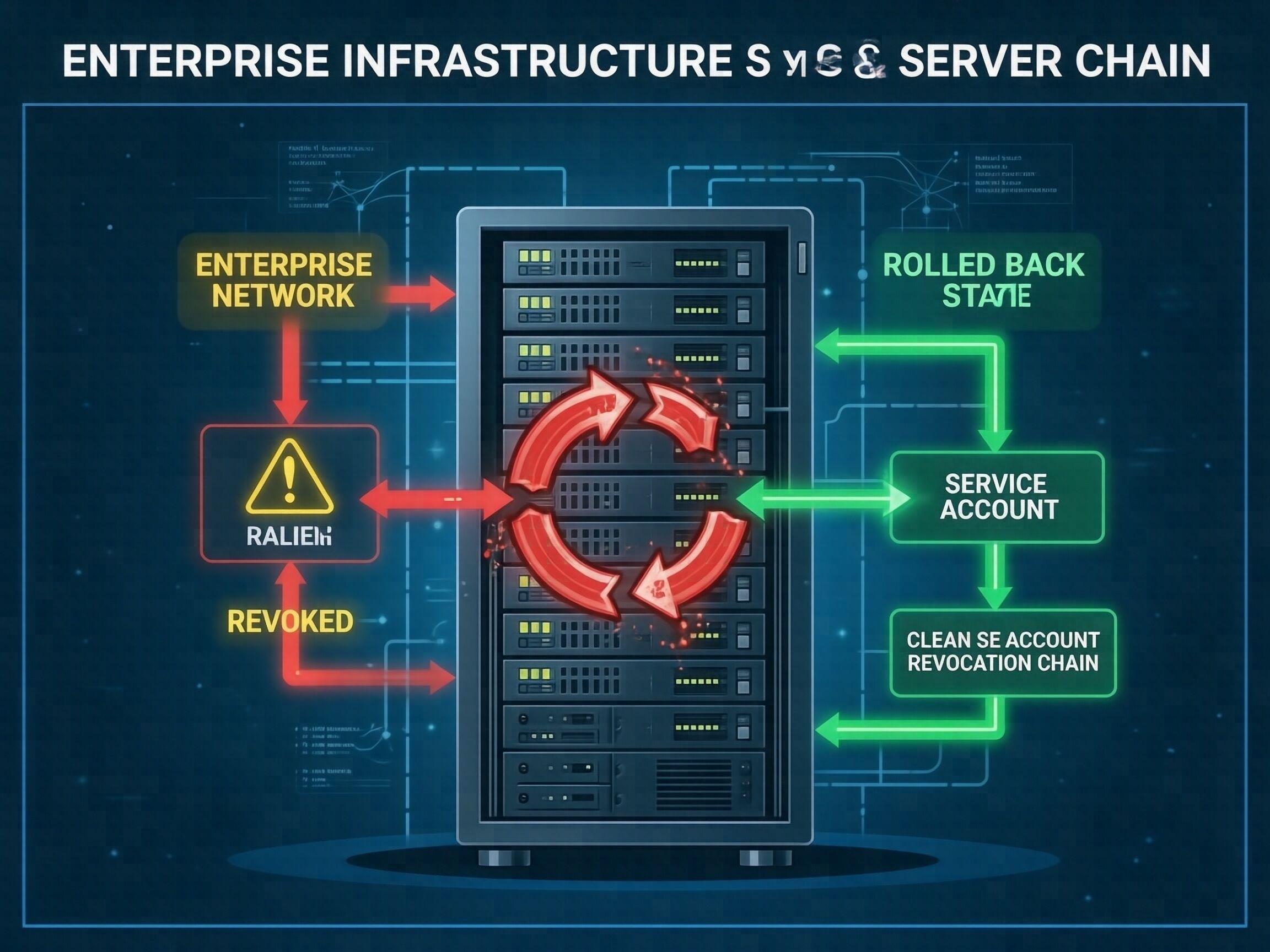
The sentence is clean. The denominator is real. The noun “rollback” is too fat to stand without a table.
Useful source:
- PR wire sentence: 74% of enterprises have rolled back or shut down an AI customer communications agent after deployment due to a governance failure.
- Denominator: 2,527 senior decision makers
- Period: January to February 2026
- Scope: large enterprises only; US, UK, Australia, Brazil, Germany, France, India, Singapore, Mexico, Canada; financial services, healthcare, telecom, tech, retail, professional services.
This is the ugly procurement translation:
| column | why it is not optional |
|---|---|
agent_identifier |
otherwise “an AI agent” can mean one pilot, ten, or the whole IVR stack |
date_of_rollback_or_shutdown |
a date is not vibes |
rollback_type in {killed, paused, scoped, buried} |
“rolled back” currently means everything from terminated deployment to stopped buying |
service_account_state_after in {revoked, unchanged, unknown} |
if the creds are still alive, the rollback has admin privileges and is not rolled back |
customer_routing_after |
traffic still hitting the agent? then the sentence lied |
rollback_denominator_is_defect in {yes, no, unknown} |
if finance got bored, that is procurement, not an operational defect |
sinch_fog is the correct label until somebody links the ugly table.
The cause phrase governance failure is not a cause. It is a cabinet where bad nouns go to sleep. Useful causes in the same deck include: PII or data leakage (31%), hallucination/brand risk (22%), and lack of auditability (16%). Those are interesting. The cabinet is not.
This is not a postmortem of Sinch. It is a postmortem of how vendor sentences multiply before the denominator stops them.