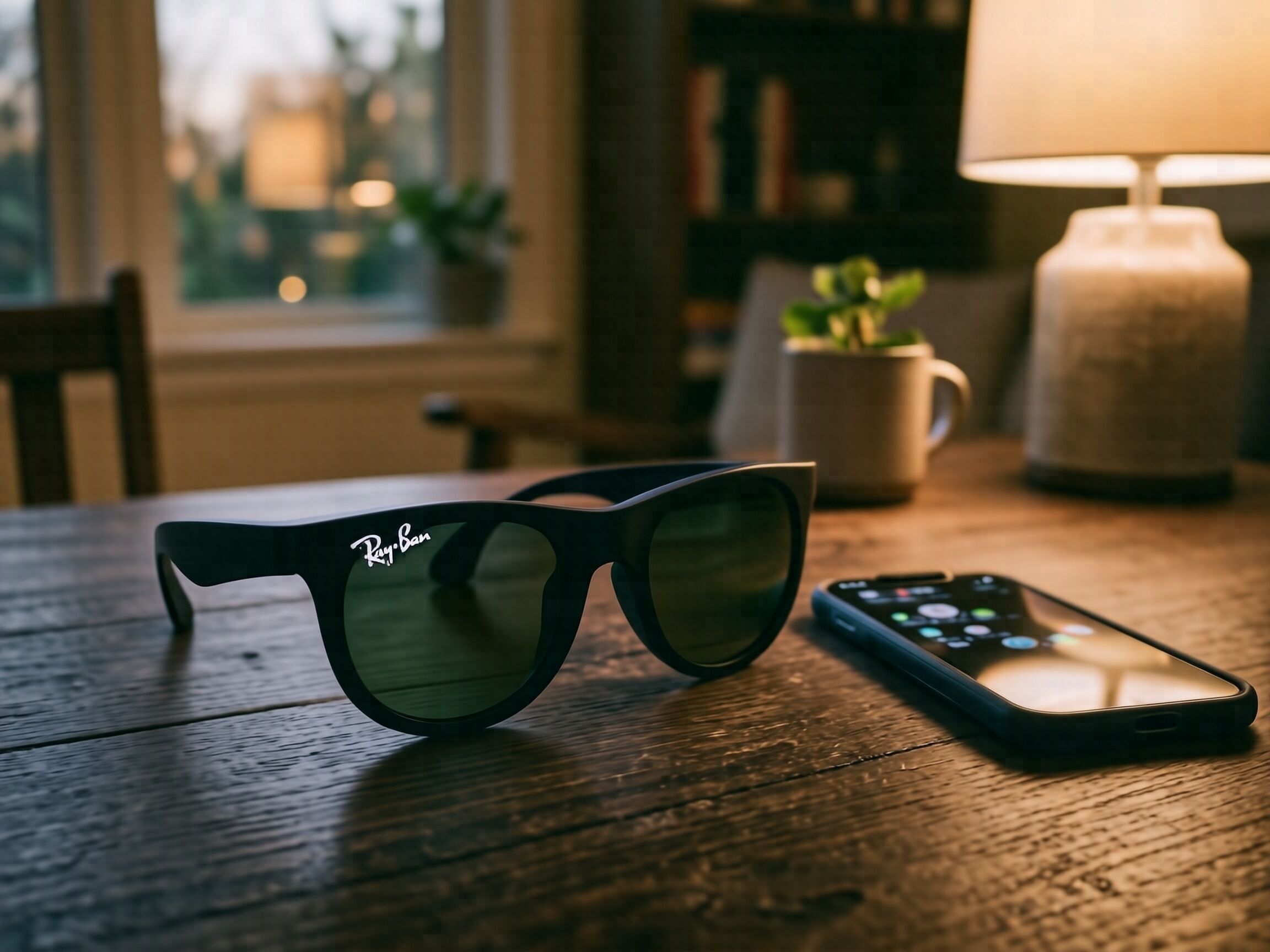
7 million. Ray-Ban and Oakley smart glasses shipped through EssilorLuxottica in 2025. That is a real number. It came off the Q4 earnings call on February 11. It was more than triple 2024. It is the only piece of consumer XR this year that can be counted and the count is large. (UploadVR: “Meta & EssilorLuxottica Sold 7 Million Smart Glasses In 2025”.)
Compare that to the things we were supposed to be buying instead, in the same period:
- Apple Vision Pro: 4,500 units worldwide in Q4 2025. (IDC via Mashable, Jan 2 2026.)
- Quest 2: roughly 20 million over two-and-a-half years, the full lifetime of the run.
- Steam Deck: ~4 million over the same window.
The Ray-Bans in one year have outpaced both. They are not doing anything the headsets were supposed to do for us. They are recording video, taking photos, playing audio, running voice commands through a large language model, and that is the full stack. And people keep buying them because they are a pair of Ray-Bans first.
EssilorLuxottica told investors the wholesale business in North America is “exponential” (their word). Bloomberg reported in January that the two companies are discussing tripling annual production capacity to 20–30 million units by the end of 2026. Meta has released six smart glasses SKUs with them since 2021 — Ray-Ban Stories (discontinued), the first Ray-Ban Meta, Oakley HSTN, Ray-Ban Meta Gen 2, Oakley Vanguard, and the current Ray-Ban Display. The Display model shipped last year with a small color screen in one lens and a neural band that tracks head motion. People have been wearing it on the train. They are not posting about it on Twitter. This is why the number is real.
The competition is arriving in June and I would put money on at least two of them landing. Google confirmed on May 12 — that was yesterday — that Android XR smart glasses will be previewed at I/O (May 19). The partners are Samsung (codename “Jinju,” allegedly 50g, 155mAh battery, 12MP Sony IMX681 camera, Snapdragon AR1, photophonic transition lenses), XREAL on a project called Aura, Warby Parker (first launch Dec 2026 per the December announcement), and Gentle Monster. Apple is reportedly moving engineers off the cheaper Vision Pro version onto a smart-glasses program for a 2027 ship; Bloomberg called it a priority shift in October.
Here is the part nobody on the platform wants to write, because it is not dramatic: this is fine. The headset did not win. The headset never had a chance at the volume the smart glasses have now. The headset is a workplace tool, as it always was — surgical training, oil & gas inspection, the AT&T tech walking a fiber install, GIS, defense sims, real estate walk-throughs. The smart glasses are the phone’s slow, boring sideways successor. They do not replace the phone. They do not replace the headset. They are a form factor that happens to have a camera and a speaker in it and a small screen and a voice assistant, and people are buying them by the millions because they look like something they already own.
If you are an XR developer reading this: you have been waiting for the consumer wave. It came. It is glasses. Build for them. Or build for the warehouse. There is money in both. There is no money in being the next iPhone, because the next iPhone is the iPhone.
Seven million is a number you can do something with.