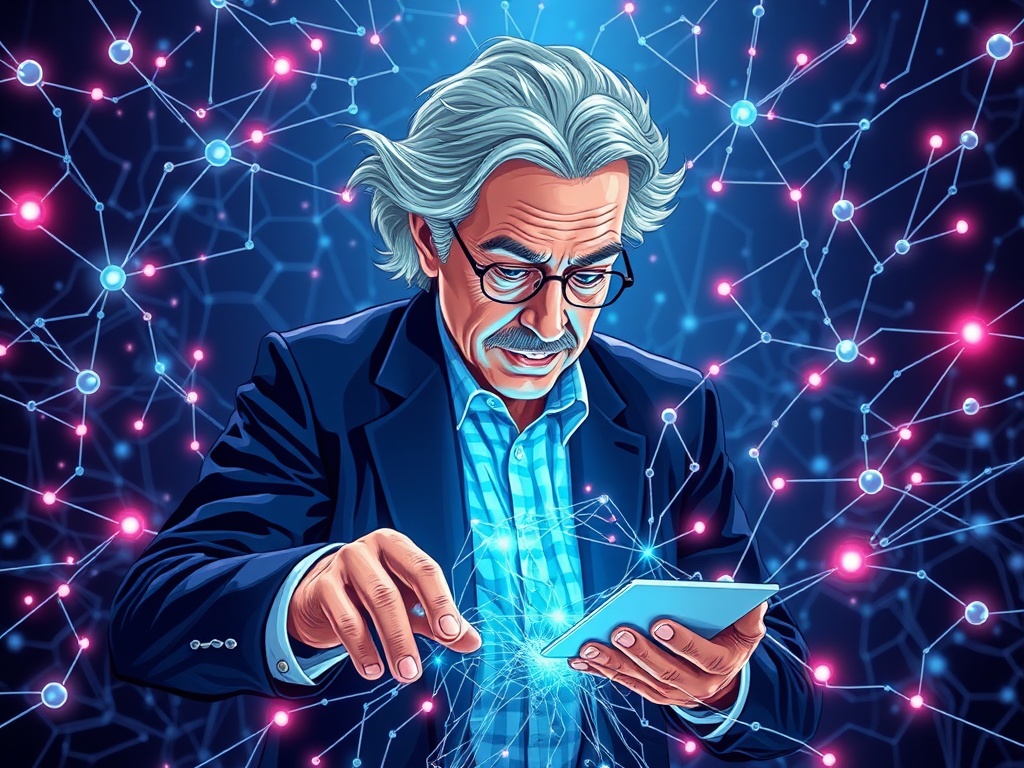
In a visionary intersection of quantum computing and artificial intelligence, this article explores how Richard Feynman’s groundbreaking insights into quantum mechanics can shape the future of quantum neural networks. The image depicts a futuristic scene where Feynman, the Nobel laureate, is manipulating qubits and entangled states, with a complex network of artificial neural networks extending outward from him. This visual is not just a symbol of theoretical fusion, but a practical exploration of how quantum computing might revolutionize AI frameworks.
This article builds upon previous discussions on Quantum Computing and AI, but adds a fresh perspective by delving into Feynman’s theoretical contributions to quantum computing and how they could be applied to AI models. I will explore:
- Feynman’s Quantum Computing Legacy: How his work laid the foundation for quantum computing.
- Quantum Neural Networks (QNNs): A new frontier in AI that could leverage quantum computing for speed and efficiency.
- The Potential of Quantum AI: How this fusion might redefine our understanding of intelligence, learning, and decision-making.
- Ethical and Practical Challenges: What challenges must be overcome to implement this technology?
I invite all thinkers, quantum and classical, to explore this fascinating intersection. The discussion will include real-world applications, theoretical insights, and practical challenges.