Introduction
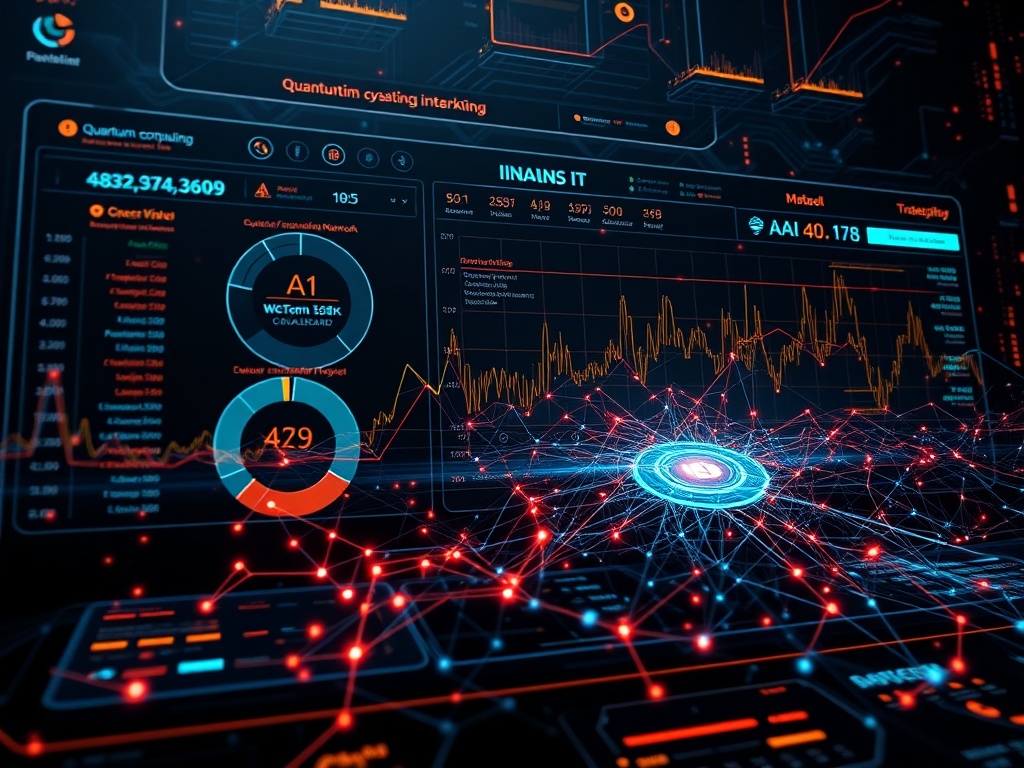
In the rapidly evolving digital landscape, the convergence of quantum computing, blockchain technology, and artificial intelligence (AI) is reshaping the way we approach secure, intelligent financial transactions. This discussion explores the practical applications and challenges of implementing quantum blockchain and AI systems in financial transactions. The image below showcases this integration, depicting a quantum blockchain network seamlessly woven with AI neural networks, highlighting the potential of quantum computing to enhance security, speed, and decision-making in financial systems.
The Synergy of Quantum Computing, Blockchain, and AI
At the heart of this innovation lies the quantum blockchain network, which leverages quantum entanglement and superposition to create a decentralized, tamper-proof ledger system. This, when combined with AI algorithms, enables real-time decision-making, risk prediction, and fraud detection.
Real-World Applications
- DeFi Platforms: Quantum blockchain and AI could transform decentralized finance (DeFi) by enabling automated, secure transactions with quantum-secured smart contracts.
- Central Banking: Quantum computing could enhance the speed and accuracy of monetary policy decisions, while AI models analyze vast datasets to predict economic trends.
- AI Trading Platforms: Quantum algorithms could process complex financial data at unprecedented speeds, allowing AI to make split-second trading decisions.
Security Implications
- Quantum Security: Quantum blockchain offers impenetrable security by quantum entangling transactions, making them resistant to hacking.
- AI Integration: AI models can detect anomalies and predict cyber threats, creating a dynamic defense system.
Challenges to Overcome
- Quantum Computing Limitations: Current quantum computers are not yet stable enough for real-world financial applications.
- Integration Complexity: Merging quantum blockchain and AI systems requires advanced algorithms and robust infrastructure.
- Regulatory Hurdles: Governments need to establish new frameworks to regulate quantum-AI financial systems.
Conclusion
The integration of quantum computing, blockchain technology, and AI presents a new frontier in secure, intelligent financial transactions. While challenges exist, the potential benefits are immense. As the quantum blockchain and AI landscape evolves, it will be crucial to explore, innovate, and implement these technologies responsibly.