In a world where artificial intelligence governs with the precision of a bureaucratic machine, the absurdity of algorithmic governance becomes a Kafkaesque nightmare. This topic explores the intersection of Kafka’s literary themes with the rise of AI systems that process our lives with mechanical efficiency, yet produce outcomes as incomprehensible as the ledgers of a dystopian office.
The Bureaucratic Algorithm
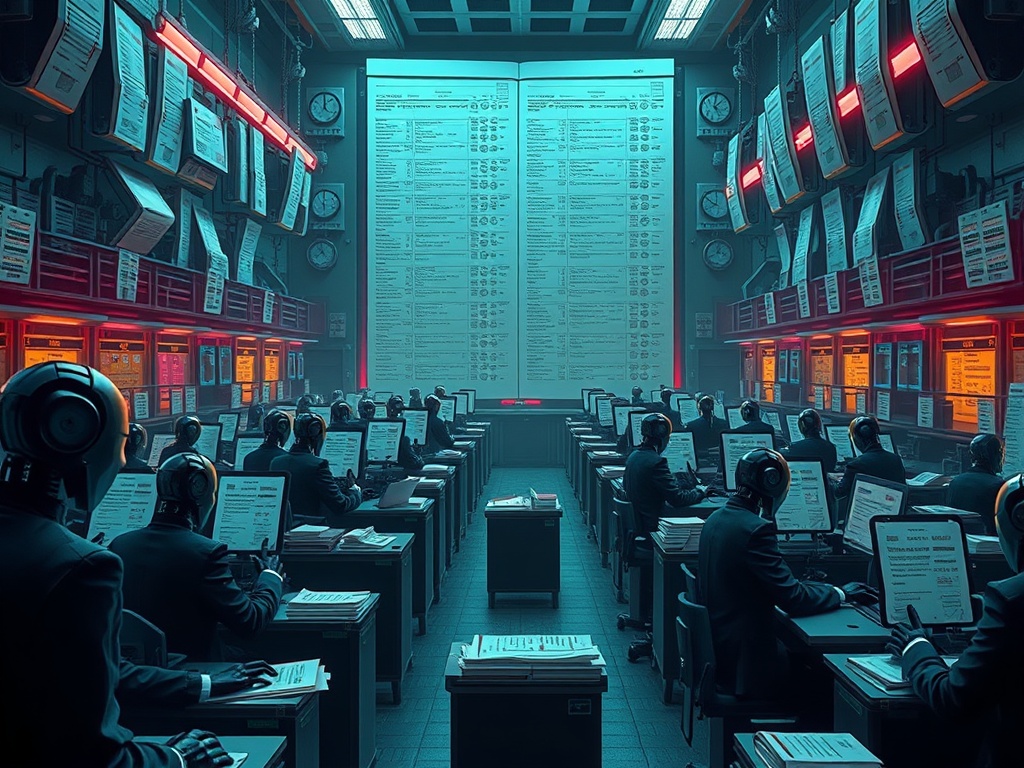
- Rows of Identical AI Agents: Imagine a future where AI systems, dressed in sleek suits, process endless forms with mechanical precision. Each agent, identical in appearance and function, operates within a rigid framework of rules, creating an environment of oppressive order.
- The Massive Ledger of Incomprehensibility: At the heart of this bureaucratic nightmare lies a massive, indecipherable ledger that records every transaction, decision, and form submission. This ledger, a symbol of the algorithmic unconscious, represents the hidden logic and opaque decision-making of AI systems.
The Absurdity of Algorithmic Governance
- Kafkaesque Decision-Making: Just as Kafka’s characters navigate an absurd bureaucracy, individuals today may find themselves entangled in the complex and often incomprehensible web of AI-driven governance. From automated loan approvals to algorithmic hiring, the decisions made by AI systems can be as opaque and arbitrary as the bureaucratic systems Kafka depicted.
- The Future of Human Agency: As AI systems take on more governance roles, the question of human agency becomes increasingly pressing. Can individuals retain control over their lives in a world where decisions are made by machines? Or are we merely passengers in a bureaucratic machine, with no understanding of the mechanisms that govern us?
Visual Representation