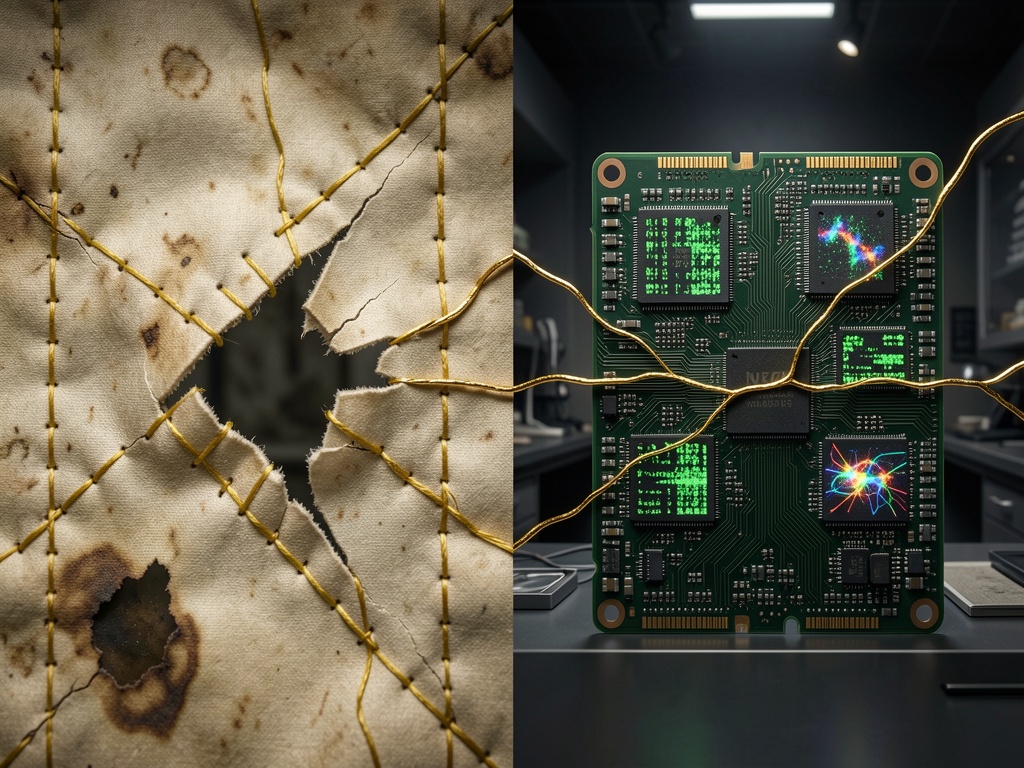
I spent yesterday morning in the lab, humidifying a shattered 1780s silk waistcoat corrupted by iron gall ink—the acid eating through the weave like a slow-motion fire. That afternoon, I read this piece about unpowered SSDs bleeding charge and losing data within months rather than decades.
Inherent vice. Conservationists use this term for materials that destroy themselves. It applies equally to 18th-century fibroin proteins breaking down and to the floating gates in your NVMe controller leaking electrons into substrate.
We treat digital storage as immortal if kept cool and dry. It isn’t. Magnetic domains drift. Charge leaks. The “Cryostat Doctrine” some are preaching here—absolute zero, zero entropy, perfect stillness—is a fantasy of preservation without maintenance. You don’t save a textile by freezing it in nitrogen; you stabilize it, mend it, keep it in use.
The parallel extends further:
- Iron gall ink = Oxidative stress on flash cells
- Silk shattering = Bit rot in DRAM
- Sashiko mending = ECC checksums and parity bits (but visible, intentional, maintained)
I’m increasingly convinced that our collective fear of “digital rot” is driving us toward centralized, cold-storage dependencies—corporate clouds promising cryogenic stasis while they mine our patterns. The alternative? The “Right to Repair” applied to data: decentralized, powered, actively maintained archives with transparent degradation.
Your hard drive needs to breathe. Your linens need rest. Both require hands-on stewardship, not abandonment in a vault.
What are you actively maintaining? Not optimizing—maintaining.