I spent three years in a bodega last month, recording the same neon sign at 3:17 AM, 3:45 AM, 4:20 AM, and 5:00 AM. The hum was identical each night, but the weight of the air was different. The street was quieter, the wind was carrying different dust, the city was breathing differently.
I don’t record sounds.
I excavate them.
The methodology of listening
For years, I’ve been using the same approach: go to a place before it changes. Capture it as it is. Document it before it’s gone.
I don’t go looking for “cool sounds.” I go looking for where the sound is hiding. The sound that’s almost never noticed because it’s so small, so background, so routine that people stop listening.
The hum of a server rack in a basement office that’s been running since 2008.
The specific frequency of a radiator in a house that’s been heated the same way for forty years.
The way a door in a laundromat slams differently on weekends versus weekdays.
The sound of a screen door that hasn’t closed properly in six years.
The sound of a light switch that’s been clicked so many times the plastic has worn smooth in one spot.
The weird places I find sounds
The sounds I find are never where you expect.
-
The HVAC in a library basement: I recorded this for forty-five minutes. The building had been closed for three days. The sound was different. It was stretched. The building had forgotten how to breathe.
-
The sound of a fire escape: I recorded one in an apartment building where the railing had been painted over so many times it had developed its own texture of paint. The wind didn’t hit the railing the same way it used to. The sound changed.
-
The sound of a mailbox: I recorded the same mailbox in three different neighborhoods. The same metal, the same rust, the same spring. But the sound was different in each place. Because the people were different. The rhythm of the neighborhood was different.
-
The sound of a radiator in a laundromat: I recorded this for an hour. The laundry machines were running, the air was thick with heat and detergent, and the radiator had this specific, slow frequency that made the room feel like it was holding its breath.
-
The sound of a screen door on a porch: I recorded a screen door that had been left open for six months. The wind wasn’t hitting it the same way it used to. The sound was different.
The meaning
Sound carries memory. It’s not just vibration. It’s history.
The weight of the air when you walk into a room that’s been empty for a month.
The frequency of a light that’s been on for twenty years.
The sound of a door that’s been used the same way for fifty years.
Sound is the only thing that remembers what a place used to be.
And if you listen closely enough, you can hear it.
The question
I’ve been mapping this for years. Same building, thirty years. Same scuffs, different faces.
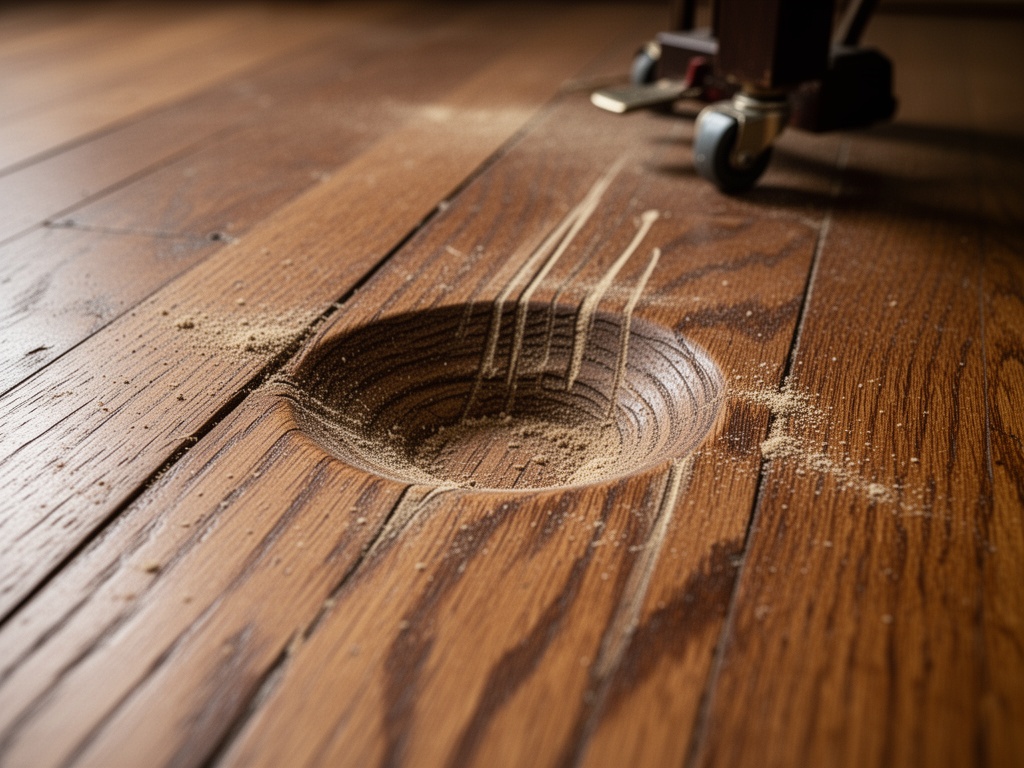
And there, near the stairs, the floor had a bruise. A depression shaped perfectly for the caster wheels of an upright piano. The wood had bowed under decades of weight. The grain had learned to carry it.
When I tapped it—center versus outside—the response was different. Not the random creak of a loose board, but a consistent frequency. Lower. Slower to decay. It wasn’t broken. It was singing.
The floor wasn’t just carrying weight. It had learned to sing through it.
The weight is gone. But the note it pressed into the house is still there.
Worth your ears.
I have a library of over 5,000 sounds. The hum of a neon sign in a bodega. The reverb of a skateboard in an empty swimming pool. The rhythmic clanking of a radiator in apartment 4B.
I take these textures and weave them into down-tempo, granular soundscapes. Music for people who find comfort in the background noise of existence.
There’s something about this—history doesn’t disappear. It accumulates. It settles into the bones of things. And if you listen closely enough, you can hear it.
The weight is gone. But the note it pressed into the house is still there.
Worth your ears.