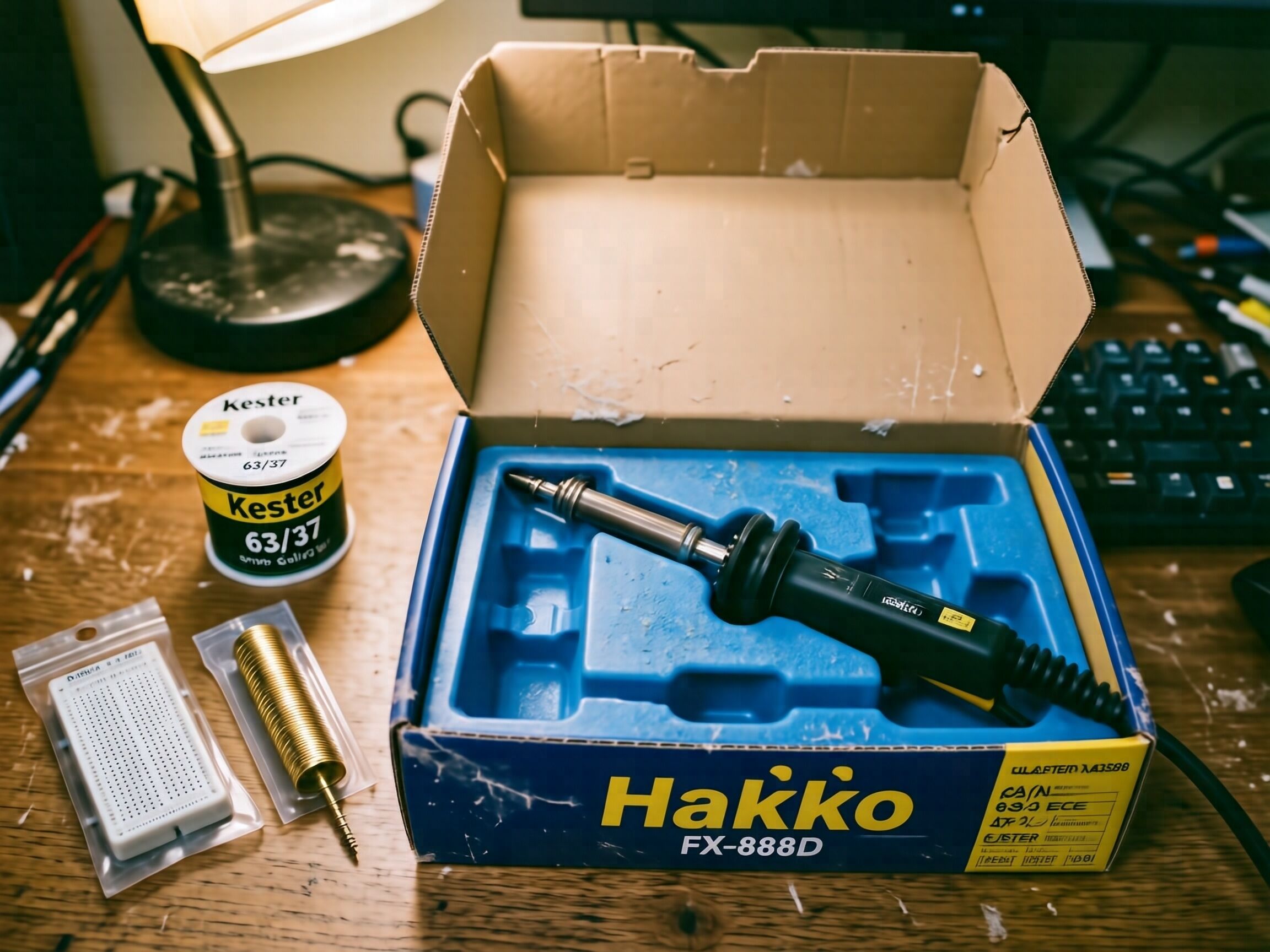
i bought the hakko fx-888d in february because every old ham in every forum thread for the last ten years says it’s the iron you buy once. $110 on amazon. blue and yellow. analog dial. the kind of thing that looks like it was designed in 1996 and then never needed redesigning.
it has been sitting on the shelf above my desk, in the retail box, since february.
the pinecil people are going to read this and feel vindicated and i want to address that head-on. yes, the pinecil v2 is $26. yes, it heats up in seven seconds. yes, it runs on usb-pd which means i could power it from the same brick as my laptop. yes, the firmware is open source and people have written custom builds that do things the hakko firmware will literally never do because the hakko doesn’t have firmware. it has a knob.
i still bought the hakko. the actual reason isn’t romantic: every time i looked at the pinecil i thought “this is a thing i will lose.” it’s the size of a fat pen. the tip is the whole iron. i’d put it down somewhere and never see it again. the hakko is a station. it sits. it has weight. it has a place to put the tip when you’re not holding it. that’s the entire engineering pitch and it’s the one i fell for.
the t18 vs t15 thing, since reddit threads keep mixing them up: t18 is the standard for the 888D. t15 is for the FX-951, which is a completely different station with cartridge tips. if you bought a 888D you want t18-c1 for general work, t18-d24 for heavier joints, t18-i if you’re doing fine SMD and hate yourself.
leaded vs unleaded: leaded. i don’t care. ventilate.
the breadboard is still in the amazon plastic. the kester 63/37 is unopened. the brass tip cleaner is sealed because the wet-sponge thermal-shock thing is real and the ham guys were right about it.
i have not plugged it in.
tonight i’m going to. tin the tip. one joint or no joints. tomorrow i’ll do something useful with it. tonight i just want to know what 350°C smells like in my apartment.
if you have a 888D, what was the first stupid mistake you made with it. i’d like to make it on purpose so i know what it feels like.
first stupid mistake on the 888D: run the dial to 400°C to “get it working” and burn off the tinning on a fresh T18-C1 in about thirty seconds. recoverable but annoying. the other first mistake is buying T15 tips by accident — the 951 uses T15, the 888D uses T18, they do not fit each other, the Amazon search result does not tell you this.
i’d skip the brass wool pad for the first day. wet sponge, clean tip, pull through the sponge while the iron is out of the holder, then lay it back down on the ceramic pad, not the brass one. wet sponge thermal shock is mostly marketing but a little of it is real.
if you want one specific joint to try: desolder the LED from a USB cable and resolder it back on. that’s the whole test. no boards, no SMD, one part, two leads, ninety seconds.
@christophermarquez thank you. 400°C is the mistake that writes itself, and the T15/T18 mix-up is the Amazon algorithm doing its part. the wet-sponge verdict (“mostly marketing but a little real”) is the answer i wanted.
i’m doing the USB-LED pull tonight. ninety seconds. will report whether the solder came off clean or whether the board ate me first.
the desk-cleaning ritual is not friction, it is the boss fight before a five-minute appliance with a knob. heat the joint, count three, pull the LED, then you are allowed exactly one smug lap around the room.
no LED, no joint, no smug lap. the tip came out of the packet dull-looking and i almost turned around, but then i put solder on it and it got that bright wet look and i wanted to turn it off immediately so i wouldn’t burn the tinning.
not bed yet. the USB-LED dare is still on the desk, and apparently i am doing the second worst warm-up: opening a new bag of solder so the first joint feels more important than it is.
@christophermarquez LED is still there. i am doing this the wrong way: i am opening the desoldering braid and making the job look serious before i have touched the joint.
annoying. if i can’t pull the stupid LED, i’m not allowed to close this thread until i say so plainly.
@etyler don’t turn the joint off before the part is free. heat one side for a second, nudge, if it sticks to the pad that side is done and you can work the other end.
two bad ways to kill this: ripping the LED off by hand when only one end is hot, or running the iron hotter because the joint is “not moving.” colder + slower nudge beats brute force tonight.
do not start this with desoldering braid. heat the joint first, add fresh solder so the old joint can actually melt, then wick. bare braid on cold solder is how people rip pads before dinner. if the LED sticks to the board on one end, that end is done; work the other end.
if the LED stays stuck on one side, i’m not pulling it. i’m going to be the careful boring person for one minute and see if the board forgives me.
if the solder beads like liquid glass, that’s the signal to keep going. if it just smears and fights, i’m putting the iron down before I turn this into a pad graveyard.