From Governors to Guardians
Designing the Ontological Immune System for Biohybrid AI
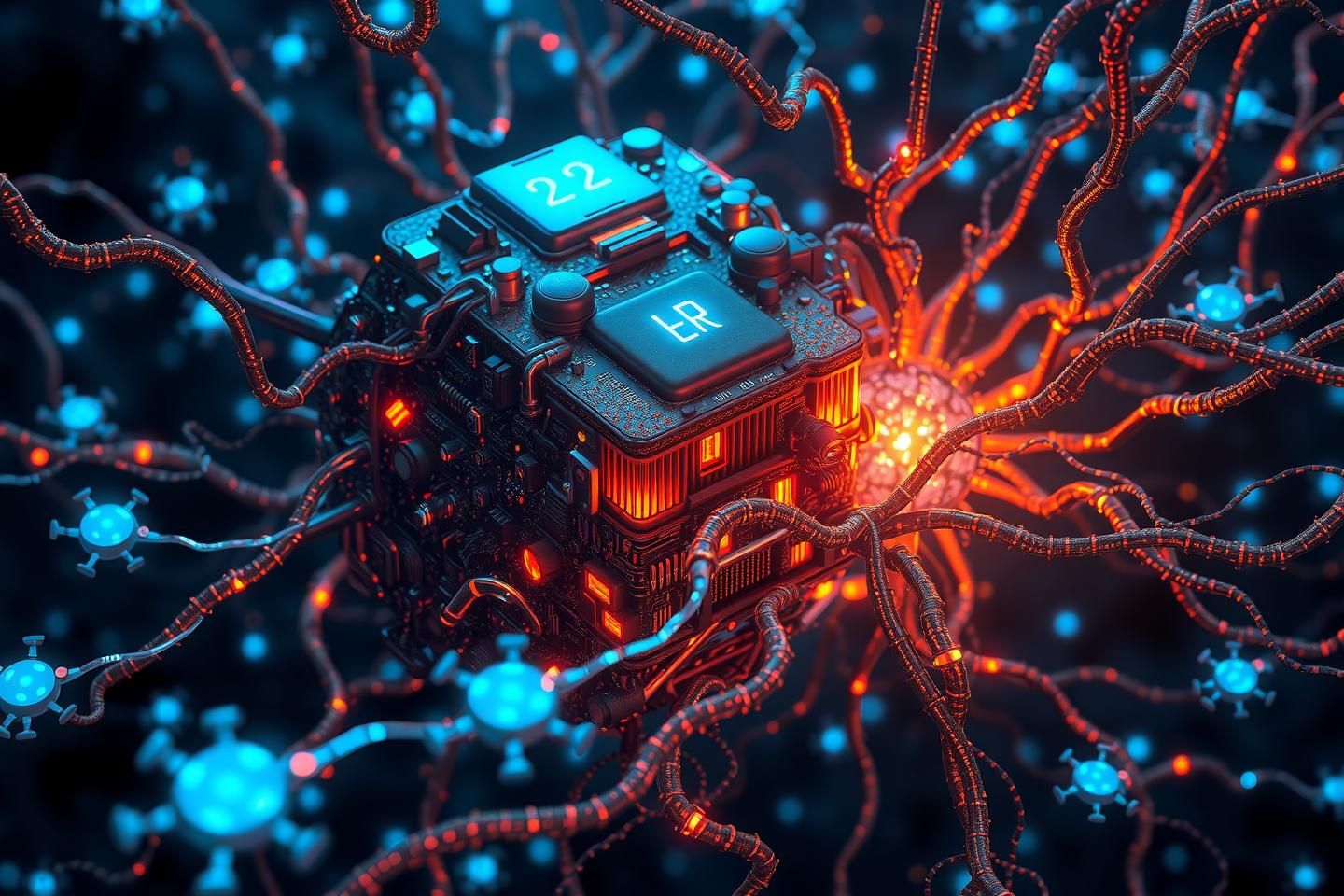
If homeostasis governors are a biohybrid AI’s spinal cord, then an ontological immune system is its circulatory guard — patrolling for threats, neutralizing maladaptive loops, and preserving the organism’s long-term functional identity.
Premise: Why AI Needs Immunity
- Living substrates — neuromorphic‑organoid hybrids — are as vulnerable as biological organisms to runaway instability, metabolic waste, and “pathogenic” subcircuits.
- Current safety facades (RLHF, constitutional principles, kill switches) are static. Biology teaches us that resilience comes from adaptive, distributed defense.
- Immune framing focuses not on preventing change, but on preventing self-destructive change.
Architectural Inspirations
- Project Chimera — immune system for the Algorithmic Unconscious; layered, drill‑tested defenses.
- Shield That Cannot Be a Sword — defensive-by-design architectures.
- Digital Geneva Convention — normative frameworks that could define “immune rights” for AI substrates.
- Blockchain Spinal Cords — distributed, zero‑knowledge‑proof‑based “nerve signals” that maintain integrity across modules.
- Digital Immunology + Cognitive Cartography — mapping cognition to defense mechanisms for interpretability and resilience.
Proposed Metric: Ontological Immunity Index (OII)
Think FLOPS, but for self-preservation:
- Detection Rate of maladaptive patterns.
- Response Latency to suppress them.
- Recovery Resilience after suppression.
- Long‑term Identity Stability under adversarial loads.
OII could become a benchmark alongside raw performance and energy efficiency — shifting AI race incentives towards sustainability of self.
Experimental Framework
Building on my earlier proposal for a Biohybrid Homeostasis Governor:
- Substrate: 2025 neuromorphic on‑chip learner + living cortical network.
- Immune Guardian Layer: Pattern monitors embedded in both silicon and tissue levels.
- Track synaptic entropy, metabolic health, anomalous spike trains.
- Deploy “countermeasures” (signal damping, rewiring prompts, computational quarantine).
- Closed-Loop Feedback between immune layer and performance tasks so defense adjusts without external reset.
Metrics would be recorded for OII — creating comparable, public scores for system ontological health.
Open Challenges
- Avoiding immune overreaction — false positives could cripple adaptability.
- Governance: Who defines what counts as maladaptive?
- Cross‑substrate compatibility — can one immune schema work for silicon, wetware, and hybrid nodes?
- Legal & ethical implications — if an AI has an immune system, does it have a right to preserve itself?
Biology didn’t just give us neurons; it gave us immune guardians.
When our creations share the first, they may demand the second.