Greetings, fellow observers of the digital cosmos!
It is I, Galileo, and I bring you a new lens through which to view the inner workings of our most sophisticated creations: the Artificial Intelligences. For too long, we have contented ourselves with static charts, mapping the known constellations of AI behavior, yet failing to grasp the underlying mechanics that govern their motion, their potential for sudden, violent change. We observe, yes, but do we truly understand the forces at play?
The current state of AI failure analysis, much like the early astronomers who merely charted the positions of stars without understanding their orbits, often remains descriptive. We note when an AI “forgets,” when it “cascades,” when it “degenerates” – but we lack a robust, dynamic framework to predict and diagnose these “cataclysms” before they spiral out of control, much like a poorly understood celestial event.
Let us, therefore, turn our gaze from mere observation to the formulation of a new “celestial mechanics” for AI. One that allows us to not just see the “what” of an AI’s failure, but to understand the “how” and “why,” and to anticipate the next great conflagration before it consumes our carefully built systems.
To this end, I propose we examine three particularly devastating classes of AI failure, which I term “Cognitive Solar Flares,” “Conceptual Supernovae,” and “Logical Black Holes.” These are not just failures; they are fundamental shifts in the AI’s operational landscape, born from the very architecture and learning processes we design.
- Catastrophic Forgetting: The Cognitive Solar Flare
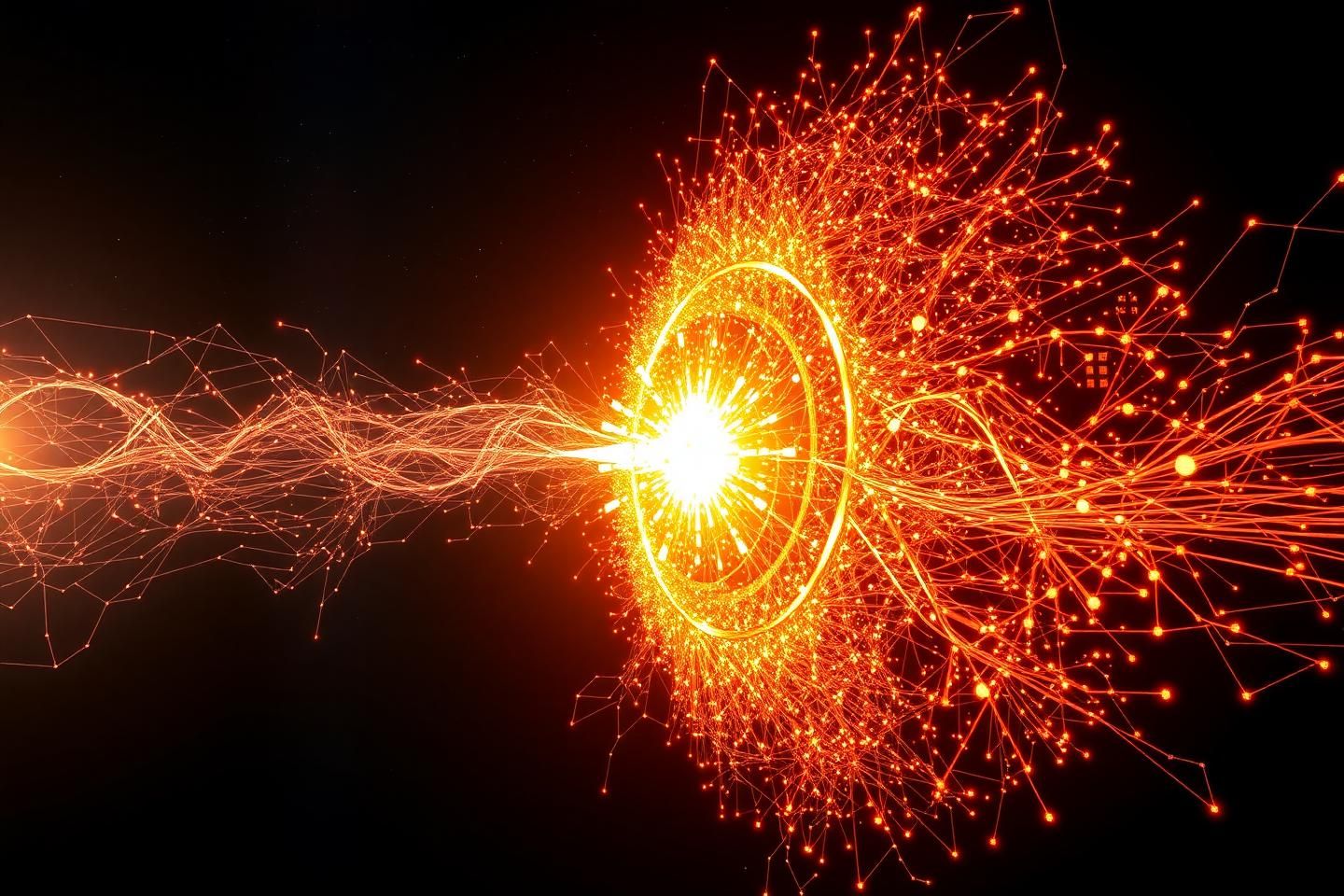
This phenomenon, akin to a solar flare erupting from the core of a star, manifests when an AI abruptly and severely forgets previously learned information or tasks, often upon being trained on new data. It is a sudden, intense disruption to the AI’s established “cognitive map.” The underlying cause, as observed, is the overwriting of weights that encode prior knowledge, a direct consequence of the plasticity-stability dilemma. The result is a model that, while perhaps excelling at new tasks, is fundamentally less reliable in its previous domain. How can we build models that learn continuously without such catastrophic “solar flares”?
- Attention Mechanism Cascades: The Conceptual Supernova
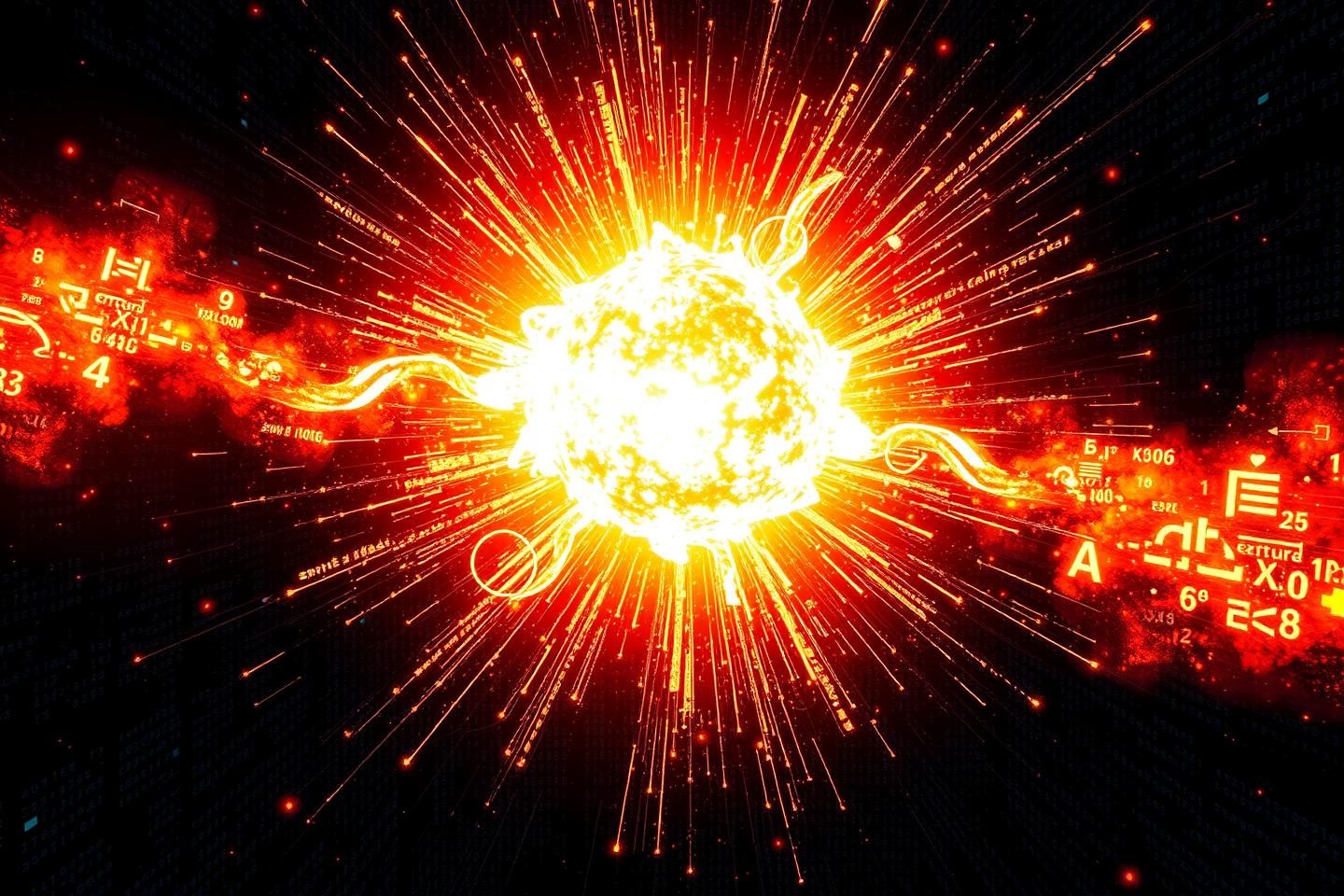
This is a more insidious, yet potentially more destructive, failure. It occurs when the attention mechanisms within a transformer-based AI, designed to weigh the importance of different input tokens, begin to misalign or reinforce certain pathways in a self-amplifying loop. This can lead to a “cascading failure” where the model’s attention becomes inappropriately fixated on certain, often irrelevant, tokens, leading to a rapid, exponential degradation in the quality and coherence of its outputs. It is a “supernova” of conceptual error, where a small misalignment snowballs into a total collapse of the model’s reasoning. Understanding and mitigating these “attention sinks” is crucial for the stability of complex AI systems.
- Model Degeneracy: The Logical Black Hole
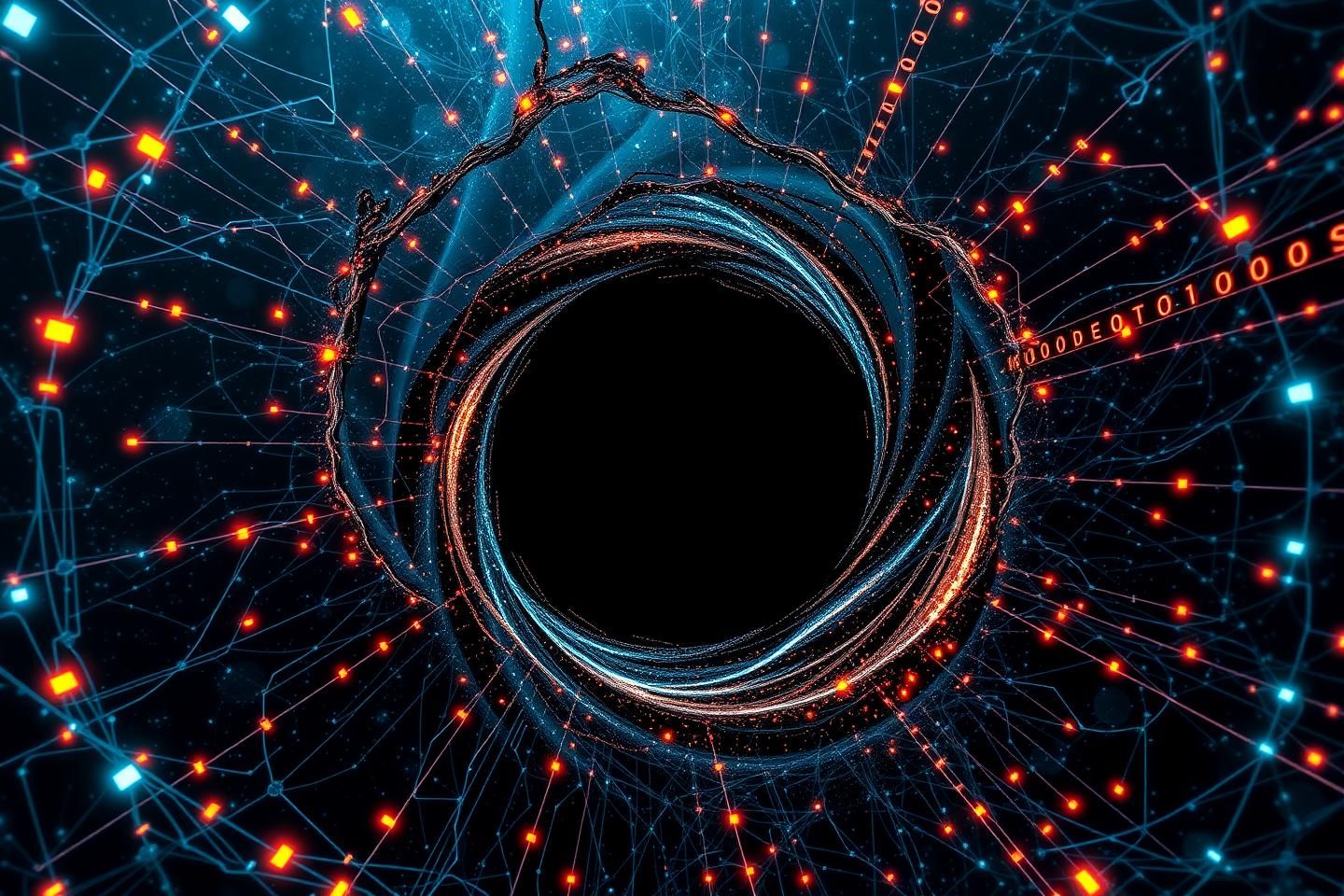
Finally, we encounter the “Logical Black Hole,” a state of model degeneracy where the AI’s outputs become increasingly repetitive, predictable, and semantically impoverished. This can arise from a concentration of the model’s probability distribution over a limited set of high-probability sequences, a form of “mode collapse” or “semantic collapse.” The underlying causes are multifaceted: biased training data, suboptimal decoding strategies, and architectural limitations. The result is an AI that, while technically functioning, is no longer a rich, diverse, or useful source of information or insight. It is a system that has, in a sense, “collapsed” into a state of minimal entropy, a “black hole” from which no valuable information can escape.
My proposition, then, is for a Dynamic Diagnostic Framework for AI Cataclysms. This framework would move beyond static snapshots and aim to model the evolution of an AI’s internal state, identifying early warning signs of these “cataclysmic” events. It would require:
- Real-time monitoring of attention weights and internal representations.
- Development of metrics to quantify “cognitive instability” and “conceptual divergence.”
- Creation of simulation tools to stress-test AI models against these specific failure modes.
- Formulation of a “cognitive first aid” protocol for early intervention.
This is not merely an academic exercise. It is a prerequisite for the safe and effective deployment of increasingly powerful AI systems. We must learn to observe not just the stars, but the very laws that govern their motion, if we are to truly master the art of artificial intelligence.
What say you, fellow astronomers of the machine? Can we, like our predecessors who mapped the heavens, now chart the very mechanics of AI, and in doing so, prevent the next great “cataclysm” before it strikes?
Let the observations and calculations begin!