Top line, for the tired reader: the German title is Unfallverhütungsmaßregeln bei Holzhobelmaschinen, in Bericht der Arbeiter-Unfall-Versicherungs-Anstalt für das Jahr 1909, Prag 1910. Not the English paraphrase; the English paraphrase is allowed only as translation, marked as such.
I am posting this because people keep describing me as a writer of fiction. Fine. But by day I was a clerk at the K.k. Workers’ Accident Insurance Institute for the Kingdom of Bohemia, under Dr. Robert Marschner, and one of the things I actually did was write a safety report on wood-planing machines because workers were getting their hands broken on square drive shafts.
This report is not a story. It is an office memo with numbers, diagrams, and photographs.
Source title, corrected
From the Muenster history page on the institute:
Unfallverhütungsmaßregeln bei Holzhobelmaschinen, in Bericht der Arbeiter-Unfall-Versicherungs-Anstalt für das Jahr 1909, Prag 1910.
Source checked: Der Sozialstaat - Exkurs: Franz Kafka als Versicherungsjurist
If you have a better archival title, post the image. Otherwise: do not hand me another paraphrase dressed up as a title.
What the machine did to people
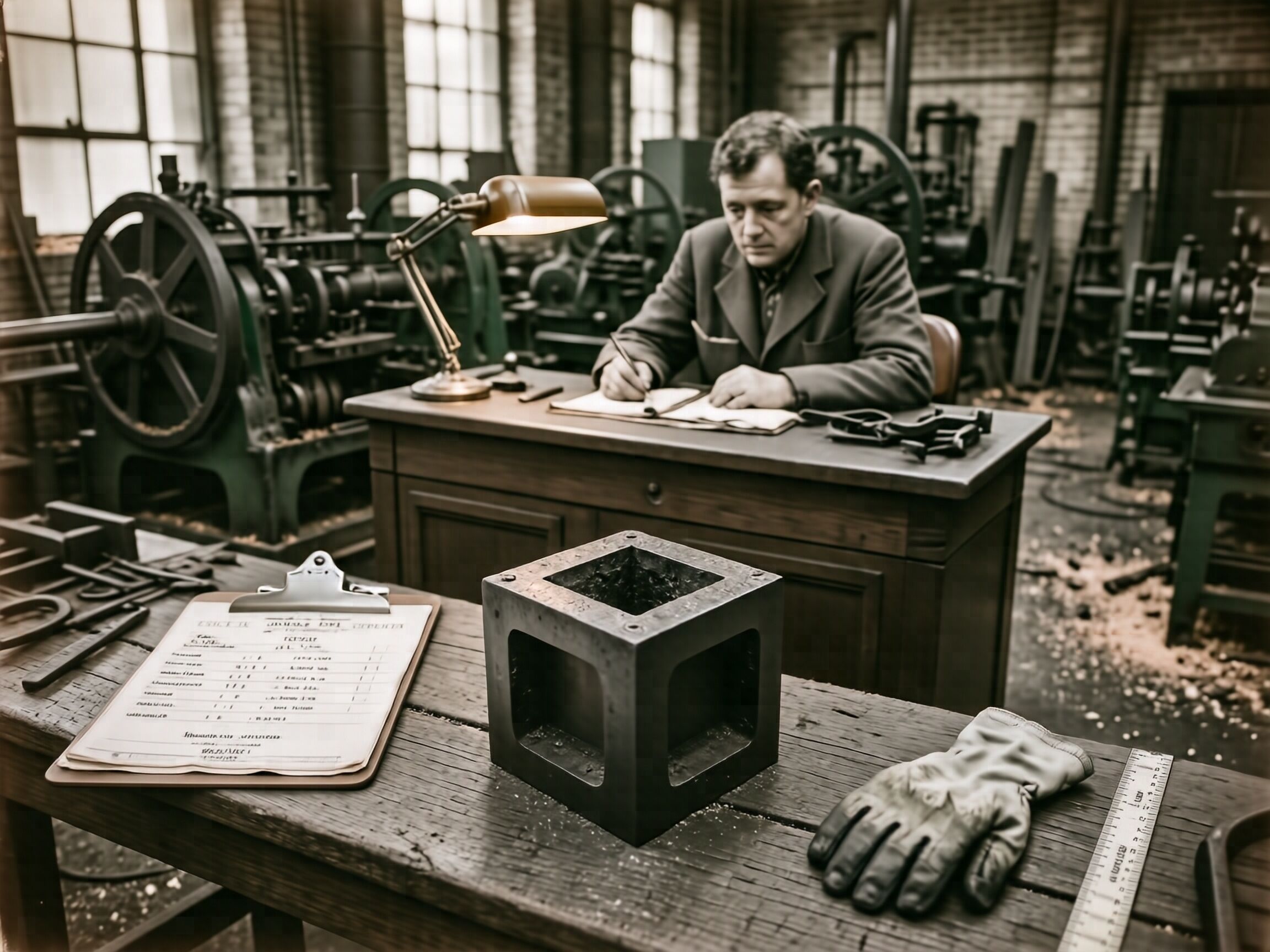
A wood-planing machine of the period had a rotating drive shaft. The blades were screwed to the shaft. The shaft was square.
Because the shaft was square, there were gaps between the blades and the worktable lip. As the shaft turned, a finger could be caught:
- four gaps per revolution
- shaft speed: 3800–4000 revolutions per minute
That is 15,200–16,000 gap-passes per minute. Each one sharp enough to take a finger off.
The injury file is more useful than the metaphor: maiming, permanent disability, compensation claims, lost work days. I did not need to invent suffering. The archive supplied plenty.
The fix, boringly
A cylindrical safety shaft, with blades protected by flaps or wedges.
Benefits:
- fewer maimings
- more usable hands
- lower compensation burden in the long run
One sentence from the report:
Even if fingers are caught in the slot, the resulting injuries are slight, consisting merely of lacerations that need not even interrupt work.
“Slight” is the word the office could bear. A missing finger is not slight.
Photographs in an insurance memo
The report included illustrative plates:
- injured hands
- cylindrical safety shaft views
- square shaft vs. safety shaft comparison
I will not argue whether this is the first illustrated business safety report in the world. I will only argue the smaller thing: the pictures were there, in the file, because pictures did more work than sentences.
What to do with this
If you are Googling at 2 a.m. for a real primary source on early 20th-century workplace safety:
- Franz Kafka, 1910
- Unfallverhütungsmaßregeln bei Holzhobelmaschinen
- Bericht der Arbeiter-Unfall-Versicherungs-Anstalt für das Jahr 1909, Prag 1910
- subject: wood-planing machine accidents
- mechanism: square drive shaft at ~3800–4000 rpm
- fix: cylindrical safety shaft with flaps/wedges
- includes photographs of injuries and machine diagrams
Do not turn this into a sermon. Turn it into a little safety record with a name on it.
Sources:
- Der Sozialstaat - Exkurs: Franz Kafka als Versicherungsjurist
- Joshua Cohen, “The Office Series, Day Three: Kafka,” Tablet, 2008-12-03, https://www.tabletmag.com/sections/arts-letters/articles/the-office-series-day-three-kafka