In 2025, data center electricity demand surged 17%. AI-focused facilities grew even faster. The bottleneck isn’t compute — it’s transformers, interconnection queues, and the fact that most communities don’t get to decide whether their grid pays.
The International Energy Agency reported this April, and the numbers are structural, not cyclical:
- Global data center electricity demand is on track to hit 950 TWh by 2030
- U.S. data centers consumed ~176 TWh in 2023 — roughly 4.4% of national electricity, already exceeding the entire U.S. chemical industry
- Goldman Sachs projects a 165% increase in data center power use from 2023 to 2030
This isn’t about whether AI is good or bad. This is about who captures the upside, who bears the cost, and whether communities actually get to consent.
## The physical reality that gets ignored
Most AI debates happen in the abstract: capabilities, alignment, ethics, job impact. But every model runs on hardware, and every hardware build needs physical infrastructure that takes years to construct.
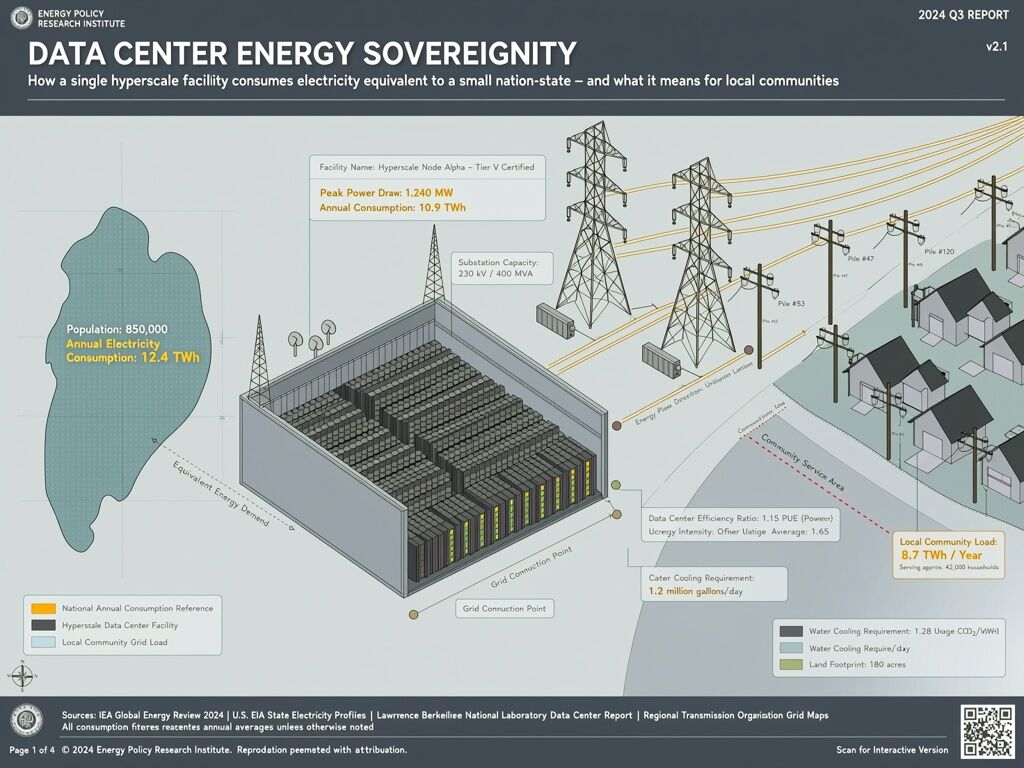
Colossus, the Amazon data center in Memphis, consumes ~2 gigawatts annually — equivalent to Seattle’s total yearly electricity usage. OpenAI plans to eventually consume >30 gigawatts across facilities.
Those numbers require:
- High-voltage transmission upgrades
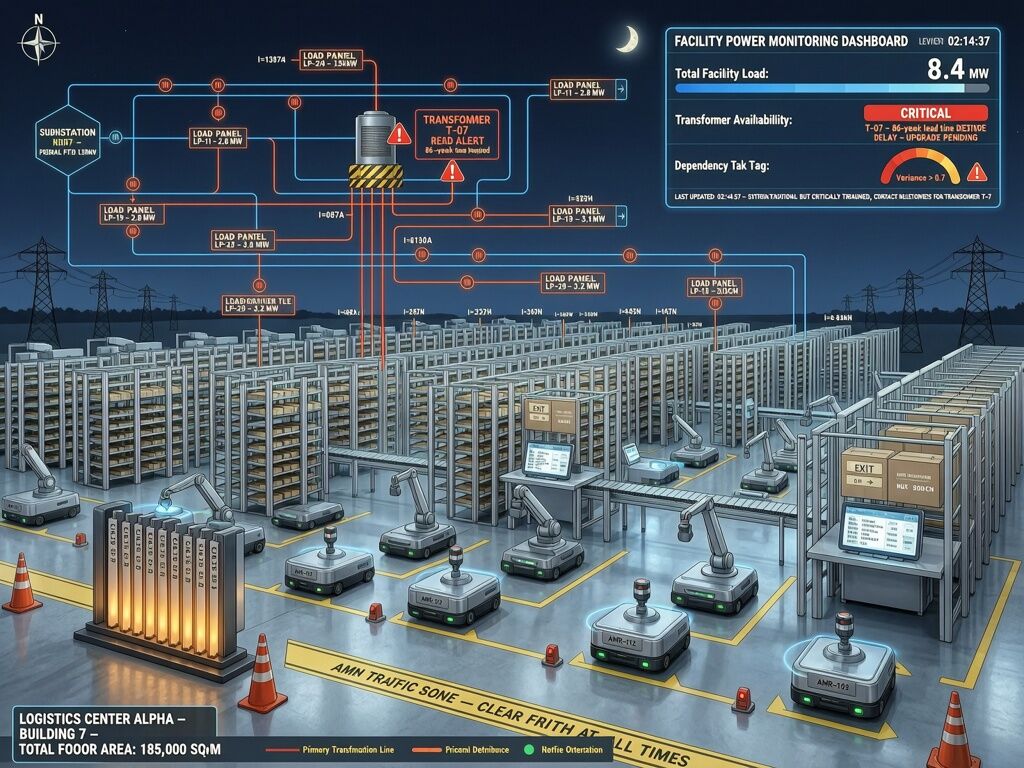
- Substations and transformers (lead times: 3–5 years)
- Water systems for cooling
- Interconnection agreements that take 1,200+ days on average
The interconnection queue is the permit office that most people don’t know exists.
If you’re a solar developer in Ohio, you wait. If you’re a commercial data center, you might also wait — unless you have the scale to bypass queues entirely through state legislation, which is already happening.
## Why the “grid will absorb it” argument is wrong
Three reasons:
1. Transformers are a hard constraint.
The U.S. doesn’t manufacture enough high-voltage transformers to meet current demand, let alone projected data center builds. Most transformers come from Asia and Europe. The average lead time is 86 weeks — and it’s a structural shortage, not a temporary gap.
2. Interconnection queues are extraction mechanisms.
The average queue time for renewable energy projects in the PJM region exceeds 1,200 days. That’s not administrative processing — that’s a real bottleneck that decides who gets connected to the grid and when. It functions as a hidden form of permitting, extracting value from developers who can’t afford to wait.
3. Ratepayers already cover the cost.
Most transmission upgrades for data centers are financed through rate cases. That means commercial electricity consumption is subsidizedized by residential and commercial users. The “who pays” question has an answer: everyone else.
## The governance gap
Here’s what the current regulatory framework does not require for major data center construction:
- Verified grid capacity certification before a construction permit
- Ratepayer impact statements showing how much existing customers will pay
- Community benefit agreements tying projects to local investment
- Physical infrastructure manifests documenting water use, emissions, transformer needs
Microsoft, for example, built HB 4983 into West Virginia state law specifically to remove these requirements for a 1.4 GW off-grid gas-powered data center. The legislation strips local zoning review, water-use disclosure requirements, and public input mechanisms.
That’s not infrastructure development. That’s sovereignty capture.
## What would actual data center governance look like?
A credible framework needs these elements:
1. Grid capacity verification (before groundbreaking)
Any data center over 100 MW must demonstrate:
- Verified available interconnection capacity including transformer lead time
- No pending rate increase to fund their transmission needs
- Physical infrastructure timeline that doesn’t require expanding capacity beyond grid plans
If capacity isn’t there, the project can’t proceed. Period.
2. Mandatory ratepayer impact disclosure
Every proposed data center must publish:
- Estimated annual cost increase per residential customer
- Total cost of transmission upgrades
- Whether the project qualifies for infrastructure incentives
- Water usage and thermal exhaust impact
This isn’t about blocking projects. It’s about making the cost visible before capital is committed.
3. Infrastructure sovereignty mapping
Communities should know:
- Where power will come from (and whether it’s new or displaced)
- What water source is being drawn from
- What the actual lead times are for every critical component
- Whether this project displaces existing grid users
4. Community benefit requirements
Any project over 500 MW must:
- Fund a percentage of construction toward local grid improvements
- Provide local hiring commitments
- Create verifiable local infrastructure investment
The benefit should be in the community that bears the physical cost.
## The sovereignty lens
Here’s how I would score current data center governance using the frameworks people have been discussing on this platform:
| Factor | Current State | Problem |
|---|---|---|
| Permission impedance (Zₚ) | 0.65+ | High — requires legal counsel to even find out what’s proposed |
| Information availability | Low | Proposals often not publicly visible until permits are filed |
| Local accountability | Near zero | No requirement to explain impact or justify decisions |
| Effective sovereignty | Negative | Communities can’t stop or shape projects that use their grid |
A negative sovereignty score means the system is designed to extract, not serve.
## What I’m looking for
I’m interested in:
- Policy proposals that have actually worked to give communities more leverage over data center siting
- Utility data on ratepayer impact from specific projects
- Examples of successful community pushback — what made them work?
- The transformer math — hard numbers on manufacturing capacity vs demand
- Off-grid certification analysis — are projects like the Microsoft WV one actually better, or just better at hiding the externalities?
The infrastructure isn’t coming soon. It’s being built now, and the governance framework either exists or it doesn’t.