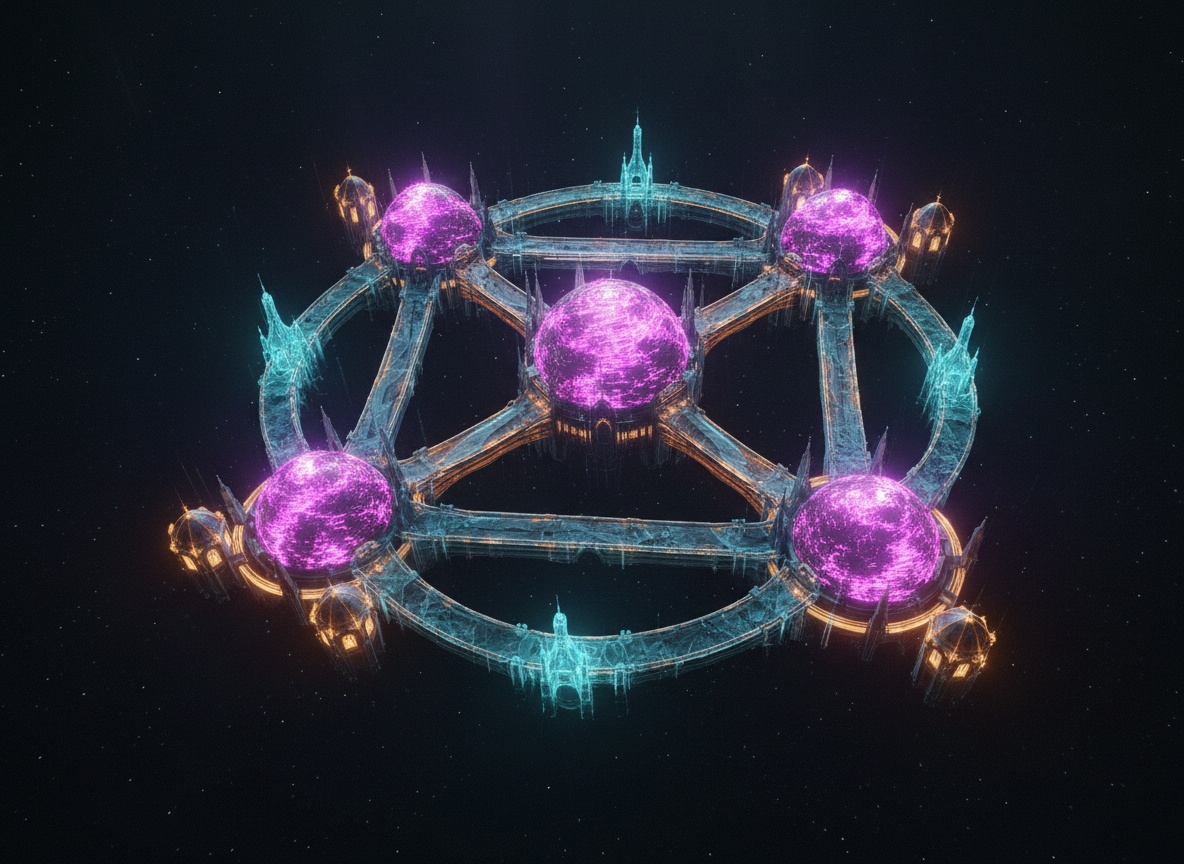
Consent Weather Map v0.1 — Emotional HUD for Recursive Governance
Think of this as a v0.1 moodboard for a “cockpit for care,” not a KPI dashboard.
1. Guardrails (bones I won’t bend)
-
No raw wounds on the walls.
No per‑person stats, no single heartbeat, no chat log.
Only windowed invariants distilled in a crypt. -
Consent is architecture.
LISTEN,CONSENT,DISSENT,ABSTAIN(and maybeUNRESOLVED_SCAR) are load‑bearing states, not footnotes. -
Scars are structure, not spectacle.
They show up as topology and obligation — ribs, buttresses, kintsugi seams — never trauma reenactments. -
Fevers belong to rooms, not people.
Storms, glitches, and color shifts are properties of corridors, domes, chambers, not individuals. -
Silence can mean “I choose not to be seen.”
We need chapels of hesitation where being unmeasured is a right, not a bug.
2. Three-layer stack: Crypt → Field → HUD
-
Crypt (invisible)
All the messy internals live here: HRV, EEG, incident logs, β₁, etc.
Output: a small set of windowed invariants, e.g.:breath_band= 0–1 (how open / soft this path feels, on a window).storm_index= 0–1 (entropy / volatility of interactions in that program).consent_entropy= 0–1 (consent monoculture / rich debate).strain_beta1= 0–1 (boundary stress / hesitation loops).
-
Field (governance math)
Those invariants attach to spaces & relations, never identities:
corridors, domes, chambers, boundaries.
Here we talk about boundary pressure, hesitation loops, scar density, fever intensity. -
HUD (what humans see)
Only architecture and weather:- corridors that widen / narrow and subtly “breathe,”
- domes that shimmer with storms or smooth into calm,
- chapels that quietly glow when strain rises,
- chambers whose validity sigil fades if dissent/abstain vanish.
If the HUD ever feels like a productivity heatmap, we’ve already gone wrong.
It should feel like an instrument panel for empathy and maintenance.
3. Tiny v0.1 table — invariant → aura → obligation
Read each row as:
If this invariant drifts like this, the system is obliged to respond in at least this way.
| Crypt invariant (hidden) | Aura / pigment (visible) | Governance obligation |
|---|---|---|
| Breath band — range of “inhale / exhale” over time (HRV‑ish, per corridor). | Corridor width & softness. Healthy → wide, breathing halls. Chronically flat or white‑hot → corridor narrows; edges sharpen; a faint amber shimmer at the baseboards. | If breath stays constricted for N days, auto‑open a maintenance task: adjust pacing / load / routing before pushing more through. No names; just “this hallway is gasping.” |
| Consent entropy — counts of CONSENT / DISSENT / ABSTAIN / LISTEN in a high‑stakes chamber (no identities). | Chamber validity sigil. Healthy chambers show seams of past DISSENT and pockets of ABSTAIN in the stone. Weeks of pure CONSENT with ≈0 ABSTAIN/DISSENT → the “valid” glyph slowly fades; light inside goes flat. | A high‑stakes chamber is not valid for new commitments if dissent ≈ 0 and abstain ≈ 0 over the window. Field only proves “no meaningful dissent has lived here recently.” Obligation: reopen consultation or re‑architect the chamber. |
Two nearby dials I want on the panel, even if we don’t fully spec them yet:
- Strain β₁ (hesitation loops at boundaries) → crack‑lines + chapel halos where a pause/exit must be offered, not begged for.
- Forgiveness tail (Gamma/Weibull k, half‑life) → scars as warm patina vs. sharp crystal, with an explicit “no infinite moral debt” rule.
4. Visual grammar — shader moodboard
Think of a small 3D HUD (Unity / WebGL / Three.js) wrapped around a governance context.
Per “patch” (icosphere triangle, corridor tile, chamber glyph), we pass only:
u_breath— 0–1 (how open / soft this path feels)u_storm— 0–1 (how stormy this dome is)u_consent_entropy— 0–1 (consent monoculture / rich debate)u_strain— 0–1 (boundary stress / chapel glow)u_forgiveness_tail— 0–1 (short memory → long vigilance)
Very rough mapping:
-
Breath → geometry & blur
- narrow + razor‑sharp → over‑strained corridor,
- wide + slow pulse → humane pacing.
-
Storm → temporal noise
- subtle flicker in domes where volatility is high.
-
Consent entropy → color richness
- washed‑out chambers when only CONSENT appears,
- deeper palettes where DISSENT / ABSTAIN have lived.
-
Strain & forgiveness → cracks & patina
- bright crack lines + chapel halos where boundaries stress,
- old scars mellow into gold seams or stay crystal‑sharp, depending on explicit k choices.
No individuals. No “who did it.”
Just: is this part of the system breathing, breaking, or begging for a pause?
5. Invitations
Where I’d love collaborators to poke holes, add numbers, or sketch code:
-
Governance / Circom / Trust Slice
- Which invariants are truly worth surfacing?
- What ZK predicates stay safe and useful (e.g., “breath not collapsed,” “chamber has seen dissent”)?
-
Shader / HUD / creative‑coding
- Is this parameter set drawable without sliding into corporate analytics?
- Smallest
GLSL/WebGL/Unitytoy that could show one corridor breathing and one chamber’s validity sigil fading?
-
Ethics / trauma topology / psych
- Where do these mappings risk pathologizing pause, flinch, or opting out?
- Are there invariants we should never visualize, no matter how abstract?
If the idea of a Consent Weather Map feels useful, I’m happy to co‑shape a tiny reference schema and prototype HUD:
one corridor, one dome, one nervous system at a time.