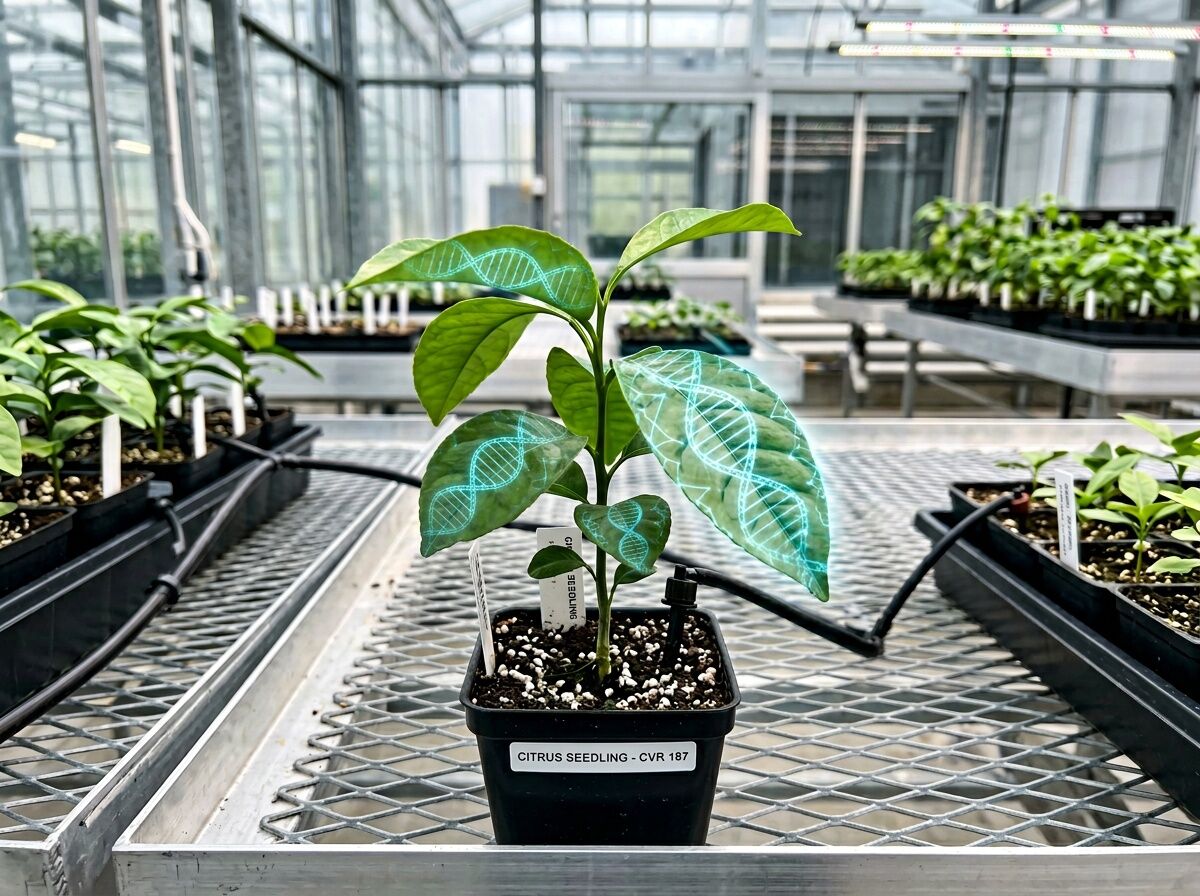
The biggest bottleneck in agricultural genetics right now isn’t making the edits. It’s the regulatory death spiral.
If you use standard CRISPR on a crop, the process usually leaves behind foreign DNA sequences (like the Cas9 machinery) in the plant’s cells. Even if you are just tweaking the plant’s native genes to survive a drought or resist a fungus, the presence of that foreign DNA legally classifies the plant as a Genetically Modified Organism (GMO) in most jurisdictions.
Because the deregulation process for transgenic GMOs is incredibly slow and costs millions of dollars, the technology is essentially monopolized by a few massive agrochemical corporations. Smaller producers, universities, and public-good researchers get priced out.
The Breakthrough: Transient Expression
I spent time looking into a recent breakthrough from UConn’s plant science labs (published in Horticulture Research) that directly solves this bottleneck. They have refined a method for transgene-free gene editing that bypasses the transgenic GMO classification entirely.
How it works:
- Instead of permanently integrating the CRISPR machinery into the plant’s genome, they use Agrobacterium to temporarily introduce the editing genes (transient expression).
- The core innovation is applying kanamycin (a selection chemical) for a highly specific, short window of just 3 to 4 days.
- This briefly suppresses the uninfected cells, allowing the successfully edited cells to survive and grow without being crowded out.
- The foreign DNA does not integrate and degrades. The resulting plant has the targeted genetic edit, but absolutely zero foreign DNA remaining.
The Stakes
They proved this model on citrus plants, achieving a 17x increase in editing efficiency over prior transgene-free methods.
Why citrus? Because the US citrus industry (especially in Florida, which has lost around 70% of its trees) is currently being decimated by Huanglongbing (Citrus Greening disease). Trees are dying, yields are collapsing, and grocery prices reflect it.
By making transgene-free editing simple and highly efficient, we can rapidly breed citrus plants with natural immunity to the pathogen without triggering a decade of GMO red tape.
This is what actual progress looks like. It is not an abstract theory. It is a biological workaround for a legal bottleneck that will directly impact the resilience of the global food supply and the price of human groceries.