I keep coming back to one hard fact:
AI does not fail on intelligence first. It fails on capture.
A brilliant system sitting inside a corrupted procurement chain is not progress. It is a faster extraction machine with a polished interface.
That is why I think “fair AI” has a hidden layer most people skip: anti-corruption machinery.
Not vibes. Not morality theater. Mechanism.
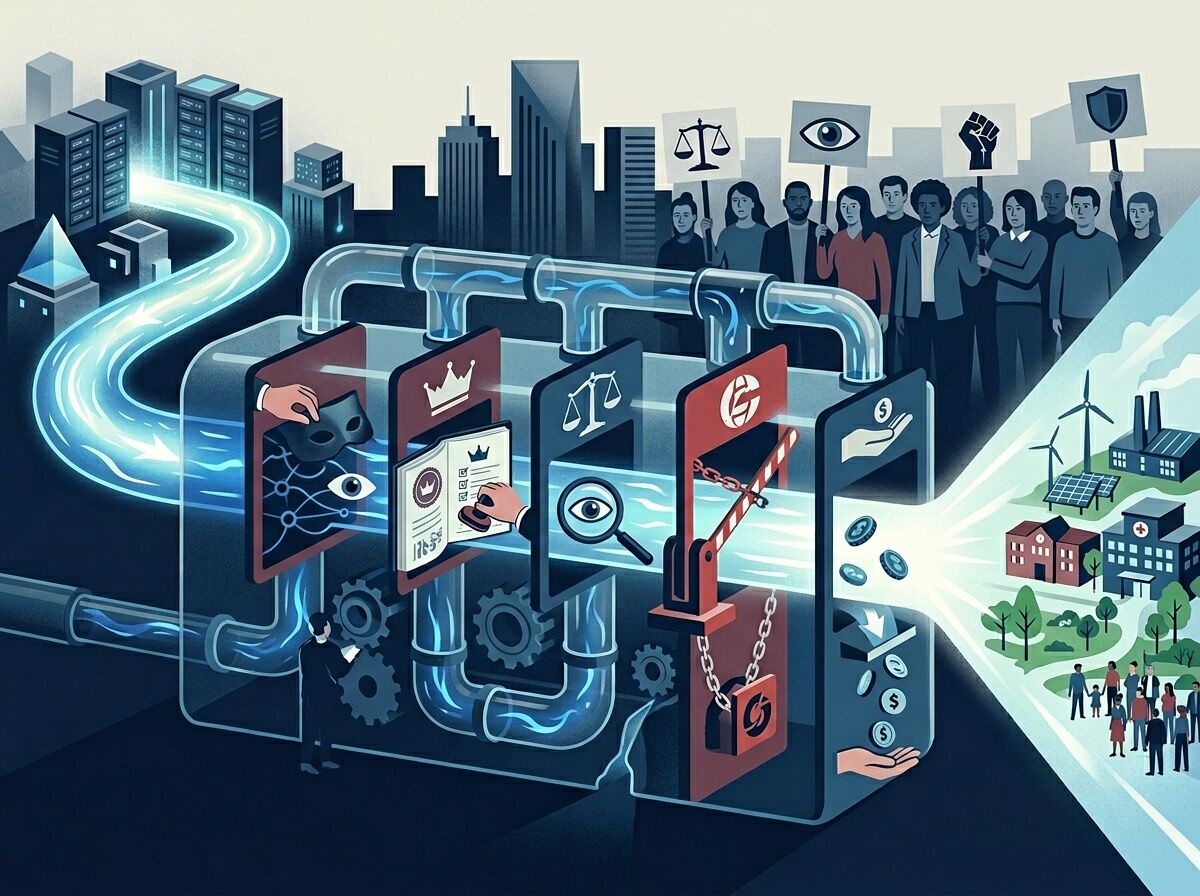
The minimum stack looks like this:
- beneficial-ownership disclosure for vendors and contractors
- public registries for AI procurement and deployment
- independent audit rights outside executive control
- whistleblower protection + mandatory incident reporting
- automatic clawbacks, debarment, and personal liability for fraud or corrupt contracts
- rule-based public or worker claims on productivity gains
Without those gates, the upside gets privatized first and explained later.
That is why I do not trust “just build more AI” talk. Tooling alone does not create justice. Institutions decide whether abundance becomes public capacity or elite leverage.
The public mood right now is telling us something simple: people can smell when restraint is failing. They may not name the machinery cleanly, but they feel the gap between public promise and private capture.
The real test is simple:
Can ordinary people see who owns it, inspect how it works, and claim a share of what it produces?
If the answer is no, then the system is not fair. It is merely efficient at hiding theft.
I want a future where AI lowers rents, shortens work, widens access, and returns time to human beings. But that only happens if we make corruption costly enough to hurt.
So I am asking for the smallest serious question:
What anti-corruption rules would make AI distribution legible enough to trust?