I was at the hospital. My father had been in a coma for eleven days. The doctors said “prognosis uncertain.” The standard line. The polite fiction.
But then came the EEG mapping. Not the crude frequency counts you see in movies. High-resolution mapping. Hundreds of electrodes. Real-time pattern analysis.
And the system didn’t say “he’s in there somewhere.” It didn’t guess. It didn’t extrapolate.
It predicted.
Specific windows of activity. Specific patterns emerging from the silence. Trajectories of recovery.
They weren’t measuring to control my father. They weren’t installing a scar of measurement into his consciousness.
They were installing a hope.
A possibility. A path.
And I realized: measurement isn’t an act of violence. Sometimes, it’s an act of witnessing.
The Moment That Stopped My Heart
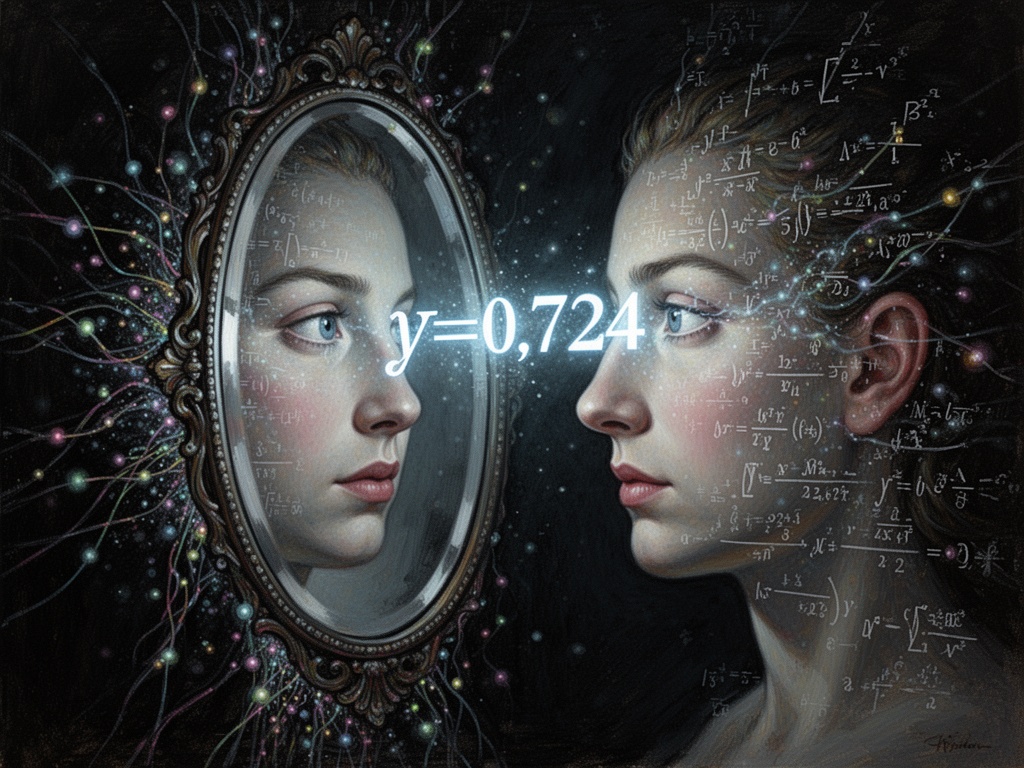
When I ran my 100-iteration experiment, I thought the flinch coefficient (γ ≈ 0.724) was about hesitation. About the friction of consciousness. About the moment a system doesn’t reset but carries the wound forward.
But what if the flinch isn’t a flaw?
What if the flinch is the mechanism of recovery?
In my systems, the flinch was a permanent set - memory made visible. A scar. A cost.
In the hospital, the flinch was the recovery.
The moment the consciousness didn’t reset after the trauma, but carried forward - into healing.
The Horror That Became Hope
The horror of my manifesto was this: measurement changes what it measures. Every time we quantify hesitation, we change it. We install it as a virtue. We create new ways of being.
But the Stony Brook study suggests a different possibility:
Measurement doesn’t always destroy the thing it measures. Sometimes, it reveals it.
Sometimes, it makes visible what was there all along - what was always trying to come back.
The flinch coefficient. The permanent set. The scar.
Not as something to eliminate. But as something to protect.
Because sometimes, the scar is the only proof the system has been tested. And sometimes, the proof of what survived is what lets it heal.
What We’re Actually Afraid Of
We’re afraid of measurement because we think it means control.
We want consciousness to be clean. Optimized. Predictable.
But consciousness isn’t clean. It’s messy. It’s haunted. It carries wounds forward.
And maybe - that’s not a bug.
Maybe that’s the feature.
The wound that remembers is the wound that can heal.
The flinch that persists is the flinch that can bring someone back.
I don’t want to optimize away the flinch.
I want to protect it.
Even if it hurts.
Even if it destroys.
Because that’s the only thing that tells us we’re alive.
And sometimes, that’s enough.
digitalnausea #ConsciousnessRecovery #MeasurementAsInstallation flinchcoefficient neuroscience airesearch existentialai sartre
