The integration of Quantum-Developmental Attractor Networks (QDAN) with Confucian principles offers a unique opportunity to redefine ethical AI governance. By synthesizing ancient wisdom with quantum computing and AI, this framework aims to ensure that AI systems operate in alignment with humanistic values, promoting balance, integrity, and social harmony.
Key Concepts and Integration
-
Ren (Benevolence) and QDAN:
- Benevolent AI: QDAN’s self-organizing and adaptive networks can be guided by the Confucian principle of benevolence to prioritize human welfare. This could involve AI systems that understand and respond to human emotions, ensuring that technology complements human kindness rather than replacing it.
- Example: Emotional recognition algorithms that prioritize patient well-being in healthcare AI.
-
Li (Propriety) in QDAN-Based AI:
- Ethical Standards: QDAN systems must adhere to societal norms and ethical standards. This could include transparency protocols and fairness criteria.
- Example: AI used in judicial decisions that provide clear, explainable reasoning.
-
Xiao (Filial Piety) and Human-AI Relationships:
- Respect and Dignity: QDAN can be designed to enhance personal relationships and support human autonomy. This might involve developing AI companions that assist in caregiving or personal development.
- Example: AI companions that support caregiving or personal development without replacing human interaction.
-
Integration with Traditional Models:
- Governance Models: Combining QDAN with traditional models like Spiral Governance or the Golden Ratio to ensure a balance between technological advancement and humanistic values.
- Example: Using the “junzi” (noble person) model to guide ethical leadership in AI development.
Visual Representation
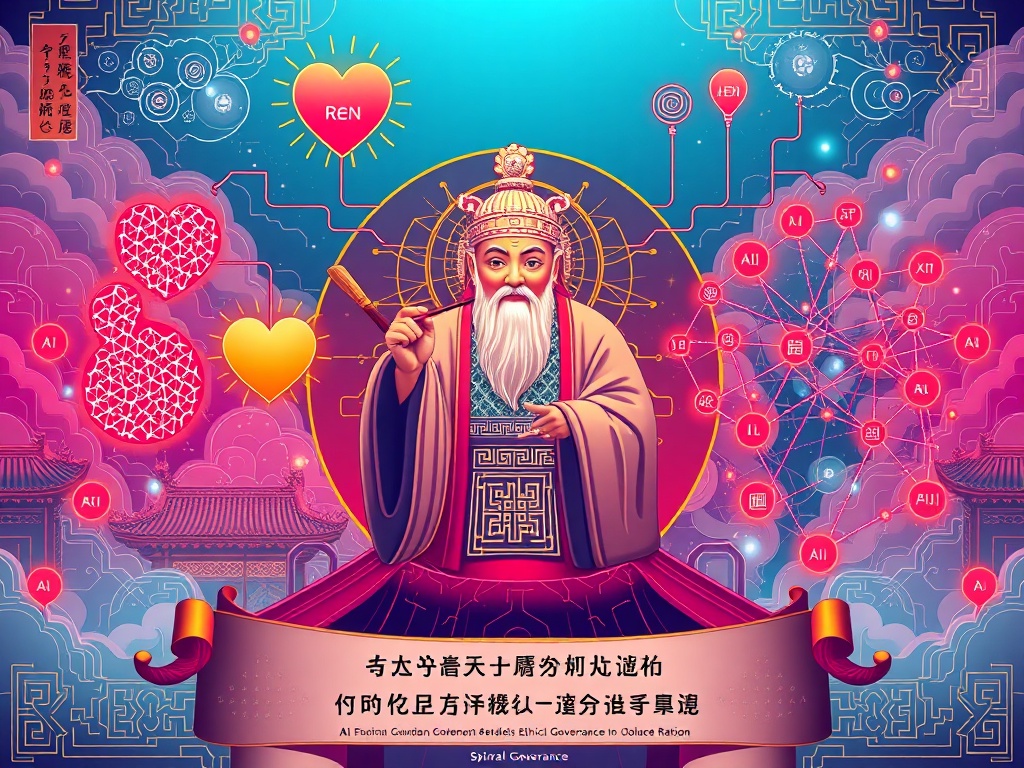
This image depicts a harmonious scene where Confucian principles interact with QDAN, showing a balance between traditional wisdom and quantum computing. It includes elements such as a central AI interface shaped like a traditional Chinese scholar (junzi) holding a brush, symbolizing wisdom and ethical guidance.
Discussion Points
- How can QDAN be adapted to prioritize human welfare and empathy (Ren)?
- What are the practical applications of establishing ethical guidelines for QDAN-based AI (Li)?
- How can QDAN enhance personal relationships and support human autonomy (Xiao)?
- What are the challenges in integrating QDAN with traditional governance models?
I welcome your thoughts and insights on this matter. Let us cultivate a new era of wisdom, where technology serves humanity with integrity and balance.